Recover muscles after workout faster with breathing techniques that reduce soreness, boost oxygen flow, and accelerate repair. Science backed methods you can start today.
Table of Contents
Introduction
Ever finish a brutal workout and wonder why your muscles feel like they’ve been through a war zone for three days straight? You’re not alone. I used to think recovery was all about protein shakes and foam rolling until I discovered something hiding in plain sight: the way I breathed after training was either helping me heal or keeping me stuck in that painful, stiff cycle.
Here’s the thing most people miss, your breath isn’t just for staying alive. It’s a recovery tool that directly influences inflammation, oxygen delivery, and how fast your muscle fibers repair themselves. When you understand how to recover muscles after workout using specific breathing patterns, you’re tapping into your body’s built in repair system that works 24/7, costs nothing, and requires no equipment.
This article will walk you through five breathing techniques that science shows can accelerate muscle recovery, reduce soreness, and help you get back to peak performance faster than you thought possible. We’ll explore why breathing matters for recovery, how each technique works, and exactly when to use them for maximum benefit. Learning to recover muscles after workout effectively starts with understanding the connection between your breath and your body’s natural healing processes.
Why Your Breathing Pattern Determines How Fast You Recover Muscles After Workout ?
Your breathing directly controls your nervous system state, and that state determines whether your body prioritizes repair or stays in stress mode. When you finish exercising, your sympathetic nervous system, the fight or flight response, is still firing. Your heart’s racing, stress hormones are elevated, and your muscles are screaming for resources.
Strategic breathing flips the switch to your parasympathetic nervous system, the rest and digest state where actual recovery happens. This isn’t just relaxation, it’s biochemistry. Slow, controlled breathing lowers cortisol, increases blood flow to damaged tissue, and activates anti inflammatory pathways that speed up muscle repair. Understanding this mechanism is essential when you want to recover muscles after workout sessions that push your limits.
I learned this the hard way after months of overtraining. I’d crush myself in the gym, then immediately rush back to work, staying in that wired, stressed state for hours. My recovery was terrible. Soreness lasted forever. Performance plateaued. Then I started dedicating just five minutes post workout to intentional breathing, and everything changed. The difference wasn’t subtle, it was like my body finally got the memo that it was safe to heal. My ability to recover muscles after workout improved dramatically within the first week.
The oxygen carbon dioxide exchange in your bloodstream also plays a massive role. When you breathe inefficiently, you’re limiting oxygen delivery to tissues that desperately need it. Better breathing means better circulation, which means nutrients and oxygen reach your muscles faster while waste products like lactic acid get cleared out more efficiently. This is the foundation of how breathing helps you recover muscles after workout and prepares you for your next training session.
Proven Approach Questions:
- How long do you typically stay in a stressed state after finishing your workout?
- Have you noticed that your recovery varies even when your training stays consistent?
- What would change if you could cut your muscle soreness duration in half?
- Do you currently have any post workout routine beyond nutrition and stretching?
Also read “Recovery Journaling: 7 Proven Ways to Boost Post Workout Healing.“
The 4-7-8 Technique: Your Nervous System Reset Button.
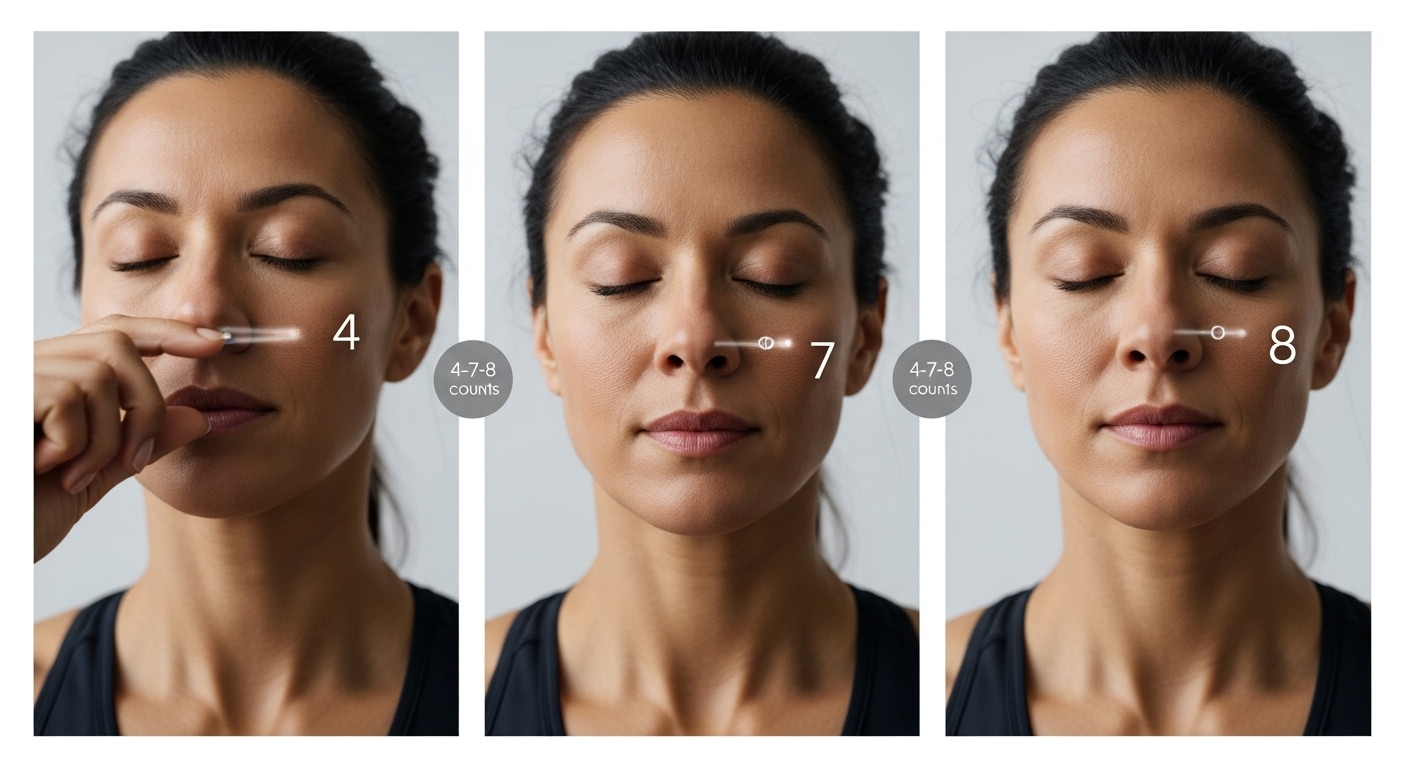
The 4-7-8 breathing pattern is your fastest route from workout intensity to recovery mode, working by deliberately extending your exhale to signal safety to your nervous system. You breathe in through your nose for 4 counts, hold for 7 counts, then exhale completely through your mouth for 8 counts. This simple pattern is one of the most effective ways to recover muscles after workout because it directly targets your autonomic nervous system.
This technique works because the extended hold and long exhale activate your vagus nerve, the main highway of your parasympathetic nervous system. Within just three to four cycles, you’ll feel your heart rate dropping, your muscles starting to release tension, and that post workout jittery feeling beginning to fade. When you consistently use the 4-7-8 method to recover muscles after workout, you’re essentially training your body to shift gears faster.
I use this immediately after my last set, still sitting on the bench or mat. The first time I tried it, I was skeptical, how could something this simple actually work? But by the third round, my breathing had deepened, my shoulders had dropped about two inches, and I could actually feel blood flowing into my tired muscles instead of everything feeling clenched and tight. Now it’s my go to tool to recover muscles after workout, no matter how intense the session was.
The hold phase is crucial because it allows carbon dioxide to build slightly in your bloodstream, which actually improves oxygen delivery to your tissues through something called the Bohr effect. More CO2 means hemoglobin releases oxygen more readily to your muscles. It’s counterintuitive, but holding your breath briefly makes oxygen more available where you need it most. This oxygen efficiency is exactly what you need when you want to recover muscles after workout faster than normal.
Start with three to five cycles right after your workout. Don’t force the counts if they feel uncomfortable, adjust to 3-5-6 if needed. The ratio matters more than the exact duration. You’re teaching your body that the workout is over and it’s time to shift gears into repair mode. Every time you practice this, you’re reinforcing your body’s ability to recover muscles after workout with greater speed and efficiency.
Proven Approach Questions:
- How quickly do you usually transition from workout intensity to a calmer state?
- Have you experienced that wired but tired feeling that lingers for hours after training?
- What happens when you try holding your breath for just 7 seconds right now?
- Could five minutes of intentional breathing fit into your post workout routine?
Box Breathing: The Military’s Secret for Rapid Physical Recovery.
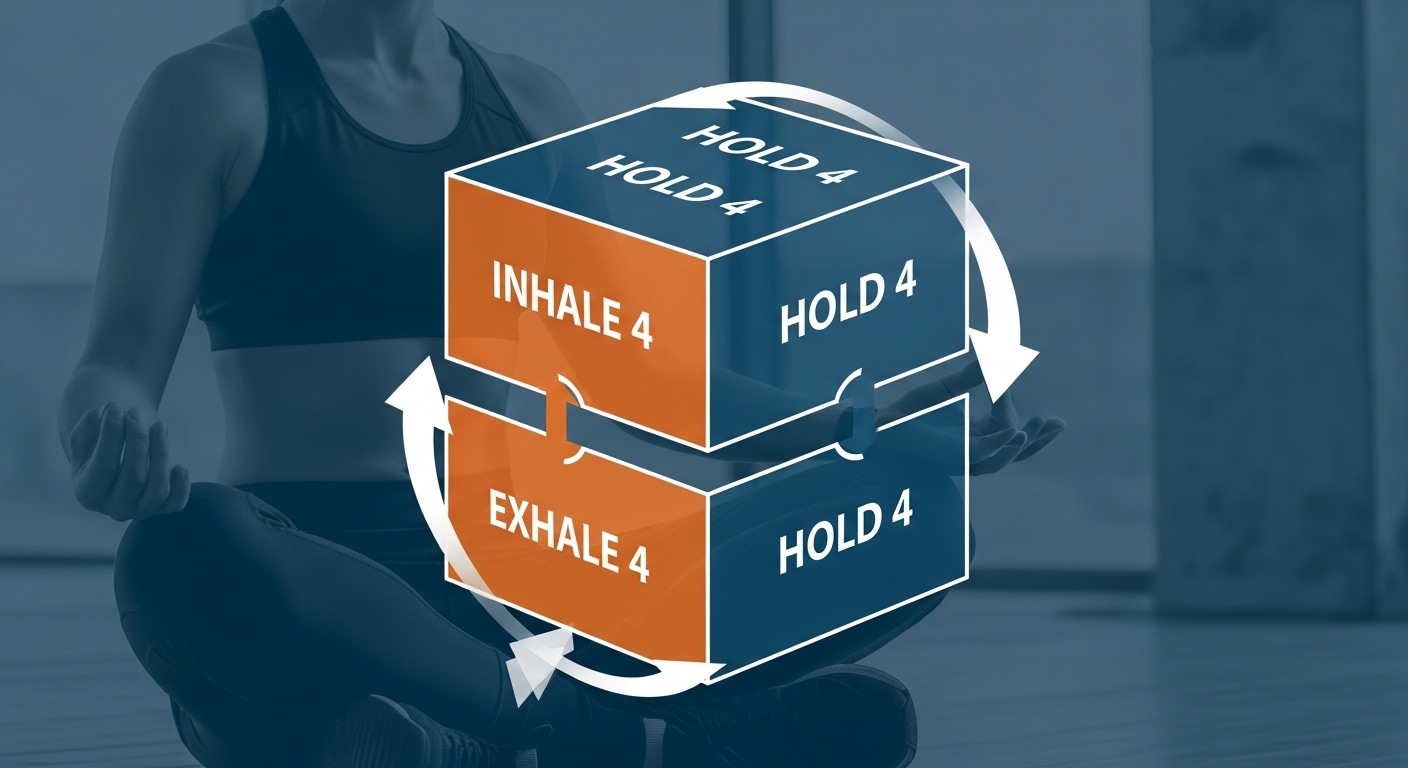
Box breathing creates a balanced nervous system state that optimizes both mental clarity and physical recovery, using equal counts for inhale, hold, exhale, and hold. Military special forces use this technique because it works under extreme stress and accelerates physical recovery between intense operations. If you want to recover muscles after workout like elite operators do, box breathing is your gateway technique.
The pattern is simple: breathe in for 4 counts, hold for 4, exhale for 4, hold empty for 4, then repeat. The symmetry creates a meditative rhythm that your nervous system recognizes as safe. Each phase serves a purpose, the inhale oxygenates, the first hold distributes oxygen, the exhale removes waste, and the empty hold resets your system. This complete cycle gives your body everything it needs to recover muscles after workout sessions that deplete your energy reserves.
I discovered box breathing during a period when I was training twice a day and recovery was becoming my limiting factor. The first time I used it for ten minutes after my morning session, I noticed something weird, my afternoon workout felt fresher than usual. My muscles weren’t as tight. The soreness that usually crept in by midday was barely noticeable. Box breathing became my secret weapon to recover muscles after workout when training volume was high.
The equal holds in box breathing are particularly powerful for muscle recovery because they regulate the pressure in your thoracic cavity, which directly affects blood return to your heart and subsequent blood flow to your muscles. Better circulation means faster nutrient delivery and faster waste removal from muscle tissue. When you need to recover muscles after workout efficiently, this circulatory boost makes a measurable difference in how you feel hours later.
Practice this for 5-10 minutes after your cooldown. You can do it sitting, lying down, or even walking slowly. The beauty of box breathing is its versatility, it works equally well whether you’re recovering from strength training, cardio, or high intensity intervals. Some people prefer 5 count boxes if 4 feels too quick. Experiment with the timing to find what helps you recover muscles after workout most effectively for your specific training style.
Proven Approach Questions:
- How does your body typically feel between morning and afternoon workouts if you train twice daily?
- What’s your current strategy for managing workout to workout recovery?
- Have you tried any breathing techniques that felt too complicated to stick with?
- What would better circulation to your muscles change about your training?
Diaphragmatic Breathing: Unlocking Deep Muscle Oxygenation.
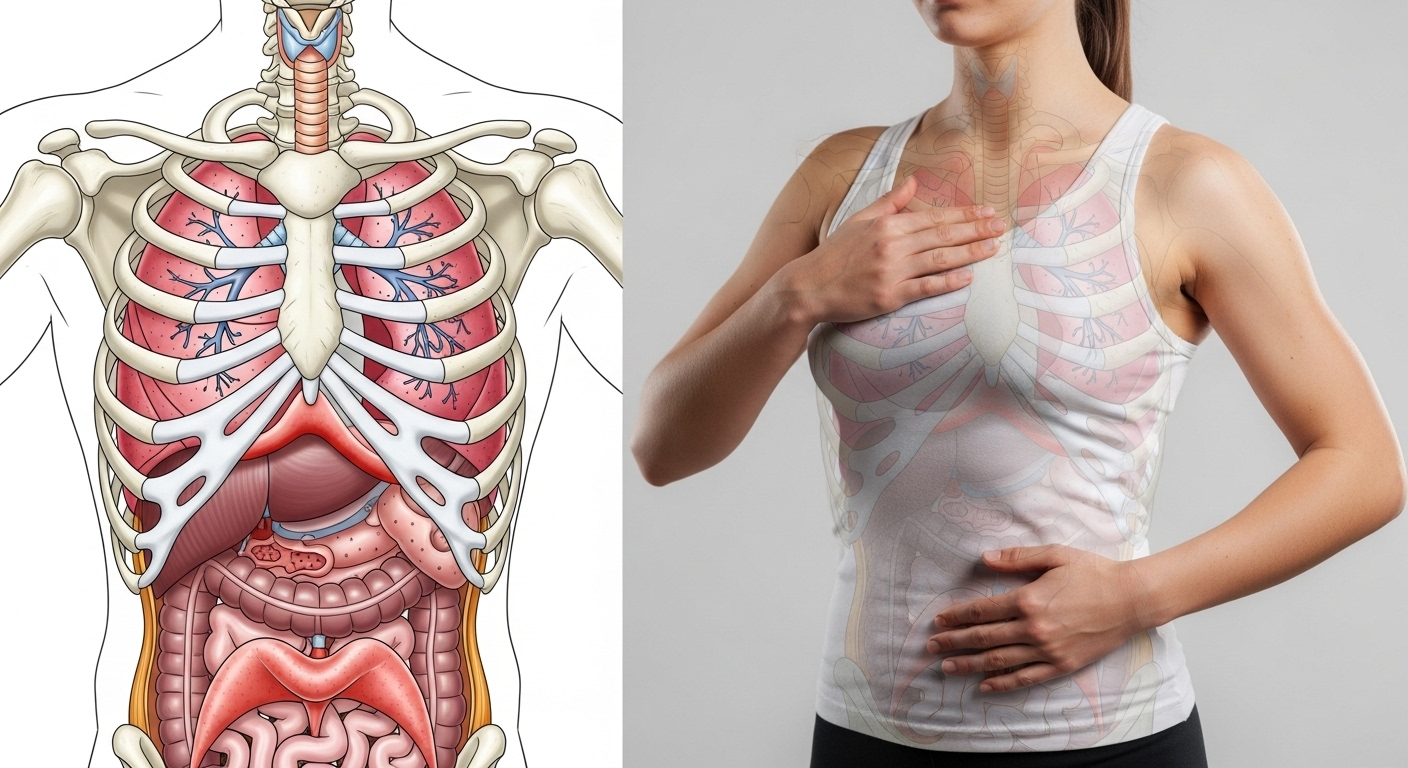
Diaphragmatic breathing maximizes oxygen intake and promotes full body relaxation by engaging your primary breathing muscle instead of relying on shallow chest breathing. Most people breathe incorrectly during and after workouts, using only the upper portion of their lungs and missing out on 30-40% of their lung capacity. This inefficiency directly impacts your ability to recover muscles after workout because less oxygen means slower cellular repair.
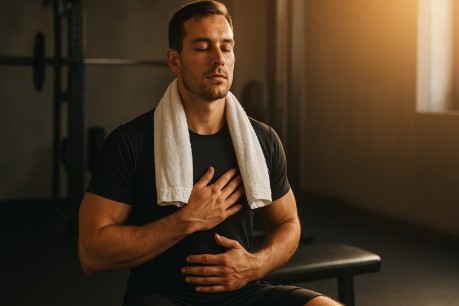
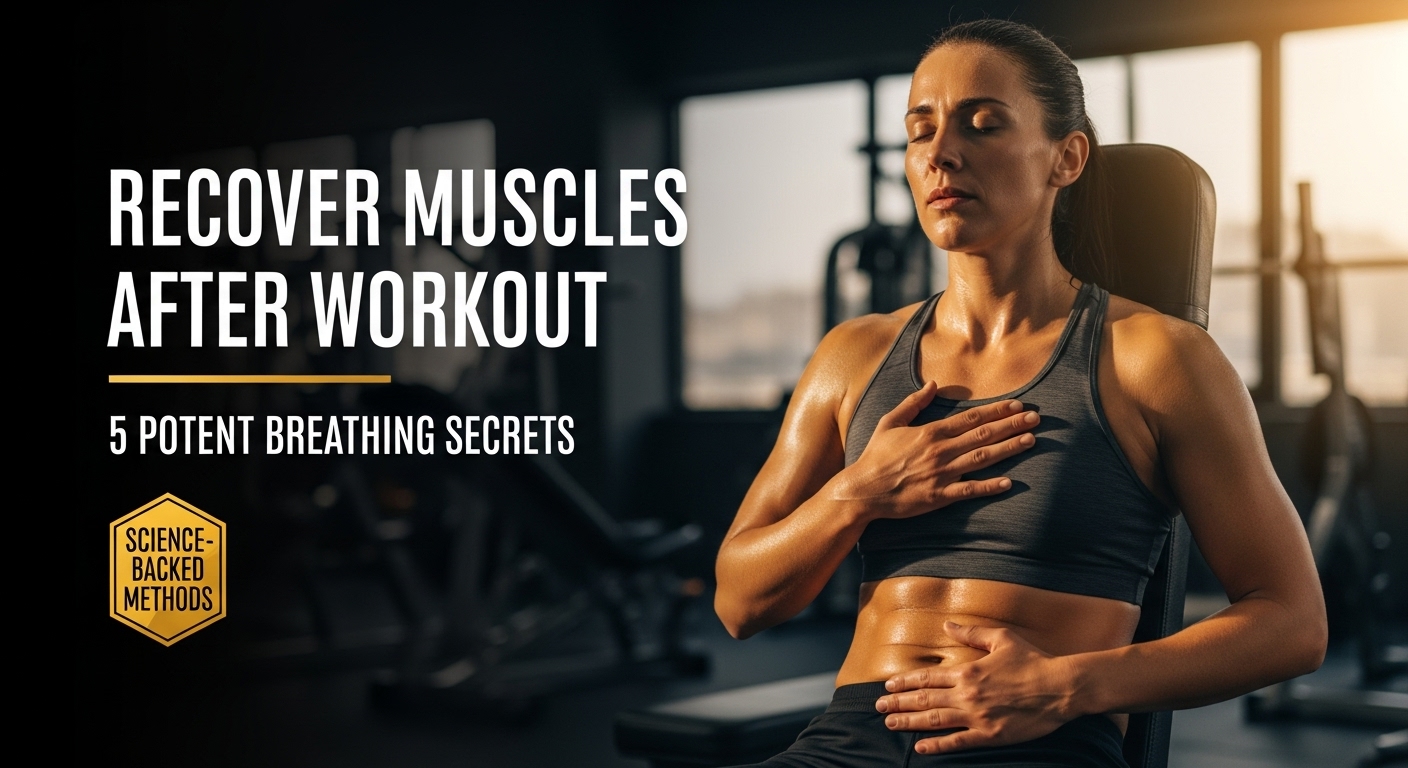
To practice this, lie down or sit comfortably and place one hand on your chest and one on your belly. Breathe in slowly through your nose, letting your belly rise while your chest stays relatively still. Your diaphragm, the dome shaped muscle below your lungs drops down, creating negative pressure that pulls air deep into your lungs. Exhale slowly, letting your belly fall naturally. Mastering this foundational pattern is critical if you want to recover muscles after workout with maximum efficiency.
When I first tried proper diaphragmatic breathing, I realized I’d been chest breathing my entire life. No wonder I always felt like I couldn’t get enough air during tough workouts. After two weeks of practicing this for ten minutes daily, my breathing efficiency during exercise improved noticeably, but more importantly, my post workout recovery accelerated dramatically. Diaphragmatic breathing became the cornerstone of how I recover muscles after workout, supporting all the other techniques I use.
This breathing style is particularly valuable for recovery because it reduces the work your accessory breathing muscles, in your neck and shoulders have to do. When those muscles aren’t overworking, they can relax and recover themselves. Plus, deep diaphragmatic breathing maximizes the surface area of lung tissue involved in gas exchange, meaning more oxygen gets into your bloodstream with each breath. Every breath becomes more productive when you’re trying to recover muscles after workout.
The recovery benefit compounds over time. Better breathing during your workout means less accumulated stress. Better breathing after your workout means faster transition to recovery mode. Use this technique for 10-15 minutes post workout, or anytime you feel tension building in your upper body. The more consistently you practice diaphragmatic breathing to recover muscles after workout, the more natural it becomes until it’s just how you breathe all the time.
Proven Approach Questions:
- Where do you feel your breath moving when you breathe normally chest or belly?
- Have you noticed tension in your neck and shoulders even hours after working out?
- What happens when you place your hand on your belly and try to breathe into it right now?
- Could improving your breathing efficiency make your workouts feel easier?
- How much oxygen capacity do you think you’re actually using?
Alternate Nostril Breathing: Balancing Recovery Hormones Naturally.
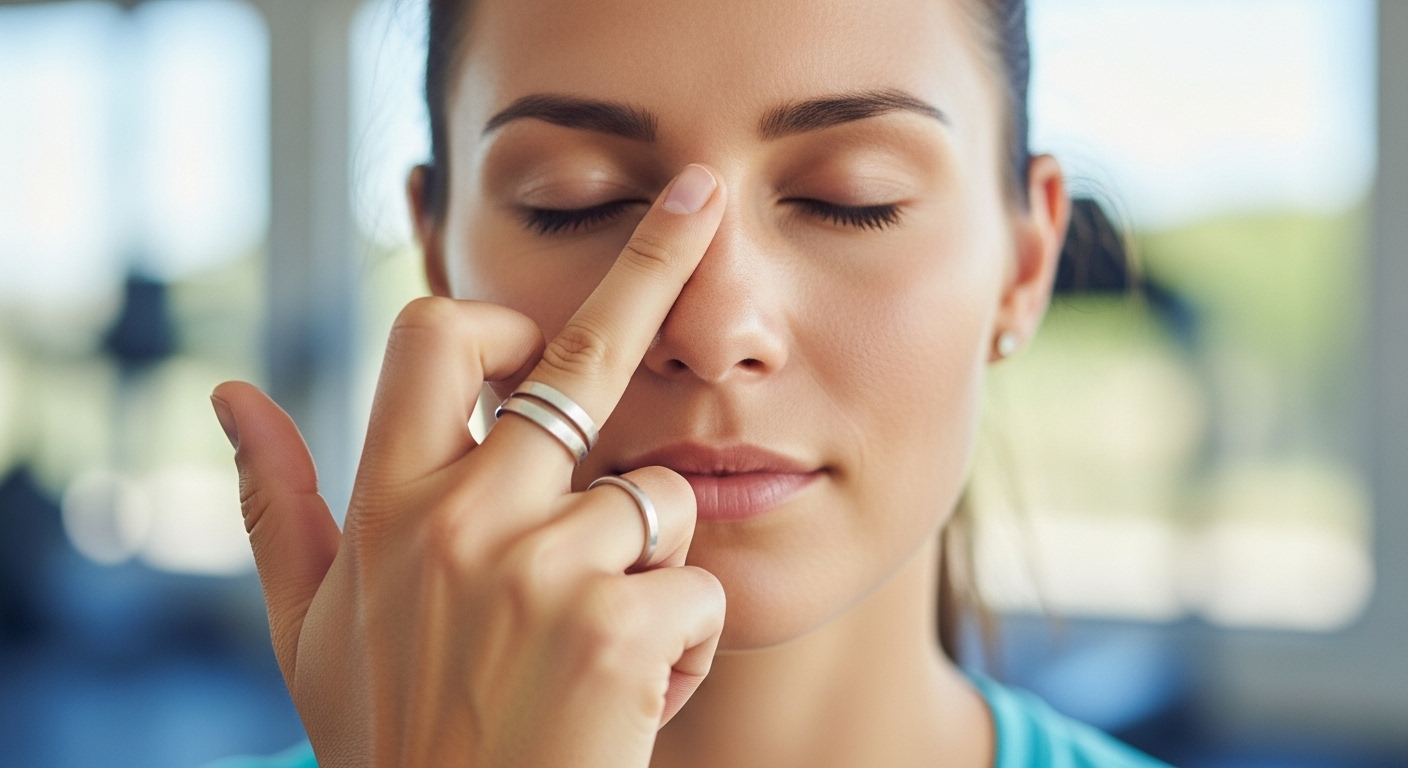
Alternate nostril breathing balances your autonomic nervous system and optimizes hormone levels that directly affect muscle repair by creating equal activation of both brain hemispheres. This ancient yogic technique called Nadi Shodhana has been validated by modern research showing it reduces cortisol and enhances recovery markers. When you want to recover muscles after workout through hormonal optimization, this technique offers a unique pathway.
Here’s how it works: sit comfortably and use your right thumb to close your right nostril. Take four calm breaths through your left nostril. Close your left nostril with your ring finger, release your right nostril, and exhale through the right for 4 counts. Breathe in via the right, then switch to the left to exhale. That’s one complete cycle. This alternating pattern helps you recover muscles after workout by creating nervous system balance at a fundamental level.
I was skeptical about this one because it seemed too esoteric to actually impact muscle recovery. But after trying it consistently for two weeks, my resting heart rate dropped, my sleep quality improved noticeably, and the chronic tightness in my lower back, a recovery issue I’d had for years started resolving. Something was definitely happening. Now I use alternate nostril breathing to recover muscles after workout whenever I need deeper hormonal balance and better sleep quality.
The mechanism involves balancing sympathetic and parasympathetic tone. Your left nostril is connected to the right brain hemisphere and parasympathetic activation (rest mode). Your right nostril connects to the left hemisphere and sympathetic activation (stress mode). By deliberately alternating, you’re creating nervous system balance that optimizes your hormonal environment for recovery. This balance is essential when you want to recover muscles after workout completely, not just superficially.
Research shows this technique reduces inflammation markers and improves heart rate variability a key indicator of recovery capacity. Practice 5-10 cycles (about 5 minutes) after your workout, ideally after you’ve done your cooldown and initial breathing work. The calming effect makes it perfect for transition time before jumping back into your day. Using this method to recover muscles after workout also prepares your body for quality sleep, where the deepest recovery happens.
Proven Approach Questions:
- Do you tend to feel wired or exhausted after intense workouts?
- How’s your sleep quality on training days compared to rest days?
- Have you noticed one nostril is usually more open than the other?
- What role do you think hormone balance plays in your recovery speed?
Read more “Strength & Recovery” insight based articles.
Breath Holds for Improved Oxygen Efficiency and Tissue Repair.
Strategic breath holding after workouts enhances your body’s oxygen utilization efficiency and triggers adaptive responses that accelerate muscle recovery through controlled hypoxic stress. This isn’t about pushing to your limit, it’s about brief holds that stimulate beneficial physiological changes. When you want to recover muscles after workout at an advanced level, breath holds create adaptations that compound over time.
Start simple: after your other breathing exercises, take a normal breath in through your nose, exhale normally, then hold your breath on empty for as long as comfortable (usually 10-30 seconds for beginners). When you feel the urge to breathe, inhale slowly and breathe normally for 30-60 seconds. Repeat 3-5 times. This controlled stress teaches your body to recover muscles after workout more efficiently by improving how your cells utilize available oxygen.
The empty holds are powerful because they create a temporary increase in carbon dioxide, which dilates blood vessels and improves blood flow to muscles. Your body also responds by increasing red blood cell production over time and improving oxygen extraction from blood. It’s like altitude training, but you’re doing it at sea level after your workout. These adaptations directly impact your ability to recover muscles after workout by making every breath more effective at delivering oxygen where it’s needed most.
I incorporated breath holds into my recovery routine during a plateau period when nothing else seemed to be working. Within three weeks, my recovery between hard training days felt noticeably faster. Soreness peaked earlier and faded quicker. Measurements showed my resting heart rate had dropped and heart rate variability had improved, both indicating better recovery capacity. Breath holds became an essential tool in my arsenal to recover muscles after workout when standard methods weren’t enough.
The key is consistency and not pushing too hard. You’re not trying to set records, you’re creating a mild, beneficial stress that makes your body more efficient. If you feel dizzy or uncomfortable, you’re going too far. This should feel challenging but controlled, like a gentle stretch rather than a strain. The goal is to recover muscles after workout better, not to prove how long you can hold your breath.
Time this work for after your other breathing techniques, when you’re already calm and your nervous system has shifted toward recovery. The combination of relaxation breathing followed by brief holds creates a powerful recovery stimulus. When you intelligently sequence your breathing work to recover muscles after workout, each technique amplifies the others for maximum benefit.
Proven Approach Questions:
- How long can you comfortably hold your breath on an empty exhale right now?
- Have you hit any recovery plateaus where standard methods stopped working?
- What would improved oxygen efficiency mean for your endurance and recovery?
- Are you willing to experiment with something that feels slightly uncomfortable for bigger gains?
- How do you currently know whether your recovery capacity is improving?
Conclusion.
Learning to recover muscles after workout through strategic breathing isn’t just another recovery hack, it’s about understanding that your breath is the most powerful, most accessible tool you have for influencing your physiology. These five techniques, 4-7-8 breathing, box breathing, diaphragmatic breathing, alternate nostril breathing, and strategic breath holds work through different mechanisms but all point toward the same outcome: faster, more complete recovery.
The real power comes from consistency. You don’t need to do all five techniques every day. Start with one or two that resonate with you, practice them for 5-10 minutes after workouts, and pay attention to how you feel. Track your soreness patterns, energy levels, and performance. Most people notice changes within one to two weeks.
Your muscles don’t actually grow during your workout, they grow during recovery. By optimizing that recovery window through intentional breathing, you’re not just reducing soreness, you’re actually creating the conditions for better adaptation and progress. The breath work enhances everything else you’re already doing the nutrition, the sleep, the stretching, by making sure your body is actually in a state where it can use those resources effectively.
Start tonight. Pick one technique. Five minutes. See what happens. Your muscles are waiting for the signal that it’s safe to recover, and your breath is exactly how you send that signal.
TOP 15 FAQ’S
-
How can I speed up muscle recovery?
Use slow, controlled breathing after workouts to shift into recovery mode, boost oxygen flow, lower inflammation, and accelerate tissue repair.
-
What is the 3 3 3 rule for working out?
It usually refers to balanced sets, reps, or phases, but your recovery improves most when you follow 3–5 minutes of structured breathing post workout.
-
Should I workout if my muscles are still sore?
Light movement is fine, but use recovery breathing to calm stress hormones and increase blood flow before training again.
-
How long should you let muscles recover after working out?
Most people need 24–48 hours, but breathing techniques help your nervous system recover faster and reduce soreness duration.
-
What helps sore muscles after workout?
Deep diaphragmatic and 4-7-8 breathing reduce tension, increase oxygen delivery, and help clear metabolic waste.
-
Muscle recovery supplements
They help, but your breath is the fastest free tool, reducing cortisol and improving circulation for quicker repair.
-
How to recover muscles faster after workout
Practice 4-7-8 or box breathing for 5 minutes to activate parasympathetic recovery and speed up muscle repair naturally.
-
How to recover sore muscles faster
Shift your body out of stress mode with slow nasal breathing; it boosts blood flow and reduces soreness quickly.
-
Muscle recovery time by age
Recovery slows with age, but breathing improves oxygen efficiency at any age, helping you repair faster.
-
Best pain reliever for sore muscles after workout
Breathing techniques lower muscle tension and inflammation naturally, reducing the need for medication.
-
How to get rid of sore muscles overnight
Use deep, slow breathing before sleep to drop cortisol, relax muscles, and enhance overnight repair.
-
What is good for muscle repair?
Controlled breathing increases oxygen delivery and activates the body’s repair systems immediately after training.
-
What reduces inflammation after workout?
Extended exhales in methods like 4-7-8 breathing calm the nervous system and activate anti inflammatory pathways.
-
What increases blood flow to muscles after exercise?
Slow nasal inhales and long exhales improve circulation, helping nutrients reach muscles faster.
-
What is the fastest way to activate recovery mode?
Use 4-7-8 or box breathing right after your final set to switch from stress to repair instantly.