Table of Contents
Introduction
The phrase “muscle mind connection” might sound abstract, but it’s one of the most powerful tools for transforming your strength training results and mindset. In fact, a 2018 study published in the European Journal of Sport Science found that simply focusing on specific muscles during exercise can lead to greater muscle activation and growth even with the same amount of weight!
By developing an intentional connection between your mind and your body, you can elevate your performance, boost neuromuscular coordination, and build a resilient mental game inside and outside the gym.
Let’s explore how unlocking the muscle mind connection can help you gain strength, grow faster, and sharpen your mental focus.
What Is the Muscle Mind Connection?
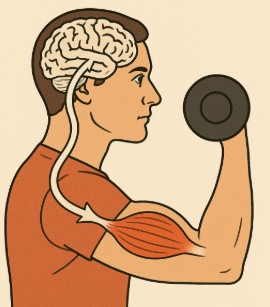
Honestly, I used to think the whole “muscle mind connection” thing was just gym bro science until I actually started paying attention to what was happening during my workouts. The muscle mind connection is basically your ability to consciously focus on and contract a specific muscle group during an exercise and let me tell you, it’s way harder than it sounds.
I remember doing bicep curls for months, just going through the motions, watching TV on the gym screens. My arms weren’t really growing, and I couldn’t figure out why. Then my trainer mentioned something about “feeling the muscle work,” and it clicked. The muscle mind connection is also called intentional muscle activation or internal focus of attention, but really it’s just about being present with your body instead of checked out.
What blew my mind was realizing this concept bridges the gap between just moving weight around and actually training your muscles effectively. It’s like the difference between driving on autopilot versus really paying attention to the road. If you want to develop this connection more deliberately, body-awareness training provides another practical approach.
Why the Muscle Mind Connection Matters in Strength Training?
I’ll be straight with you once I started focusing on this stuff, my workouts completely changed. The muscle mind connection increases muscle activation, especially during isolated movements like lateral raises or tricep extensions. I used to struggle with feeling my rear delts work, but when I started really concentrating on squeezing them during reverse flies, boom suddenly I could feel every fiber firing.
Better form naturally follows when you’re actually thinking about what you’re doing. I used to have this terrible habit of letting my shoulders roll forward during bench press because I wasn’t paying attention to my body positioning. Now I consciously think about retracting my shoulder blades and engaging my lats, and my bench form is infinitely better.
The mindful lifting aspect has been huge for me too. Instead of just grinding through reps, I stay present during each one. It’s almost meditative in a way. This intentional approach supports long-term progression by building proper movement patterns from the start, rather than having to correct bad habits later (trust me, unlearning poor form is way harder than learning it right the first time).
Neurological Benefits of Intentional Lifting.
Here’s where things get really interesting from a science perspective. When you focus on specific muscles during exercise, you’re actually enhancing motor unit recruitment basically getting more muscle fibers involved in the movement. I noticed this big time when I started really concentrating during my deadlifts. My hamstrings and glutes started activating way more effectively.
The repetition and focus aspect reinforces proper movement patterns through what’s called neuroplasticity. Your brain literally rewires itself to perform movements more efficiently. After about six weeks of really focusing on my lat engagement during pull-ups, I could feel them working without even thinking about it consciously.
What’s cool is that this develops neural pathways associated with peak performance. Elite athletes talk about this all the time they’re not just physically strong, they’re mentally dialed in to exactly which muscles are working and how. The injury prevention benefits are real too. When you’re focused and intentional, you’re way less likely to use sloppy form or make those random jerky movements that can tweak something.
Also read ” Strength Training: 7 Mindful Breathing Techniques for Peak Performance.“
Techniques to Strengthen the Muscle Mind Connection.
Visualization and Mental Rehearsal.
I used to think visualization was just woo-woo nonsense, but man was I wrong. Before I even touch a weight now, I’ll visualize the target muscle working through its full range of motion. For chest exercises, I literally picture my pecs contracting and stretching. Sounds weird, but pre-lift mental practice actually increases cortical activation and focus there’s real research behind this stuff.
The key is being specific with your visualization. Don’t just think “work chest” actually imagine the muscle fibers shortening during the concentric phase and lengthening during the eccentric. It takes practice, but once you get the hang of it, your workout quality goes through the roof. Visualization can also strengthen the mental side of training by rehearsing the movement and desired outcome before execution.
Tempo Training and Slow Eccentrics.
This technique completely changed my understanding of muscle engagement. Slowing down the eccentric phase (the lowering portion) to feel the muscle under tension is like adding a magnifying glass to your workout. I started doing 3-4 second negatives on my bicep curls, and holy crap, I could finally feel exactly where my biceps were working throughout the entire range of motion.
The enhanced muscle fiber engagement and awareness you get from tempo work is unreal. It’s like the difference between looking at something quickly versus studying it closely. Most people rush through reps and miss all the subtle sensations that tell you whether you’re actually targeting the right muscles effectively. Slow eccentric work is another way to make this connection more deliberate by increasing control and awareness during each repetition.
Tactile Feedback and Cues.
Here’s something that felt awkward at first but works incredibly well, lightly touching or tapping the target muscle to stimulate activation. I do this especially with muscles I have trouble feeling, like my rear delts or lower traps. Just a gentle touch helps create that neural connection.
Verbal cues are equally powerful. Instead of just telling myself to “do the exercise,” I use specific cues like “squeeze your glutes” during hip thrusts or “pull with your lats” during rows. These internal commands help direct your nervous system to recruit the right muscles. It’s like giving your brain GPS directions instead of just saying “go somewhere.”
Impact on Mindset and Mental Development.
The mental discipline aspect of this has been one of the most surprising benefits. Requiring consistent attention and presence during workouts actually builds mental discipline that carries over into other areas of life. I’ve gotten way better at focusing on tasks at work since I started practicing mindful lifting.
It’s also been amazing for reducing gym anxiety. When you shift focus inward to what your muscles are doing, you stop worrying so much about what other people think or whether you look stupid doing an exercise. Your attention is completely absorbed in the task at hand.
The growth mindset piece is huge too. Instead of just “doing” exercises, you’re actively participating in your training and improvement. Every rep becomes an opportunity to get better at muscle recruitment and body awareness. This has completely changed how I approach challenges, not just in the gym, but everywhere.
The meditative nature of mindful lifting has improved my stress management significantly. There’s something incredibly calming about being completely present with your body and breath during a set. It’s like a moving meditation that leaves you feeling centered and focused.
Combining the Muscle Mind Connection with Breathing.
I can’t emphasize enough how much proper breathing supports neural control and muscular engagement. When I first started paying attention to my breathing during lifts, I realized I was holding my breath way too much, which was limiting both my performance and my ability to stay focused on the target muscles.
Now I use breathing to anchor my attention and create rhythm for each rep. During bench press, I’ll inhale on the way down while thinking about my chest stretching, then exhale forcefully while focusing on my pecs contracting on the way up. The synchronization between breath and muscular effort improves endurance dramatically too.
The key is making breathing part of your muscle activation strategy, not just something that happens automatically. It becomes another tool for staying present and engaged with your training. Breathing can further strengthen this mind-body connection by helping you control your state during training.

Practical Applications in Training.
If you’re new to this whole concept, start with isolation exercises like bicep curls or leg extensions. These single-joint movements make it easier to focus on one specific muscle group without getting overwhelmed. I recommend starting with just 3-5 slow, controlled reps with your full attention on the target muscle.
Mirror feedback has been invaluable for me, especially when learning to engage muscles I couldn’t feel well initially. Sometimes I’ll even record myself doing exercises to assess whether I’m actually engaging the right muscles based on my body positioning and movement quality.
Using this technique during warm-ups to “wake up” lagging muscles has been a game-changer. Before back workouts, I’ll do some light lat pulldowns or band pull-aparts with complete focus on feeling my lats and rhomboids activate. It primes those muscles to work better during the heavier compound movements later in the workout.
The biggest mistake I made early on was trying to apply this to every single exercise right away. That’s too much mental load. Pick one or two exercises per workout to really focus on, then gradually expand your mindful lifting practice as it becomes more natural.
Conclusion.
Look, I’m not gonna lie, when I first heard about the muscle mind connection, I rolled my eyes pretty hard. It sounded like some new-age fitness nonsense that personal trainers were pushing to justify their rates. But after actually giving the muscle mind connection a real shot for a few months, I can honestly say it’s completely transformed how I approach training.
The muscle mind connection isn’t just a mental gimmick or some trendy buzzword floating around Instagram fitness accounts. There’s legitimate science backing this stuff up, and more importantly, it actually works when you put in the effort to develop it. What really clicked for me was realizing the muscle mind connection bridges intention with action, it’s the missing link between just moving weight and actually training your body effectively.
I’ve been lifting for over fifteen years now, and incorporating the muscle mind connection through mindful muscle activation has unlocked strength gains I didn’t even know were possible. My bench finally broke through that stubborn plateau I’d been stuck at for months. My deadlift feels more solid and controlled than it ever has. But beyond the numbers, my training awareness has increased dramatically. I actually know what’s happening in my body during each rep instead of just grinding through sets mindlessly.
The mindset benefits of practicing the muscle mind connection have been just as valuable as the physical ones. Building that mental discipline and focus in the gym has made me more resilient and concentrated in other areas of life too. There’s something powerful about knowing you can direct your attention exactly where you want it, when you want it.
Here’s my honest advice: if you’re serious about getting stronger and actually enjoying your workouts more, give the muscle mind connection approach a real chance. Don’t just try it for a week and give up when it feels awkward or difficult. Start slow, be patient with yourself, and remember that developing the muscle mind connection takes time like any new skill.
Ready to lift with intention? Slow down during your next workout, tune in to what your muscles are actually doing, and let your mind lead your muscles to greatness. Trust me, once you feel that muscle mind connection click into place, you’ll wonder how you ever trained without it.
TOP 12 FAQ & ANSWERS
Q1. What exactly is the muscle mind connection?
The muscle mind connection is your ability to intentionally focus on a specific muscle during exercise so it contracts more effectively. Instead of just “moving weight,” you’re actively engaging the right muscle fibers. This creates better activation, improved form, and long-term strength gains.
Q2. Is the muscle mind connection real or just a fitness myth?
It’s absolutely real. Studies show that consciously focusing on a muscle during exercise increases muscle activation and growth even with the same weight. Many lifters who once thought it was “bro science” changed their minds after applying it consistently in training.
Q3. How do beginners start practicing the muscle mind connection?
Start small. Pick one isolation exercise, like a bicep curl or leg extension, and perform slow, controlled reps while focusing only on that muscle. Don’t try to apply it to every lift right away it’s easier to master when you narrow your attention.
Q4. Why does focusing on muscles improve strength gains?
When you direct your attention to a specific muscle, your brain recruits more motor units (muscle fibers) in that area. Over time, this reinforces efficient movement patterns, improves neuromuscular coordination, and helps you lift with better form leading to stronger, more sustainable gains.
Q5. Can the muscle mind connection help prevent injuries?
Yes. By staying mentally engaged with your form and muscle activation, you’re less likely to make careless, jerky movements. Better awareness also means catching small mistakes like shoulders rolling forward on bench press before they become bad habits that risk injury.
Q6. What techniques actually strengthen the muscle mind connection?
Three of the most effective are:
Visualization: Picture the target muscle fibers working through each rep.
Tempo training: Slow down, especially during the lowering (eccentric) phase.
Tactile cues: Lightly touch or tap the muscle, or use verbal cues like “squeeze your glutes.”
Q7. How does breathing tie into the muscle mind connection?
Breathing anchors your attention. Syncing inhales and exhales with muscle contraction helps you stay present and improves oxygen delivery. For example: inhale as you lower the weight (muscle stretches), exhale as you lift (muscle contracts).
Q8. Does this approach only work for bodybuilders?
Not at all. Athletes, casual lifters, and even beginners can benefit. It’s about improving awareness and performance not just building size. Whether you’re chasing strength, mobility, or stress relief, the mind muscle connection helps you train smarter.
Q9. Can focusing too much on this slow down workouts?
At first, yes. Being intentional feels slower and sometimes awkward. But once the habit builds, it becomes second nature. Over time, it actually makes workouts more efficient because every rep counts.
Q10. How does the muscle mind connection improve mindset outside the gym?
Practicing intentional focus in training builds mental discipline that carries into daily life. It reduces gym anxiety, helps manage stress, and strengthens your ability to concentrate on tasks. Many lifters describe it as a “moving meditation” that calms their mind.
Q11. What mistakes should I avoid when trying this?
– Trying to apply it to every exercise right away (mental overload).
– Rushing reps instead of slowing down.
– Ignoring breathing.
– Checking out mentally (watching TV, scrolling on your phone mid-set).
Q12. How long does it take to feel a real difference?
Most people notice a change in a few weeks. Around 6–8 weeks, your brain starts rewiring (neuroplasticity), and certain muscles activate almost automatically without needing as much conscious effort.