Table of Contents
Want to recover faster after intense workouts? You’re about to discover how. Crushing workouts but dragging yourself through the week feeling like you got hit by a truck ? You’re not alone. if you’re still sore three days after leg day, your recovery faster game is broken and it’s costing you serious gains.
Most gym-goers obsess over training intensity while completely ignoring the recovery equation recover faster. They push harder, train longer, and wonder why progress stalls. The missing piece isn’t more effort. It’s a smarter recovery system to recover faster.
What if you could cut your recovery time in half to recover faster using nothing but simple protocols your body already has built-in? No expensive supplements. No fancy equipment. Just three powerful tools working together: optimized sleep, strategic breathing, and mental reset techniques.
This is the Recovery Stacking System and these five hacks will transform how quickly you bounce back to recover faster, build muscle, and dominate your next training session.
Why Most People Recover Slower Than They Should ?
Here’s what nobody tells you: gains don’t happen in the gym. They happen during recovery.
Your body rebuilds these fibers stronger and bigger, but only when you give it the right conditions to recover faster. Training tears you down. Recovery builds you back up. The problem? Most people maximize the damage phase while minimizing the repair phase to recover faster..
Think about it. You spend hours researching the perfect workout split, tracking progressive overload, and optimizing your training volume. Then you treat recovery like an afterthought to recover faster “I’ll just sleep and eat some protein.” That approach leaves massive results on the table.
The real issue runs deeper than just sleeping more or drinking water. True recovery requires three synchronized systems recover faster working together. Your body needs physical restoration through quality sleep, nervous system regulation through breath control, and psychological reset through intentional mental practices.
Generic advice like “get eight hours” ignores sleep quality. Tips like “stay hydrated” miss the stress factors that block nutrient absorption. Suggestions to “stretch more” overlook your nervous system’s role in muscle tension.
Recovery isn’t passive, Recover faster an active skill you can train and improve. Once you understand this, everything changes. Let’s build that skill starting now.
The Recovery Stacking System:
How Sleep + Breath + Mind Multiply Results to recover faster.
Individual recovery methods add up. The Recovery Stacking System multiplies results. Here’s the difference: using sleep alone gives you baseline recovery to recover faster. Adding breathing techniques doubles to recover faster, your nervous system’s efficiency. Layer in mental reset protocols, and suddenly you’re operating at a completely different level.
This isn’t about doing more things it’s about making everything work together.
Pillar One: Sleep handles physical repair to recover faster. While you’re unconscious, your body rebuilds damaged muscle fibers, rebalances hormones, and replenishes glycogen stores. Without quality sleep, none of the other recovery work matters. This forms your foundation.
Pillar Two: Breathing controls your nervous system. Your autonomic nervous system has two modes: stress mode blocks recovery, while rest mode enables it. Breathing is the fastest switch you control. Most people stay stuck in stress mode for hours after training, wondering why they can’t relax. Strategic breathing flips that switch in minutes.
Pillar Three: Mental reset clears psychological fatigue to recover faster. Your brain doesn’t separate mental stress from physical stress. Work anxiety plus training stress equals double the cortisol flooding your system. Mental recovery techniques stop this compound effect and create space for actual healing.
When these three pillars work in isolation, you get decent results. Stack them together with proper timing, and they amplify each other. Better sleep happens when your nervous system is calm. Your nervous system calms faster when your mind is reset. Your mind resets easier when your body feels rested. This creates an upward recovery spiral to recover faster.
The five hacks below target these pillars strategically. Some hit one pillar hard. Others activate multiple systems simultaneously. Together, they form your complete recovery protocol. Let’s break them down.
Hack 1: Sleep Optimization Beyond “Get Eight Hours” to recover faster.
Everyone knows sleep matters. Few people optimize sleep quality and that’s where recovery speed actually lives.
You can sleep nine hours and wake up exhausted. You can sleep six hours and feel incredible. The difference isn’t duration, it’s depth and quality. Your body cycles through different sleep stages, with deep sleep and REM sleep handling most recovery work. Disrupted cycles mean disrupted recovery, regardless of total time in bed.
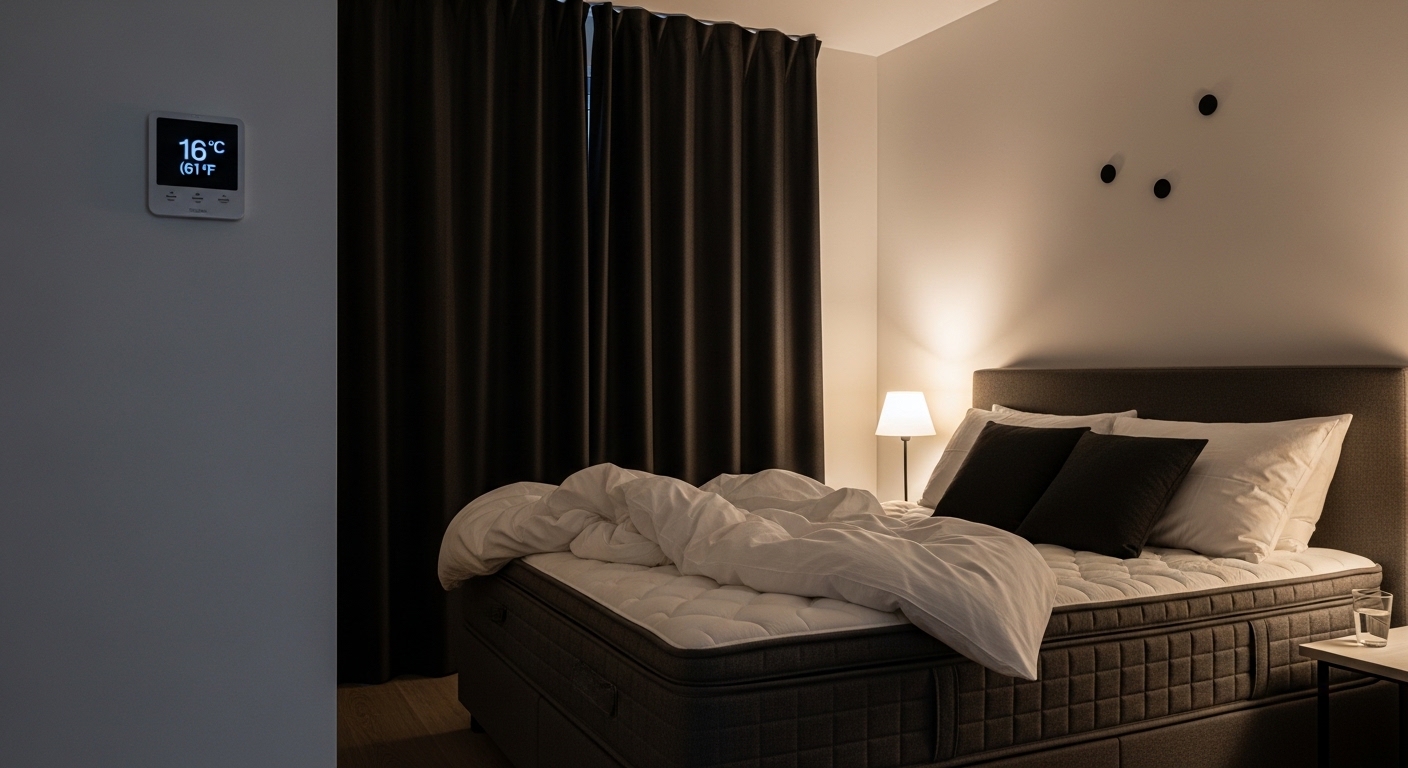
Start with temperature control to recover faster. Your core body temperature naturally drops during deep sleep. A room set between 60-67°F accelerates this process, helping you fall asleep faster and stay in deep sleep longer. Warm rooms fight against your biology, keeping you in lighter, less restorative sleep stages.
Next, eliminate all light sources completely. Even tiny amounts of ambient light suppress melatonin production and disrupt your circadian rhythm. Blackout curtains work best, but a quality sleep mask solves the problem if you can’t control your environment.
Now implement the 10-3-2-1-0 Protocol. This timing system removes the most common sleep disruptors:
- Ten hours before bed: cut all caffeine
- Three hours before bed: stop eating large meals
- Two hours before bed: finish work and stressful tasks
- One hour before bed: eliminate all screens and blue light
- Zero snoozes needed when you wake up refreshed
Finally, establish a consistent pre-sleep routine. Your brain needs a signal that it’s time to power down. Dim the lights sixty minutes before bed. Keep your bedtime consistent, even on weekends. Your circadian rhythm loves predictability.
Action step: Tonight, set your bedroom temperature to 65°F and move your phone to another room. Start your wind-down sequence at least one hour before you want to sleep. Notice how much faster you drift off.
Within one week, you’ll fall asleep quicker. Within three weeks, you’ll wake feeling genuinely refreshed. By week four, you’ll notice less soreness and more consistent energy throughout your day.
Also read our previous article
“How to Release Muscle Tension: 5 Rapid Ways to Feel Better.”
Hack 2: 4-7-8 Breathing for Nervous System Shutdown.
Your nervous system determines whether your body can actually recover or not. Most people finish training and stay locked in stress mode for hours, completely blocking the recovery process without realizing it.
Here’s what’s happening: your sympathetic nervous system activates during workouts, the fight-or-flight response that gives you energy and intensity. That’s perfect for training. The problem starts after you finish. This stress mode floods your body with cortisol, a catabolic hormone that literally breaks down muscle tissue.
Recovery requires the opposite: your parasympathetic nervous system, the rest-and-digest mode that triggers growth hormone release and tissue repair. Your body can’t build muscle while cortisol dominates. You need to actively switch modes.
Breathing is the fastest manual override you possess. The 4-7-8 technique specifically activates your vagus nerve, the major highway of your parasympathetic system. Master this pattern and you can shift from stress to recovery in under two minutes.
Here’s the exact protocol:
Empty your lungs completely. Inhale air slowly, controlled through your nose for one to four counts. Hold that breath for seven counts. Exhale forcefully through your mouth for eight counts, making a “whoosh” sound as air escapes. That’s one cycle. Complete at least four cycles to trigger the response.
The extended exhale is key, it’s longer than your inhale, which signals safety to your nervous system. Holding your breath increases carbon dioxide slightly, creating a calming effect. The rhythmic pattern itself tells your brain to stand down from high alert.
Use this protocol three times daily: immediately post-workout for five minutes, before bed to prepare for sleep, and anytime you feel stressed or anxious during the day.
Action step: Do four cycles of 4-7-8 breathing right now. Pay attention to what happens. Your heart rate slows noticeably. Tension releases from your shoulders. Your mind quiets. That’s your parasympathetic system activating.
Expect immediate results. You’ll feel calmer within seconds. Your sleep onset improves that same night. Within days, you’ll notice faster recovery and reduced muscle soreness because your body spends more time in actual repair mode.

Hack 3: Box Breathing for Muscle Tension Release.
While 4-7-8 breathing shuts down your nervous system, box breathing targets physical muscle tension directly. Different tool, different outcome, both essential for complete recovery.
Post-workout muscles hold residual tension even after you stop exercising. This tension restricts blood flow, and restricted blood flow means slower nutrient delivery and waste removal. You need active relaxation, not just passive rest.
Box breathing uses equal-length intervals to create a powerful relaxation rhythm. Inhale for four counts. Hold your lungs full for four counts. Exhale for four counts. Hold your lungs empty for four counts. Complete at least five full rounds, focusing on the targeted muscle groups you just trained.
The equal timing creates predictable rhythm, which your brain interprets as safety. The holds create pressure changes throughout your body that encourage muscle fibers to release their grip. This isn’t just mental, it’s mechanical tension relief.
Take this technique further with progressive muscle relaxation integration. During your inhale, intentionally tense your target muscle group. During the first hold, maintain that tension. During your exhale, release completely and let the muscle go slack. During the second hold, notice the difference between tension and relaxation. This conscious contrast teaches your body what true relaxation feels like.
Target specific areas based on your training: legs after squats or deadlifts, chest and shoulders after pressing movements, back muscles after pulling exercises.
Action step: After your next workout, spend five minutes doing box breathing while focusing on the muscles you just worked. Feel the tightness dissolve.
You’ll notice immediate effects, that heavy, tight feeling in your muscles reduces significantly. Within hours, stiffness decreases. The next day, your delayed onset muscle soreness will be noticeably less severe than usual.
Hack 4: The Five-Minute Mental Recovery Ritual.
Physical recovery gets all the attention. Mental recovery gets ignored, yet psychological fatigue kills physical performance just as effectively as muscle damage.
Your brain doesn’t distinguish between different stress sources. It processes work deadlines, relationship conflicts, and training intensity as the same threat. Each source dumps cortisol into your bloodstream. When mental stress compounds with training stress, your body drowns in stress hormones that actively block recovery.
You can sleep perfectly and eat flawlessly, but if your mind stays stressed, your body won’t heal. The mind-body connection isn’t metaphorical, it’s biochemical reality.

The Five-Minute Mental Reset Protocol addresses this directly.
Minutes one and two: gratitude journaling. Grab a notebook and write three specific things you appreciate about today’s training session. “Hit a new personal record on squats.” “Maintained perfect form throughout.” “Showed up despite feeling tired.” Research shows gratitude practice reduces cortisol by up to 23 percent. You’re literally lowering stress hormones through intentional appreciation.
Minutes three and four: visualization. Close your eyes and create a vivid mental picture of yourself fully recovered. See your muscles rebuilding. Feel energy returning to your body. Visualize waking up tomorrow feeling refreshed and strong. Your brain activates similar neural pathways during visualization as during actual recovery, priming your physiology for the outcome you imagine.
Minute five: intention setting. Write one clear intention for tomorrow’s training. Make it specific and positive. “During chest work, I’ll concentrate on the mind-muscle link. This gives your subconscious guidance for tomorrow while providing psychological closure for today.
Action step: Tonight after training, spend five minutes on this protocol. Keep a dedicated recovery journal by your gym bag so you never skip it.
The mental clarity hits immediately. Emotional calm follows within minutes. Within days, your sleep quality improves as your mind stops racing. Within weeks, your overall recovery accelerates noticeably because you’ve eliminated the hidden tax of chronic mental stress.
Lets have a deep dive into our “Strength & recovery” category articles.
Recover Faster with the Complete Stack Protocol.
Individual hacks deliver solid results. The complete stacking protocol delivers transformational results. This is where everything multiplies.
You’ve learned the individual tools. Now build them into two integrated sequences that turn your body into a recovery machine.
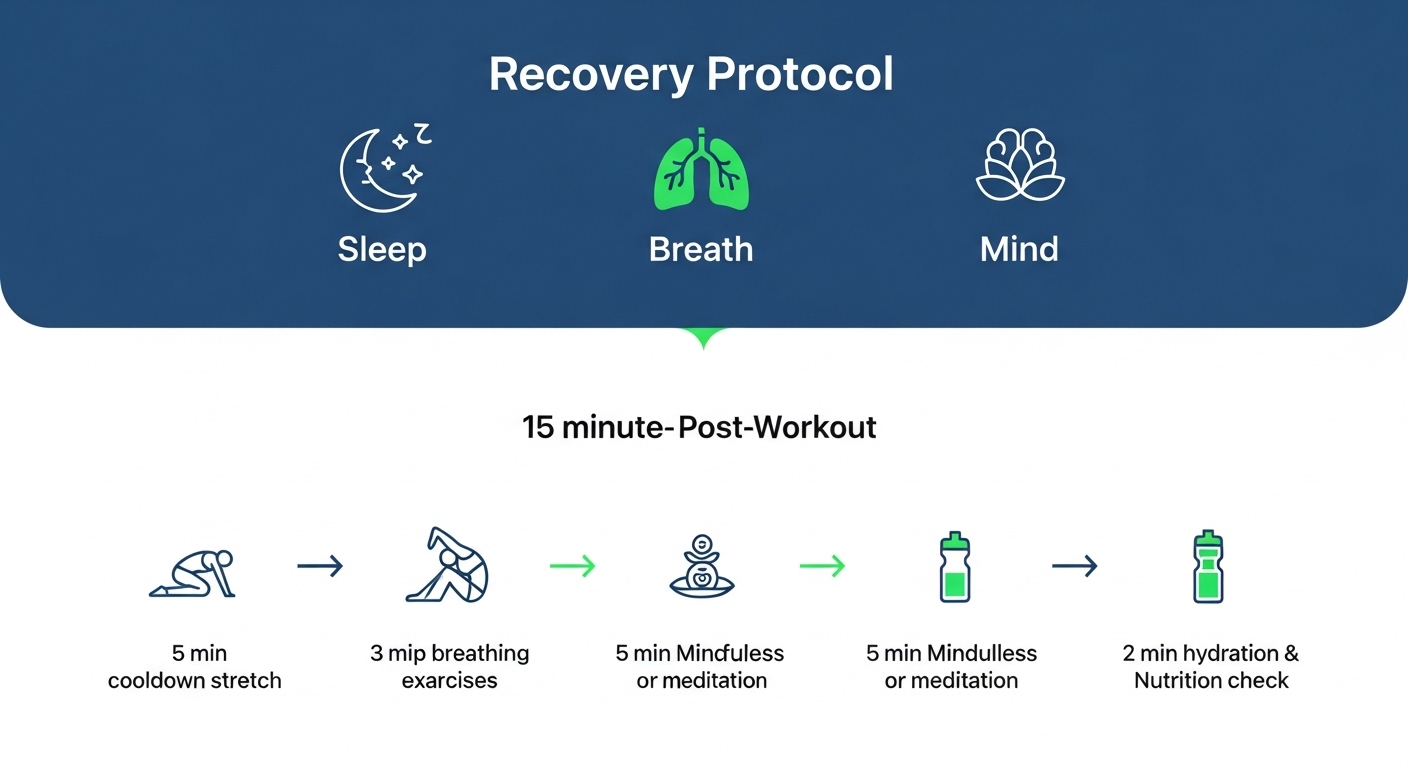
Post-Workout Recovery Stack (15 minutes total):
Start immediately after your last set. Minutes zero through five, perform box breathing targeting the muscles you just trained. Five full rounds minimum. This releases physical tension and begins shifting you out of stress mode.
Minutes five through ten represent your nutrition window. Drink 16-24 ounces of water to begin rehydration. Consume 20-30 grams of protein. If you completed a particularly intense session, add simple carbohydrates. This timing matters, your muscles are primed to absorb nutrients in the first thirty minutes post-workout.
Minutes ten through fifteen, execute four cycles of 4-7-8 breathing. This completes your nervous system transition from sympathetic to parasympathetic dominance. You’ve now activated full recovery mode, and your body will maintain this state for hours.
Pre-Sleep Recovery Stack (20 minutes total):
Begin twenty minutes before your target bedtime. Minutes zero through five, complete your mental reset ritual. Gratitude, visualization, intention. This clears psychological stress and prevents your mind from racing when you lie down.
Minutes five through fifteen form your wind-down routine. Dim all lights in your space. Verify your bedroom temperature is set to 65°F. Remove all devices from the room. Engage in light reading or gentle stretching, activities that signal rest rather than stimulation.
Minutes fifteen through twenty, perform 4-7-8 breathing cycles continuously until you feel sleep approaching. Don’t count cycles, just breathe until your eyelids get heavy. This technique works as a direct sleep initiation tool while deepening your sleep quality throughout the night.
Progressive Implementation:
Week one, commit to just the post-workout stack. Make it automatic after every training session. Week two, add the pre-sleep stack on training days only. Week three and beyond, run both protocols daily, even on rest days. Recovery is continuous, not just a training-day activity.
Action step: Screenshot these protocols now. Set a phone reminder for immediately post-workout. Execute the stack tonight and track how you feel tomorrow morning.
Expect noticeable soreness reduction within one week. By weeks two and three, you’ll return to training readiness much faster than before. After four weeks, you’ll have established a new baseline, you simply recover faster than you used to, consistently and predictably.
What Sabotages Your Recovery (Avoid These Mistakes).
Even perfect protocols fail if you’re actively sabotaging yourself. Eliminate these recovery killers immediately.
Alcohol within three hours of sleep ruins everything. Even a single drink disrupts REM sleep cycles, dehydrates your tissues, and blocks growth hormone release. If you drink, finish at least four hours before bed.
Late-night high-intensity cardio spikes cortisol right when your body should be winding down. The nervous system stays activated, making quality sleep nearly impossible. Schedule intense work for earlier in the day, keeping evenings for recovery protocols.
Doom scrolling before bed combines blue light exposure with psychological stress. Both suppress melatonin and elevate cortisol. Your phone is a recovery killer. Remove it from your bedroom completely.
Skipping scheduled recovery days triggers the overtraining paradox. More training doesn’t equal more results when you exceed your recovery capacity. Take at least one full recovery day weekly, implementing your protocols without any training stimulus.
Ignoring non-training stress compounds your physiological burden. Work pressure, relationship conflicts, and financial anxiety all dump the same stress hormones into your system. Your body counts total stress load, not just training stress. Use these protocols especially hard during high-stress life periods.
How Long Does It Actually Take to Recover Faster?
Set realistic expectations based on workout intensity. Light sessions require roughly 24 hours for complete recovery, you’ll feel minimal soreness and energy returns to normal quickly. Moderate workouts need about 48 hours, expect some stiffness but nothing debilitating. Intense or heavy training sessions demand 72 hours minimum, with delayed onset muscle soreness typically peaking on day two before improving on day three.
These recovery protocols reduce those timelines by 30-40 percent when implemented consistently. Your 72-hour recovery window can shrink to 48 hours. Your 48-hour window might compress to 36 hours. The exact reduction depends on your individual factors: age, training experience, nutrition quality, and baseline stress levels.
You’ll know you’ve fully recovered when these signs appear: zero muscle soreness, energy feels normal or elevated, mood remains stable, sleep quality stays high, and motivation to train returns naturally. Don’t ignore these signals. Your body speaks clearly if you listen.
Individual variation matters enormously. These protocols accelerate your personal baseline, whatever that happens to be. Trust your body’s feedback more than arbitrary timelines.
Your Recovery Transformation Starts Tonight.
Recovery is where gains actually happen. Training provides the stimulus. Recovery delivers the adaptation. You’ve been focusing on the wrong half of the equation.
The Recovery Stacking System sleep optimization, strategic breathing, and mental reset protocols to recover faster, gives you complete control over the recovery process. These aren’t random tips to try someday. They’re integrated protocols designed to work together, amplifying each other’s effects.
You don’t need to implement everything simultaneously. Start with one hack tonight. Most impactful for immediate results? The 4-7-8 breathing protocol before sleep. Do four cycles and feel the shift happen in real-time.
Your body already wants to recover. It’s built for adaptation and growth. You’ve just been leaving barriers in place that block the natural process. Remove those barriers with these five hacks, and watch your recovery speed transform.
Your next workout is waiting. Your body is ready to recover faster than ever before. Give it the tools tonight, and tomorrow you’ll understand the difference between training hard and training smart.
The gains you’ve been chasing are already inside you. Recovery unlocks them. Start stacking.
TOP 15 FAQ
-
How to recover more quickly?
Stack quality sleep, 4-7-8 breathing, post-workout box breathing, and a 5-minute mental reset to switch fully into repair mode.
-
What helps you recover quicker?
Deep sleep, nervous system shutdown breathing, hydration, protein timing, and reducing mental stress accelerate recovery.
-
How to recover extremely fast?
Shift from stress mode to rest mode immediately after training using breathing plus sleep optimization.
-
How to fast up recovery?
Use the 15-minute post-workout stack: box breathing, hydration + protein, then 4-7-8 breathing.
-
How to recover faster as a runner
Prioritize parasympathetic breathing post-run, optimize sleep temperature, and clear mental stress before bed.
-
Does chest or back recover faster
Recovery speed depends more on intensity and nervous system stress than muscle group.
-
Do smaller muscles recover faster
Generally yes, but only if total stress load is low and sleep quality is high.
-
Do quads recover faster than hamstrings
Not always. Heavier load and volume determine recovery time more than muscle type.
-
Do shoulders recover faster than other muscles
They may feel quicker, but joint stress and overuse can delay full recovery.
-
What muscle recovers the slowest
Large muscle groups trained with high intensity typically require the longest recovery window.
-
Do smaller muscles recover faster than bigger muscles
Often yes, because they experience less total structural damage during training.
-
Does upper body recover faster than lower body
Lower body sessions usually demand longer recovery due to greater systemic stress.
-
Why do I stay sore for days after workouts?
You’re staying in stress mode. Without switching to parasympathetic recovery, repair slows down.
-
How long does it take to fully recover?
Light training: 24h. Moderate: 48h. Heavy sessions: up to 72h without stacking protocols.
-
What blocks muscle recovery the most?
Poor sleep, alcohol, late-night cardio, stress overload, and skipping recovery days sabotage repair.