How long for muscle to recover? Most muscles need 24 to 72 hours. Learn the 7 stages behind that range and a simple check for when to train again.
Table of Contents
How long for muscle to recover is the question you ask when your legs feel like wet cement on the stairs. The short answer is that most muscles need about 24 to 72 hours before they can handle hard work again. Sessions that are really harmful can extend it to four or five days.
Imagine a hotel manager who spends Monday mornings squatting a lot. On Tuesday he spends twelve hours on his feet through a checkout rush, and every staircase hurts. This is a hypothetical, but his question is real: is he recovered, or just busy?
How long for muscle to recover is the time between a hard training session and the point where that muscle performs at its normal level again. It is not one fixed number. It depends on how damaging the session was, how well you eat and sleep, and how much other stress you carry.
KEY TAKEAWAYS.
- How long for muscle to recover usually lands between 24 and 72 hours, and very damaging work can need several more days.
- Muscle protein building rises within hours and, in classic lab studies, stayed elevated for roughly one to two days.
- Soreness is a weak clock. It can fade before strength returns.
- Recovery has seven overlapping stages, and each one runs on its own timeline.
- Sleep, total protein, enough food, and life stress change your timeline more than any gadget.
- Check three things before training again: soreness, performance, and mental drive.
- Training too early usually costs you quality in the next session.
How Much Time Does Muscle Take to Recuperate? The Brief Response.
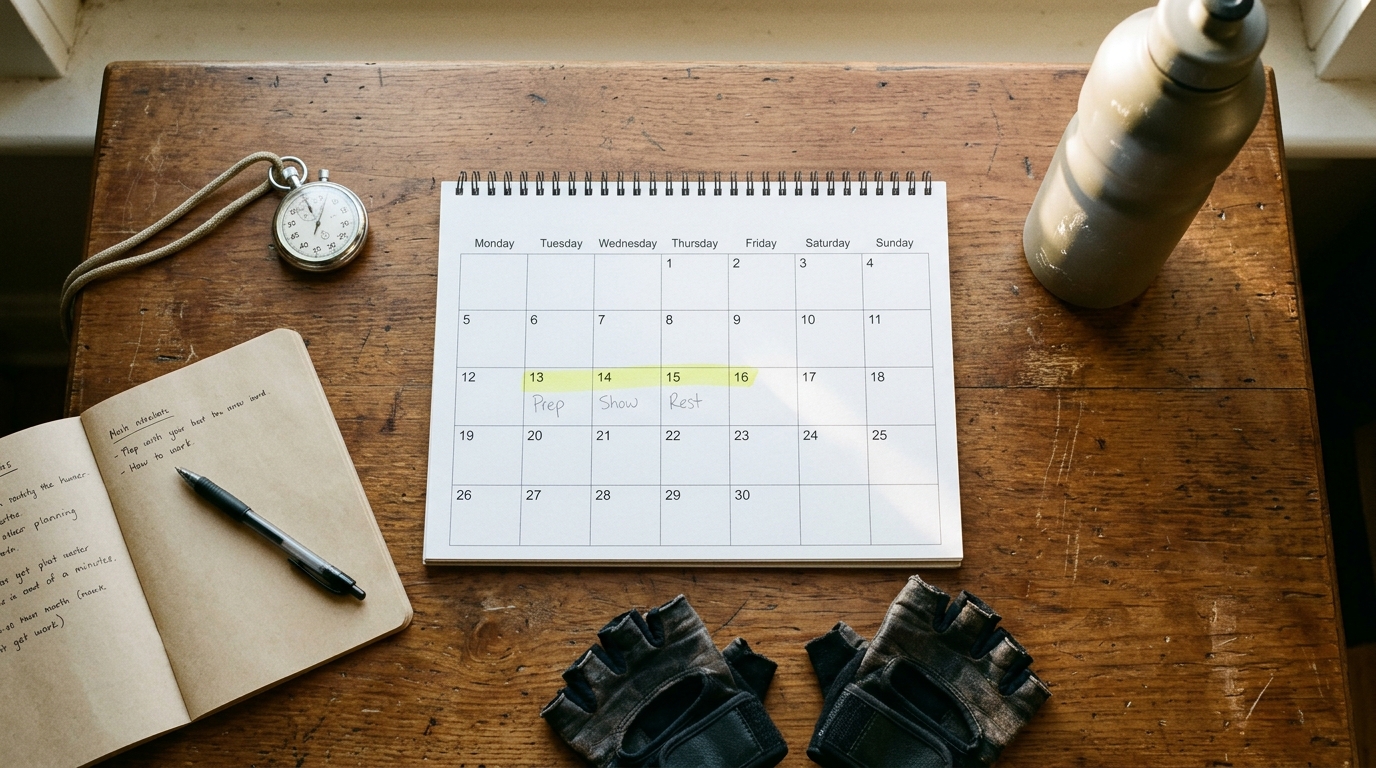
For most people, the answer is 24 to 72 hours for the same muscle after a hard session. Easier sessions sit near the low end. New or very damaging sessions sit near the high end.
Quick Comparison.
These are rough planning ranges from my own synthesis, not lab values.
| Session type | Typical wait for the same muscle | Main reason |
|---|---|---|
| Moderate lifting, well below your limit | 24 to 48 hours | Little fiber damage, fast fuel refill |
| Hard sets near failure on familiar lifts | 48 to 72 hours | More damage, longer protein building |
| New exercise or slow lowering work | 3 to 5 days | Highest damage, strongest soreness |
| Long endurance session, especially downhill | 2 to 5 days | Fuel loss plus repeated impact |
How Long for Muscle to Recover? The 7 Stages From Training to Adaptation.
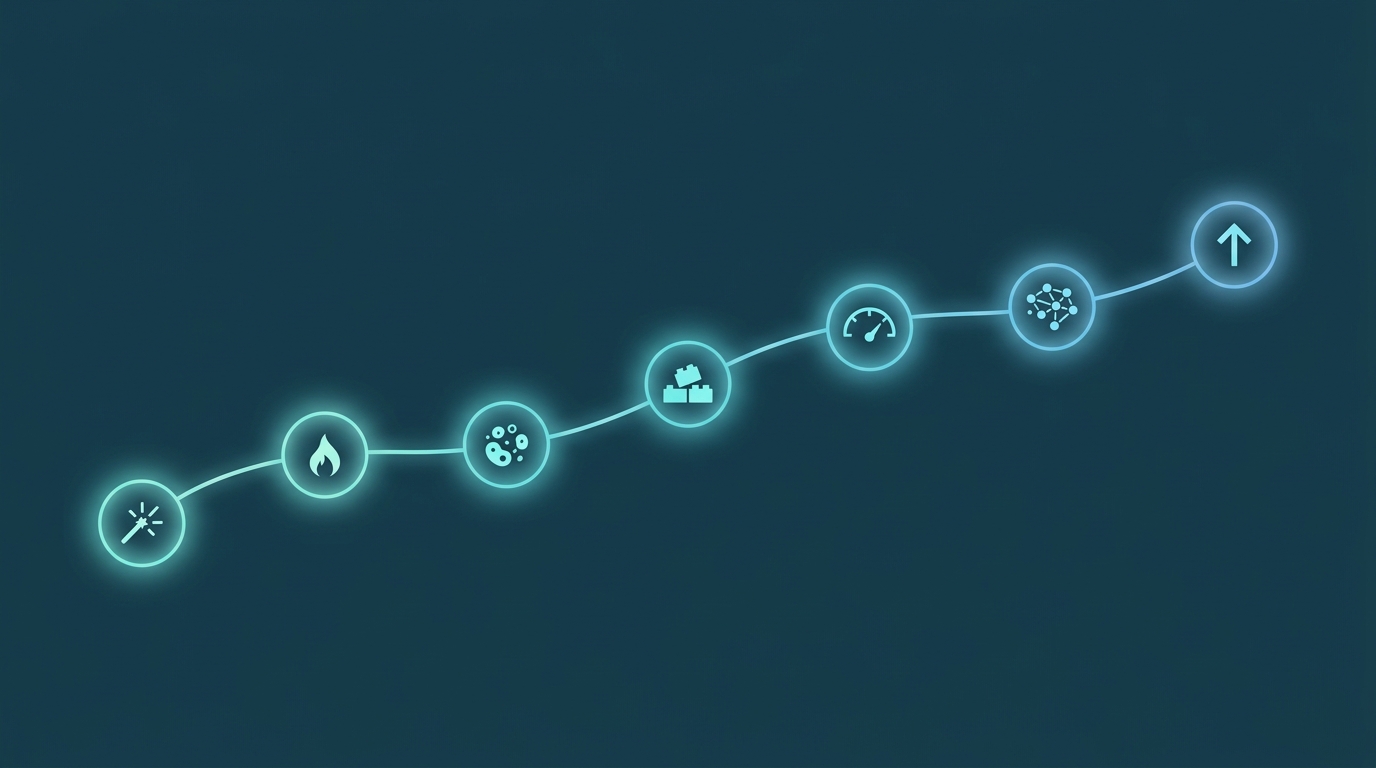
Muscle recovery time is not a single occurrence. It is seven processes that overlap, and this seven-stage split is my simplified way to explain it, not a scientific standard. Here is what happens and roughly when.
Stage 1: Load and Micro Damage (0 hours).
Hard training strains muscle fibers, especially when you lower a weight slowly. Some fibers are disrupted at a microscopic level. That disruption is part of the training signal. Slow lowering phases are one reason exercise selection and technique can change how demanding a session feels. Learn more about eccentric training techniques for strength gains and how to use controlled repetitions in your workouts.
Stage 2: Inflammation and Cleanup (hours to about 3 days).
Immune cells arrive to clear damaged material and send repair signals. Soreness frequently manifests the next day. It usually peaks between one and three days and fades within about a week.
Stage 3: Repair Signals (first days).
Satellite cells are resting repair cells that sit beside muscle fibers. After hard training they wake up and help repair fibers and support growth. This stage is slower and harder to feel.
Stage 4: Protein Building (about 1 to 2 days).
Your body builds new muscle protein faster after hard lifting. In a 1995 study, six young men did 12 hard sets for one arm. Protein building was up about 50% at 4 hours, about 109% at 24 hours, and near baseline by 36 hours (MacDougall et al., Canadian Journal of Applied Physiology).
A 1997 study of eight volunteers, studied fasted, found a slower fade. Protein building was up 112% at 3 hours, 65% at 24 hours, and 34% at 48 hours (Phillips et al., American Journal of Physiology). The two studies differ, which tells me the window depends on the person and the session.
Stage 5: Fuel Refill (about a day).
Your muscles store carbohydrate as glycogen, and hard sessions drain it. With enough carbohydrate, refilling often takes around a day, though damaging work can slow it. Eating enough total food matters more than one perfect meal.
Stage 6: Nervous System Reset (1 to 3 days).
Your brain and nerves also work hard in a heavy session. Many lifters feel flat or clumsy for a day or two even when soreness is gone. The research here is less clean than for the other stages, so I treat it as experience, not settled fact.
Stage 7: Adaptation (weeks).
Over repeated cycles, muscle becomes more capable of handling the same load. Some writers call the rebound above your old baseline supercompensation. Real progress is usually gradual, so do not expect one clean peak after every session.
What Affects Muscle Recovery Duration ?
Five things move how long for muscle to recover more than anything else. Each one is something you can influence.
- Session damage: Slow lowering phases and new exercises cause more damage than familiar work.
- Training history: After you repeat an exercise, the same session usually causes less damage and soreness. We refer to this as the “repeated bout effect”.
- Sleep: Short sleep is linked with worse recovery and performance, though no single number works for everyone.
For practical ways to make sleep habits more consistent, explore these sleep mindset strategies for better recovery and endurance. - Food: Protein spread across the day and enough total calories support Stage 4 and Stage 5.
- Life stress: Long work days and mental pressure compete for the same recovery budget. This is my interpretation, not a proven formula.
If work pressure makes it difficult to switch off, these breathing techniques for focus offer practical exercises for approaching stressful moments more deliberately.
Some pages publish neat age brackets with exact hours for each decade. I treat those as rough guesses, because the gap between individuals in one age group is large.
There is also a counterpoint. Many lifters shorten how long it takes for muscle to recover by training a muscle more often with fewer hard sets per session, which lowers the damage of each workout.
On days when you want to keep moving without adding another demanding session, explore these active recovery workout strategies for practical ways to make lighter movement part of your routine.
How Long for Muscle to Recover: Why Soreness Is a Poor Clock
When you ask how long for muscle to recover, soreness feels like the obvious answer, but it only tells you that damage and inflammation happened. It does not tell you that your strength is back. After damaging exercise, strength can stay lower than normal even after soreness fades.
Think of a hotel room after a guest checks out. The bed looks fine by noon, but the room is not ready until housekeeping resets it and someone inspects it. Soreness is the unmade bed, while strength and mental drive are the inspection.

The real problem is hesitation. You feel fine, so you push, then your first working set feels heavy and you lose the day. You can stop speculating and find a technique to test when you cease seeing discomfort as a sign of good health.
Recovery involves more than waiting for soreness to fade. Explore these mindful recovery strategies for a broader look at how to approach rest and recovery more intentionally.
The Readiness Gate Check: How Long Does Muscle Take to Recuperate?
The Readiness Gate Check is my original three step test for deciding whether to train a muscle again. It is LiveOptimum interpretation, not research. It works because soreness, performance, and mental drive each measure a different part of recovery, and any one alone can mislead you.
- Soreness gate: Move the muscle through its full range with no load. A dull ache is fine. Sharp or pinching pain is a stop sign.
- Performance gate: Do your first warm up sets at your normal weight. If the bar speed and feel match your usual, the gate is open.
- Mind gate: Ask whether you slept reasonably and want to train. Instead of skipping if you’re afraid of it, turn down the volume.
If two of three gates are open, train with fewer hard sets. If only one is open, take another day.
Common Mistakes People Make When Judging How Long for Muscle to Recover.
Mistake: Using soreness as the only signal.
Fix: Add a performance check with your first warm up sets.
Mistake: Copying a fixed 48 hour rule for every session.
Fix: Match the wait to the session type in the table above.
Mistake: Chasing one perfect post workout shake.
Fix: Spread protein across the whole day, since protein building stays elevated for more than a few hours.
Mistake: Ignoring stress outside the gym.
Fix: Cut hard sets by about a third in weeks when work and sleep are rough.
FINAL SUMMARY.
- The answer to how long for muscle to recover is a planning default of 24 to 72 hours, not a promise.
- The seven stages overlap, so no single stage tells you that you are ready.
- Protein building and fuel refill finish sooner than full adaptation does.
- Soreness is evidence of damage, not proof of readiness.
- Session type, sleep, food, and stress shift your personal timeline.
- Three gates give you a better decision than one feeling.
Next time you wonder how long for muscle to recover, do not ask whether you are sore. Ask which gates are open. Your honest answer is usually faster and cheaper than any recovery gadget.
Written by Bippy (Md. Rishad Hasan Bippy), founder of liveoptimum.com and writing on physical and mental performance development through personal experience.
Top 15 FAQ’s
What are signs of poor muscle recovery?
Persistent soreness, reduced strength, unusually heavy warm-up sets, low training drive, and poor performance can indicate that you need more recovery time.
What is the 3-3-3 rule gym?
Your article does not define a standard 3-3-3 gym rule. Instead, it recommends checking soreness, performance, and mental drive before training again.
What kills muscle gains the most?
Repeatedly training without enough recovery can undermine performance. Insufficient sleep, inadequate food, excessive session damage, and ongoing life stress can also hinder progress.
What helps muscles recover faster?
Get enough sleep and total calories, spread protein across the day, replenish fuel with carbohydrates, and adjust training volume to match your recovery.
How long for muscle to recover from exercise
Most muscles need about 24–72 hours after hard exercise. New exercises or highly damaging sessions may require 3–5 days.
How long for muscle to recover after exercise
Allow roughly 24–72 hours after a hard workout, then assess soreness, warm-up performance, and mental drive instead of relying on time alone.
How long for muscle to recover reddit
Your article gives a general range of 24–72 hours, but recovery varies with workout intensity, training history, sleep, food, and life stress.
How long for muscle to recover female
The article suggests 24–72 hours as a general planning range. Individual recovery depends on workout demands, training history, sleep, nutrition, and other factors.
How long do shoulders take to recover from workout
Shoulders often need around 24–72 hours after hard training, but demanding or unfamiliar exercises may require longer. Check performance before training them hard again.
How to speed up muscle strain recovery
Your article focuses on post-workout recovery, not treatment for muscle strains. If you suspect an injury, avoid pushing through sharp pain and seek appropriate medical advice.
How long does it take for muscles to heal after injury
Your article addresses exercise recovery, not injury-healing timelines. Recovery from an injury depends on its severity and type, so seek professional assessment for significant pain or weakness.
How long does it take for muscles to repair after workout
Repair begins within hours. Muscle protein building can remain elevated for roughly 1–2 days, while full performance recovery commonly takes 24–72 hours.
Can muscles recover in 24 hours?
Yes, after some moderate sessions. Hard sets near failure may need 48–72 hours, while unfamiliar or highly damaging workouts can require 3–5 days.
Is soreness a reliable sign that muscles have recovered?
No. Soreness can fade before strength returns. Check your range of motion, normal warm-up performance, and mental drive before training hard again.
How do I know when to train the same muscle again?
Use the Readiness Gate Check: assess soreness, warm-up performance, and mental drive. If only one of the three checks passes, take another day.