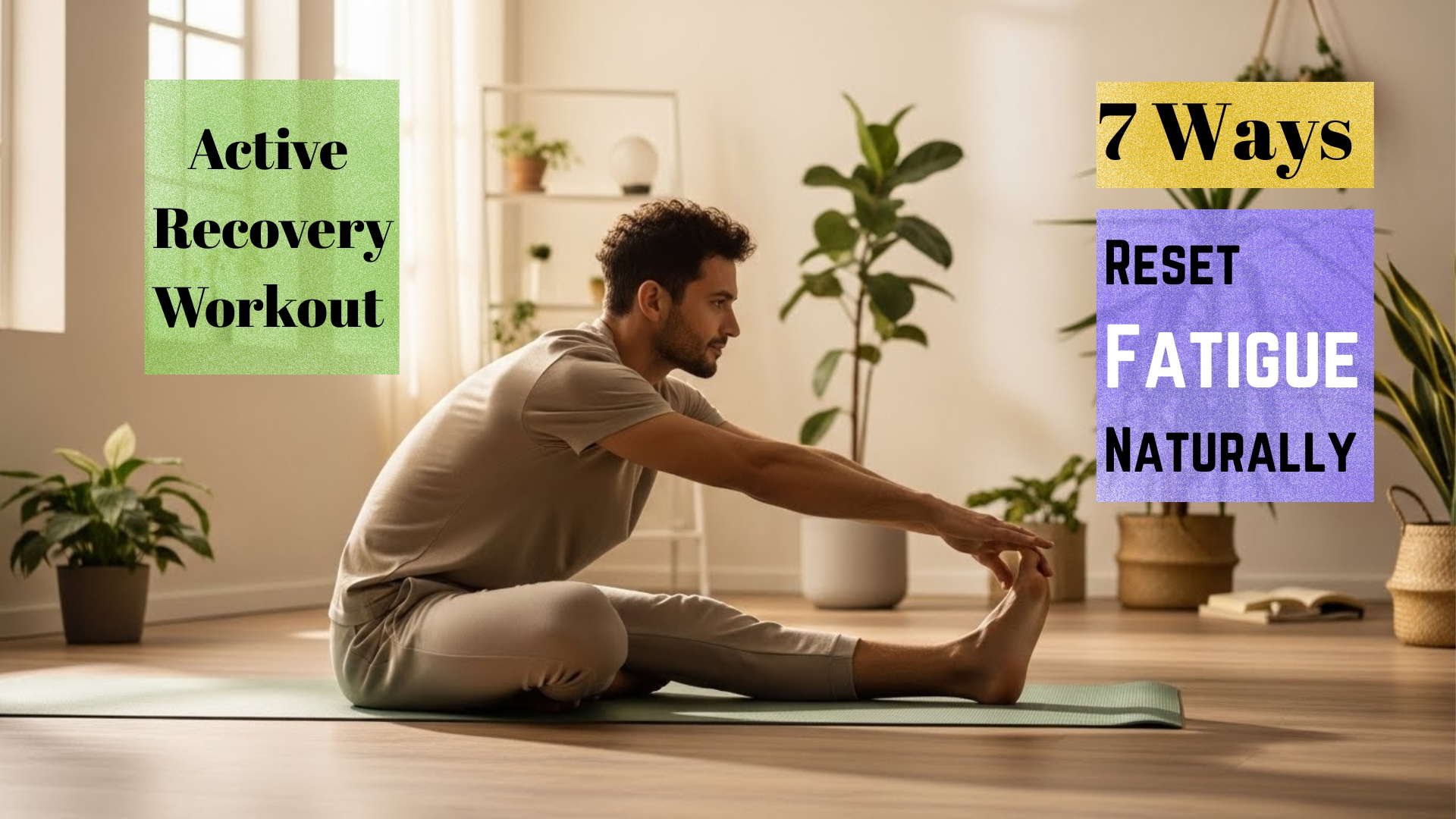
Active recovery workout strategies reset fatigue, speed muscle repair, and turn rest days into performance boosting rituals with mindful movement techniques.
Table of Contents
Introduction.
I used to think rest days meant lying on the couch feeling guilty. My muscles stayed tight, my mind stayed wired, and I returned to training feeling worse. Then I learned something that shifted everything: rest is not about doing nothing, it is about doing the right things intentionally.
An active recovery workout is not another training session disguised as rest. It is a deliberate protocol that helps your nervous system downshift, your muscles flush metabolic waste, and your mind detach from performance pressure. You will learn seven strategic methods that make rest days feel purposeful and restorative to your training progress.
Why Traditional Rest Days Fail Most Athletes ?
Traditional rest often fails because it ignores the nervous system’s need for active engagement. When you go from intense training to complete stillness, your body does not know how to release tension. Blood flow drops, metabolic byproducts linger, and mental stress continues cycling.
After hard lifting sessions, I would take a full day off thinking I was doing the right thing. But my shoulders stayed knotted, my lower back felt compressed, and sleep was restless. The problem was not that I rested, it was that I rested passively. My body needed movement, just not the kind that creates more stress.
An active recovery workout bridges the gap between effort and stillness. Light movement increases circulation without taxing your system, helping oxygen reach fatigued tissues while clearing lactate and inflammatory markers. Gentle mobility signals to your nervous system that it is safe to relax, shifting you from sympathetic overdrive into parasympathetic restoration.
Think of your body like a river after a storm. If water stops moving entirely, debris settles and clogs flow. But if it keeps moving gently, everything clears naturally. That is what happens during an active recovery workout session.
Proven Approach Questions:
- When was the last time you felt truly restored after a rest day?
- Do you hold tension even when you are not training?
- What would change if rest days made you feel lighter instead of guilty?
Also read Breath Pacing exercises: 7 Surprisingly Calm Ways to Gain Energy.
The Mind Body Reset Through Nervous System Awareness.
An effective active recovery workout begins with nervous system regulation, not physical movement. Your sympathetic nervous system drives performance. Your parasympathetic system drives recovery. Most athletes live with the accelerator pressed down even on rest days because they never consciously engage the brake.
I learned this after months of feeling wired but exhausted. My heart rate stayed elevated even when I was not training. I would lie in bed replaying workouts, unable to turn off the performance drive. My body was screaming for recovery, but my nervous system did not know how to access it.
The breakthrough came when I started every active recovery workout day with five minutes of intentional breathwork. Slow controlled exhales that lasted longer than my inhales. This pattern activates your vagus nerve. Within minutes, my heart rate would drop and I would feel a shift from striving to settling.
Before any movement, check in with your nervous system. Is your breathing shallow? Is your jaw clenched? Are your shoulders near your ears? These are signs your system is still in performance mode. Use breath as your first tool. Four counts in through your nose, six counts out through your mouth, repeated for three to five minutes.
Proven Approach Questions:
- Can you identify when your body is stuck in go mode?
- What physical sensations tell you that you are holding stress?
- How often do you use breathwork as a recovery tool?
Strategic Movement One: Low Intensity Walking With Breath Pacing.

Low intensity walking combined with breath pacing is the most accessible active recovery workout for full body circulation and mental clarity. Walk at a pace where conversation feels easy, around 50 to 60 percent of your max heart rate, and sync your breath to your steps.
This is not your typical walk where you are listening to a podcast. This is a moving meditation where your only job is to match breath to movement. I do this for 20 to 30 minutes on my hardest recovery days. The rhythm of steps and breath creates a feedback loop that calms everything down.
Walking at this intensity increases blood flow to your legs, hips, and lower back without creating muscular fatigue. The breath pacing ensures you stay in an aerobic zone that promotes recovery rather than stress. Your heart rate stays low, cortisol does not spike, and your mitochondria get gentle stimulus for adaptation without depletion.
When I walk with breath awareness, my thoughts slow down. The constant mental chatter about training splits and performance metrics fades. That mental reset is as valuable as the physical recovery during your active recovery workout.
Proven Approach Questions:
- When you walk, do you stay mentally present?
- Can you slow down enough to match breath to movement?
- What changes when you walk without a performance goal?
Strategic Movement Two: Joint Mobility Flows for Tension Release.
Joint mobility flows target areas where tension accumulates from repetitive training patterns. These controlled circular movements restore range of motion in shoulders, hips, spine, and ankles. This active recovery workout approach uses dynamic explorations of your body’s natural movement capacity.
I spend 10 to 15 minutes each recovery day moving through gentle circles. Shoulder rolls, hip circles, spinal rotations, ankle rotations. No force, no pushing into pain. The first few circles always feel sticky. By the fifth or sixth rotation, something releases.
This type of active recovery workout increases synovial fluid production, the lubricant that keeps your joints healthy and pain free. When you train hard, your body prioritizes force production over mobility maintenance. Recovery days are when you reverse that priority.
What surprises most people is how emotional this work can be. When I first started dedicating time to slow joint mobility, I would occasionally feel tears surface. Not from pain, but from release. Your body stores stress in these areas, and when you finally give them permission to move freely, old tension shifts emotionally too.
Proven Approach Questions:
- Which joints feel most restricted in your body right now?
- When was the last time you moved without a performance goal?
- Do you notice emotional shifts when you release physical tension?
Strategic Movement Three: Restorative Yoga With Body Scanning.
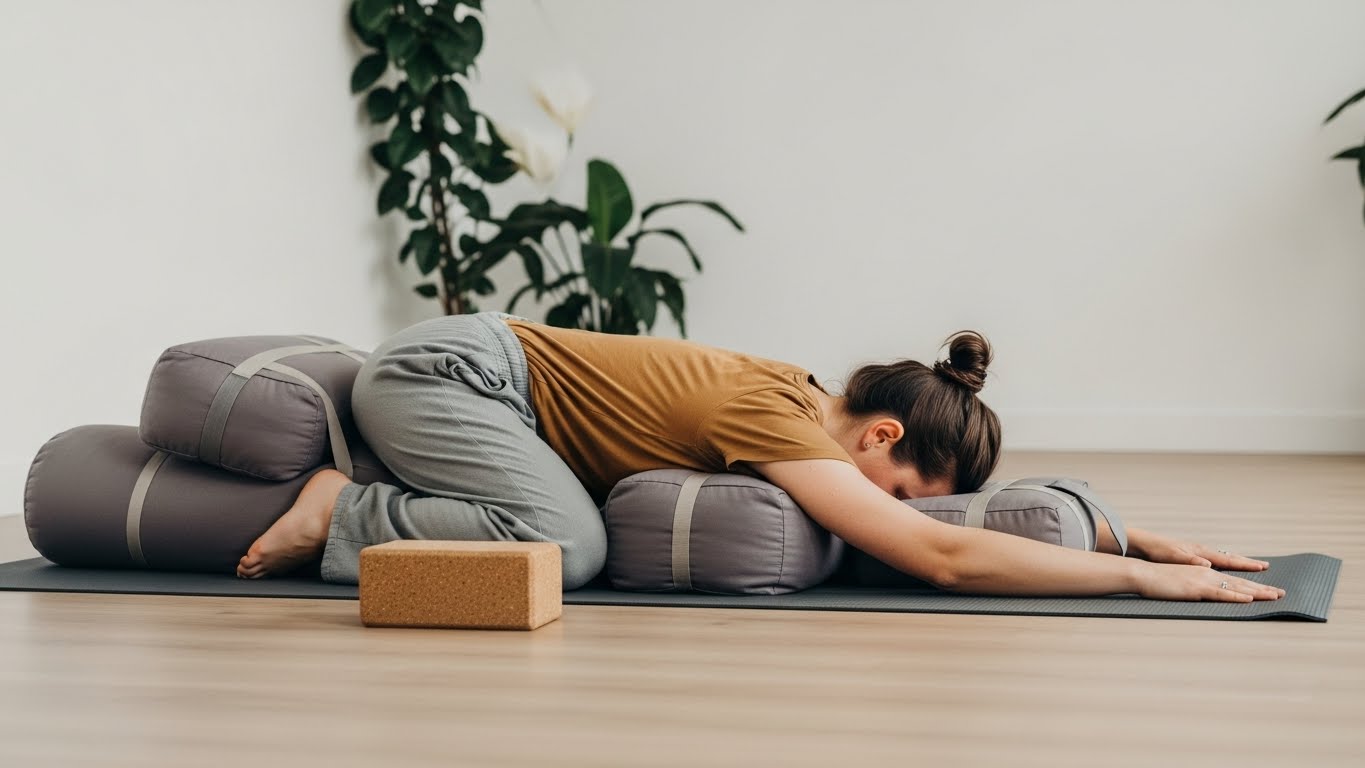
Restorative yoga combined with body scanning trains you to notice subtle tension patterns and release them consciously. Unlike power yoga, this active recovery workout uses supported poses held for 3 to 5 minutes, allowing your nervous system to fully relax into each position.
I use child’s pose, supported bridge, and legs up the wall as my core restorative sequence. Where can I soften? The first scan always reveals areas I did not know were tight. The second scan reveals layers underneath.
This practice teaches you the difference between relaxation and release. Relaxation is surface level. Release is deeper. Your nervous system permits true letting go. That only happens when you hold a position long enough for your body to trust it is safe.
The body scanning component turns passive stretching into active awareness training during your active recovery workout sessions. Over time, this awareness transfers to training. You start recognizing tension earlier, before it becomes pain.
Proven Approach Questions:
- Can you identify where your body holds the most tension?
- How long can you stay still before discomfort takes over?
- Do you listen to your body’s signals or override them?
For more deep insight about Mindset Development articles…. click here.
Strategic Movement Four: Contrast Therapy With Intentional Stillness.

Contrast therapy alternates between heat and cold exposure to stimulate circulation and reduce inflammation. This active recovery workout protocol resets your autonomic nervous system through temperature variation. Spend 3 to 4 minutes in warmth, then 1 to 2 minutes in cold, repeated for 3 to 4 cycles.
I was skeptical until I experienced it during a brutal training block where my legs felt like concrete. After just one contrast session alternating between hot and cold water, the heaviness lifted. My muscles felt responsive again.
Heat dilates blood vessels and increases flow to tissues. Cold constricts them and triggers an anti inflammatory response. The alternation creates a pumping effect that flushes metabolic waste more effectively than rest alone.
The stillness between hot and cold is where integration happens during your active recovery workout routine. Stand for 30 seconds in neutral temperature and notice what shifts. This pause teaches you to recognize what recovery actually feels like in real time.
Proven Approach Questions:
- How comfortable are you with physical discomfort when it serves recovery?
- Do you rush through recovery protocols?
- What sensations tell you that your body is actually recovering?
Strategic Movement Five: Swimming or Water Based Movement.
Swimming or water based movement provides an active recovery workout that eliminates impact stress while offering gentle resistance. The buoyancy of water unloads your joints and spine, allowing movement patterns that would feel painful on land to become fluid.
I swim slow laps or walk in chest deep water for 20 to 30 minutes on my deepest recovery days. No intervals, no pace targets. The water pressure creates a natural compression effect that helps move lymphatic fluid and reduces swelling in fatigued tissues.
Water based recovery is uniquely effective because of sensory feedback. Water resistance provides constant gentle input to your nervous system without harsh impact. Your proprioception gets recalibrated in a low threat environment during each active recovery workout in water.
Water has a meditative quality that is hard to replicate elsewhere. The sound dampens, your breathing becomes more conscious, and the sensation of floating creates a rare feeling of weightlessness.
Proven Approach Questions:
- When was the last time you moved without feeling gravity on your joints?
- Do you have access to water based recovery options?
- How does your body feel different in water?
Strategic Movement Six: Fascial Release With Slow Roller Work.
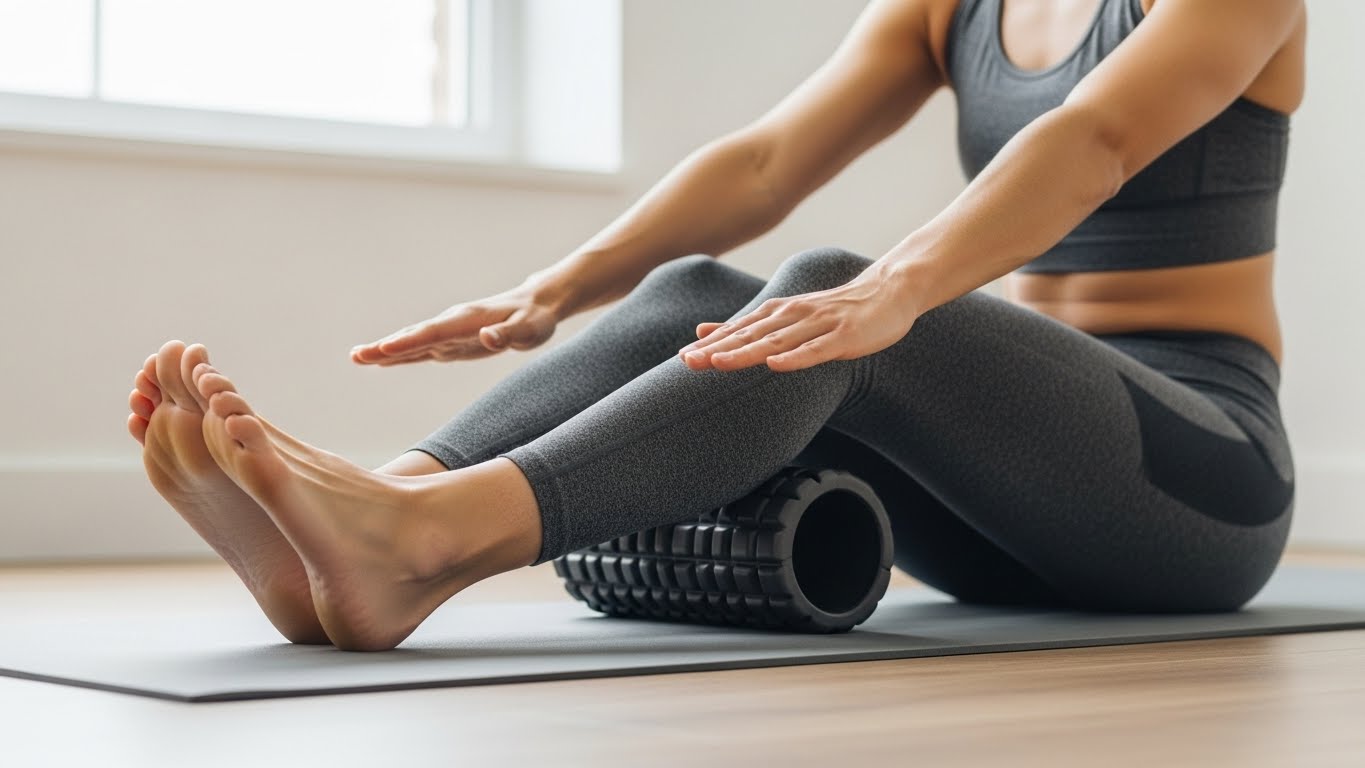
Fascial release using foam rollers targets the connective tissue network that wraps your muscles. This active recovery workout method restores tissue quality and releases adhesions that limit movement. The key is moving slowly, no more than one inch per second, pausing on tender spots for 30 to 60 seconds.
Most people roll too fast, treating it like another exercise to check off. I used to do the same thing. Rapid passes over my quads, wincing through pain. But that approach misses the point. Fast rolling activates your nervous system’s threat response.
When I slowed down and started pausing on restrictions, everything changed. I would find a knot, stop there, and breathe for a full minute. The first 20 seconds were uncomfortable. By the final 20 seconds, the tissue would start to soften.
This active recovery workout approach teaches you the landscape of your own tension. You start recognizing patterns. The more you explore with slow roller work, the better you become at preventing injury.
Proven Approach Questions:
- Do you rush through fascial release?
- Can you identify your most common areas of restriction?
- How would your movement quality improve with regular release work?
Strategic Movement Seven: Mindful Stretching With Breath Integration.
Mindful stretching with breath integration combines gentle static holds with conscious breathing to release muscular tension. This active recovery workout technique uses 60 to 90 second holds, using your exhale to deepen the position gradually rather than forcing range.
I dedicate 15 to 20 minutes before bed on recovery days to stretch my hamstrings, hip flexors, chest, and shoulders. The difference between mindful stretching and regular stretching is attention. I am not watching TV. I am feeling the edge of resistance, breathing into it, noticing when it softens.
The breath transforms stretching from mechanical to therapeutic during your active recovery workout practice. When you inhale, your muscles naturally contract slightly. When you exhale fully, they have permission to release. I use a 4 count inhale, 6 count exhale pattern.
This practice does double duty: physical tension release and mental wind down. After a week of consistent mindful stretching, I sleep deeper, wake with less stiffness, and approach training with more presence.
Proven Approach Questions:
- Do you stretch with full attention or while distracted?
- Can you feel the difference between forcing a stretch and breathing into one?
- What patterns of tightness show up consistently?
Conclusion.
An active recovery workout is not about doing more, it is about doing the right things with intention. Rest days fail when they are passive or disconnected from your body’s actual needs. When you approach recovery as a strategic practice combining movement, breathwork, and nervous system awareness, everything shifts.
The seven methods we explored are not meant to be done all at once. Choose one or two that resonate with your current needs. Make them consistent rituals. give proper attention to your body to understand what its saying. Recovery is individual, and what works this week might need adjustment next week.
The most powerful transformation happens when you realize rest days are not interruptions to progress. They are where progress is actually built. Start treating your active recovery workout days with the same intention you bring to your hardest training sessions.
TOP 15 FAQ
-
What is an active recovery workout?
An active recovery workout uses low-intensity movement and breathwork to restore the nervous system, improve circulation, and speed muscle repair without adding training stress.
-
What is the 3 3 3 rule for exercise?
The 3-3-3 rule usually refers to rotating three movements, three sets, or three minutes, but for recovery it emphasizes short, low-stress movement cycles.
-
What is the 5 5 5 30 rule?
It often means 5 exercises, 5 reps, 5 rounds in 30 minutes. For recovery days, intensity stays low to support circulation, not fatigue.
-
Does the 7 minute chair workout really work?
It can improve mobility and blood flow, but for recovery it works best when combined with slow breathing and nervous system downshifting.
-
Active recovery workout examples
Examples include slow walking with breath pacing, joint mobility flows, restorative yoga, swimming, and gentle foam rolling.
-
30 minute recovery workout
A 30-minute recovery workout combines light walking, mobility, breathwork, or water movement to clear fatigue without stressing muscles.
-
Active recovery workout CrossFit
In CrossFit, active recovery focuses on low-intensity cardio, mobility, and breathing to reduce nervous system overload from high output sessions.
-
Active recovery workout at home
At home recovery can include mobility flows, breath-led stretching, foam rolling, or slow bodyweight movement without equipment.
-
Active recovery workout Cycling
Easy cycling at conversational pace boosts circulation, clears metabolic waste, and supports recovery without loading joints.
-
Active recovery workout zwift
On Zwift, active recovery means low-watt steady rides focused on relaxed breathing and nervous system calm, not performance metrics.
-
45 minute active recovery workout
A 45-minute session allows deeper recovery using walking, mobility, stretching, and breathwork while keeping heart rate low.
-
Active recovery workout no equipment
No equipment recovery includes walking, joint circles, restorative yoga, breath pacing, and mindful stretching.
-
Why are rest days still exhausting?
Passive rest keeps the nervous system stressed. Active recovery uses gentle movement to signal safety and restore balance.
-
Can active recovery reduce soreness?
Yes. Light movement improves blood flow, helping remove waste products that cause stiffness and delayed muscle soreness.
-
How often should you do active recovery workouts?
Active recovery works best on rest days or between hard sessions, especially during high training volume or stress.