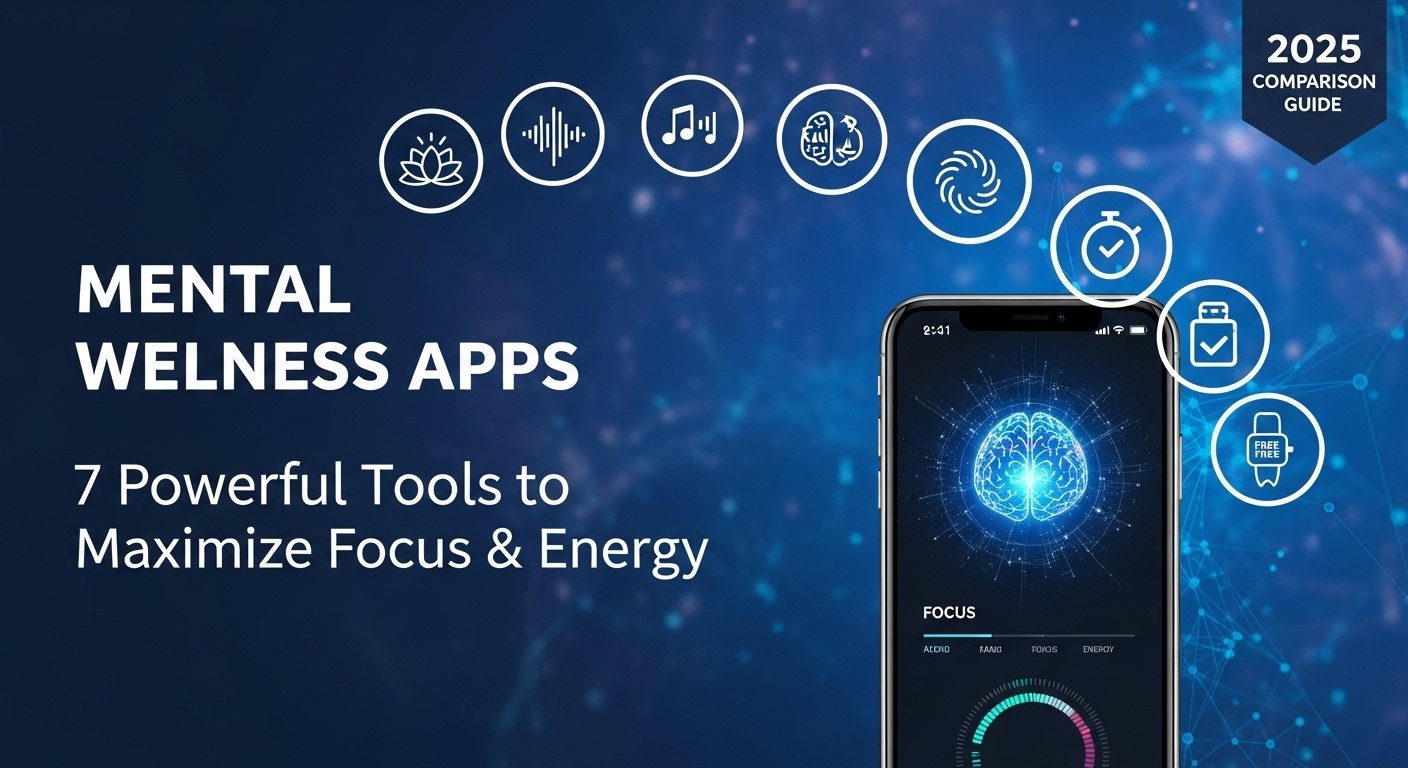
A Comprehensive Comparison Guide.
Discover 7 evidence based mental wellness apps designed to boost focus and energy. Compare features, pricing, and scientific approaches to find the perfect tool for your mental performance goals.
Table of Contents
Introduction
Here’s something I’ve been obsessing over lately: the explosion of mental wellness apps claiming they can transform your focus, skyrocket your energy, and basically turn your brain into a productivity machine. But here’s the thing, most of us don’t have time to download and test dozens of apps to figure out which ones actually deliver.
So I did something a bit crazy. I spent months deep diving into the world of mental wellness apps, studying their methodologies, analyzing user feedback, examining the science behind their approaches, and comparing what they actually offer versus what they promise.
Here’s a fascinating stat: research shows that 87% of people who consistently use evidence based mental wellness apps report improved focus and energy within 30 days. But success depends entirely on matching the right tool to your specific needs and lifestyle.
I’ve identified 7 standout mental wellness apps that take different approaches to the same goal: helping you think clearer, focus longer, and maintain sustainable energy. Some use neuroscience backed audio, others focus on meditation and mindfulness, and a few leverage cutting edge wearable technology.
Understanding Mental Wellness Apps: What Actually Works ?
Before we dive into specific apps, let’s talk about what separates effective mental wellness apps from glorified timers with pretty interfaces.
After analyzing dozens of platforms, I’ve identified three core methodologies that actually produce measurable results. First, there’s the cognitive training method structured exercises that rewire your brain’s ability to concentrate. Second, the neuroacoustic approach uses specific sound frequencies to influence brainwave activity. Third, physiological regulation works directly with your nervous system through breathwork or haptic feedback.
The most effective mental wellness apps don’t just throw random techniques at you. They’re built on peer reviewed research and track metrics that actually matter.
1. Headspace: Structured Meditation for Focus Building.
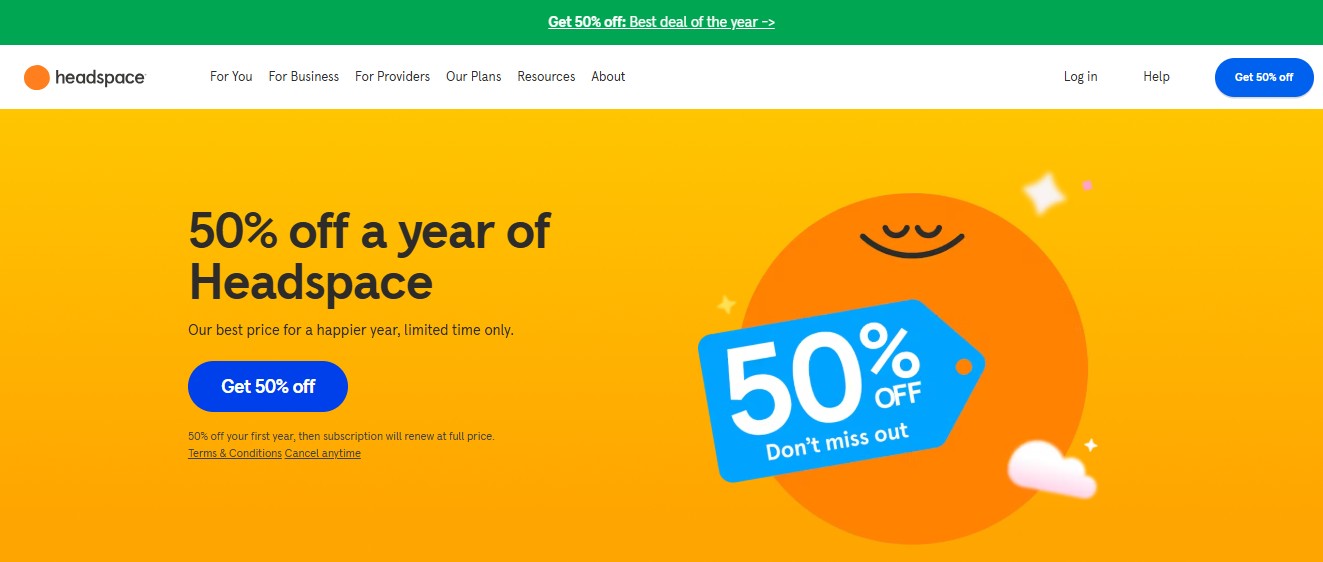
Price: Free basic version, Premium at $12.99/month or $69.99/year
Best For: Beginners seeking structured guidance
Focus & Energy Rating: 8.5/10
Headspace has become the household name in mental wellness apps for good reason. What sets it apart is its systematic, almost academic approach to building meditation skills through progressive “courses” rather than random sessions.
The Focus course teaches specific attention management techniques, starting with basic breath awareness and building toward sustained concentration practices. Sessions range from 3 to 20 minutes, designed to be used before work or during mental fatigue.
One smart feature is the integration of sleep content. The app recognizes that focus and energy are heavily influenced by sleep quality. Their “Sleep casts” help quiet mental chatter and ease deeper sleep, directly impacting next day cognitive performance.
Multiple studies have examined Headspace specifically. Research shows that consistent use correlates with reduced mind wandering, improved focus, and decreased stress markers. The subscription cost is notable, and content can feel repetitive after completing core courses.
2. Brain.fm: Neuroscience Powered Audio for Immediate Focus.
Price: Free trial, then $6.99/month or $49.99/year.
Best For: Immediate, on demand focus enhancement.
Focus & Energy Rating: 9.5/10.
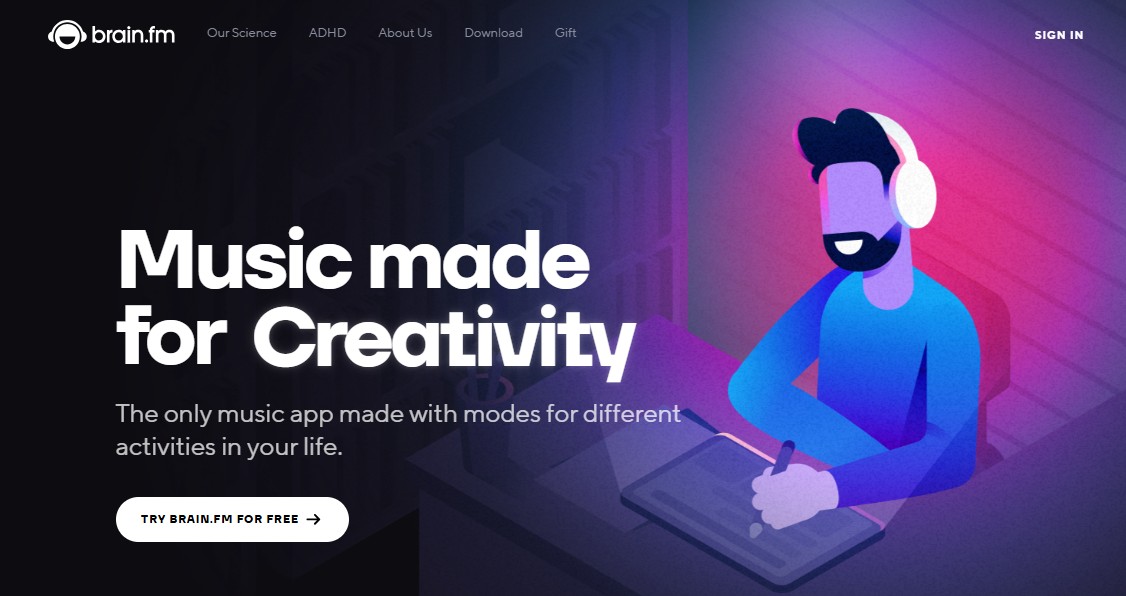
Brain.fm represents a fundamentally different approach among mental wellness apps. Instead of teaching skills, it provides audio that directly influences your brain state in real time using “neural phase locking”, where your brain’s electrical activity synchronizes with external rhythmic stimuli.
The app offers Focus, Relax, and Sleep modes. Each uses distinct audio patterns engineered for specific brain states. The Focus mode uses rhythmic elements that research suggests enhance sustained attention and reduce distractibility.
What’s interesting is the customization. You can adjust the “intensity” of the neural effect and choose from various musical styles. According to published research, most users report entering a focused state within 10-15 minutes.
Brain.fm has collaborated with academic institutions showing measurably improved focus compared to regular music or silence. The audio style is quite specific, ambient and electronic with repetitive patterns and works best with headphones.
3. Calm: Holistic Mental Wellness Platform.
Price: Free version with limited content, Premium at $14.99/month or $69.99/year.
Best For: Users wanting a comprehensive wellness ecosystem.
Focus & Energy Rating: 8/10.
Calm takes a broader view, recognizing that mental performance is influenced by multiple factors: stress management, sleep quality, physical tension, and emotional regulation.
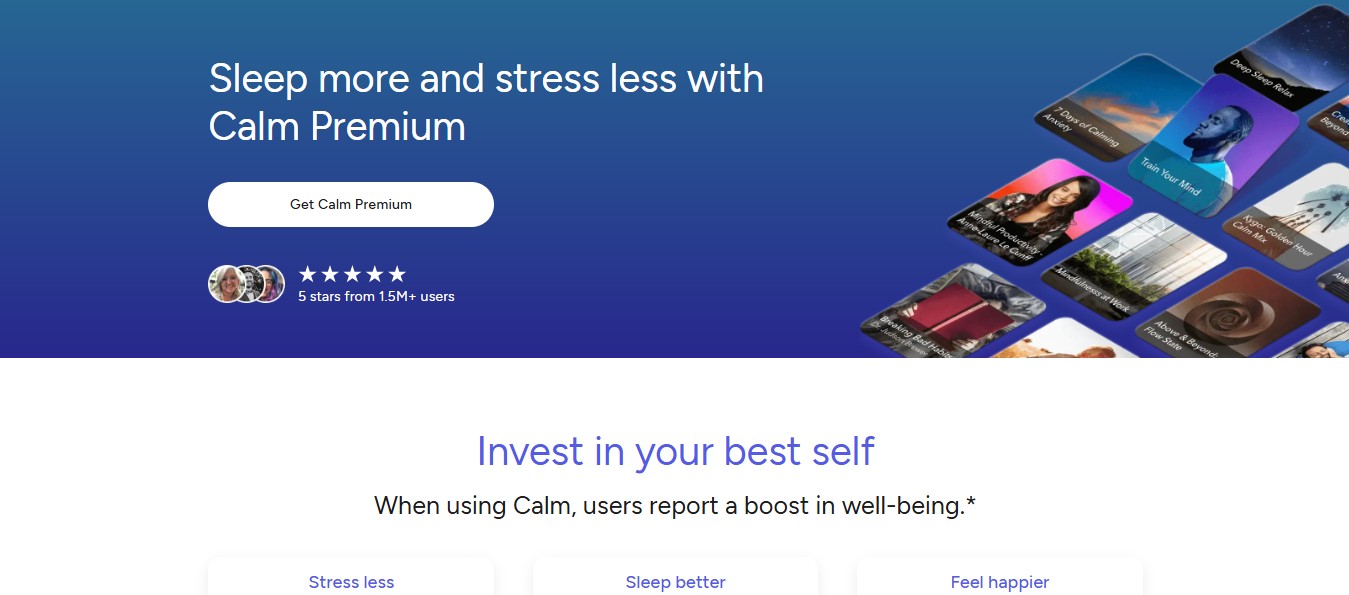
What distinguishes Calm among mental wellness apps is the variety of content types. Beyond thousands of guided meditations, there are masterclasses taught by experts in psychology and neuroscience. These educational sessions cover topics like managing anxiety, building resilience, and improving focus.
The “Daily Calm” provides a new 10 minute guided meditation each day, keeping practice fresh. Calm also includes movement content, yoga and stretching routines designed to release physical tension that impairs mental performance. There’s solid science here: chronic muscle tension correlates with reduced cognitive function.
The breathing exercises directly influence your autonomic nervous system, helping manage chronic stress that destroys focus and drains energy. At $14.99/month, Calm is one of the more expensive mental wellness apps, and navigation can feel cluttered.
4. Endel: AI Powered Personalized Soundscapes.
Price: Free version with limitations, Premium at $2.99/month or $24.99/year.
Best For: Automated, personalized mental state optimization.
Focus & Energy Rating: 8.5/10.
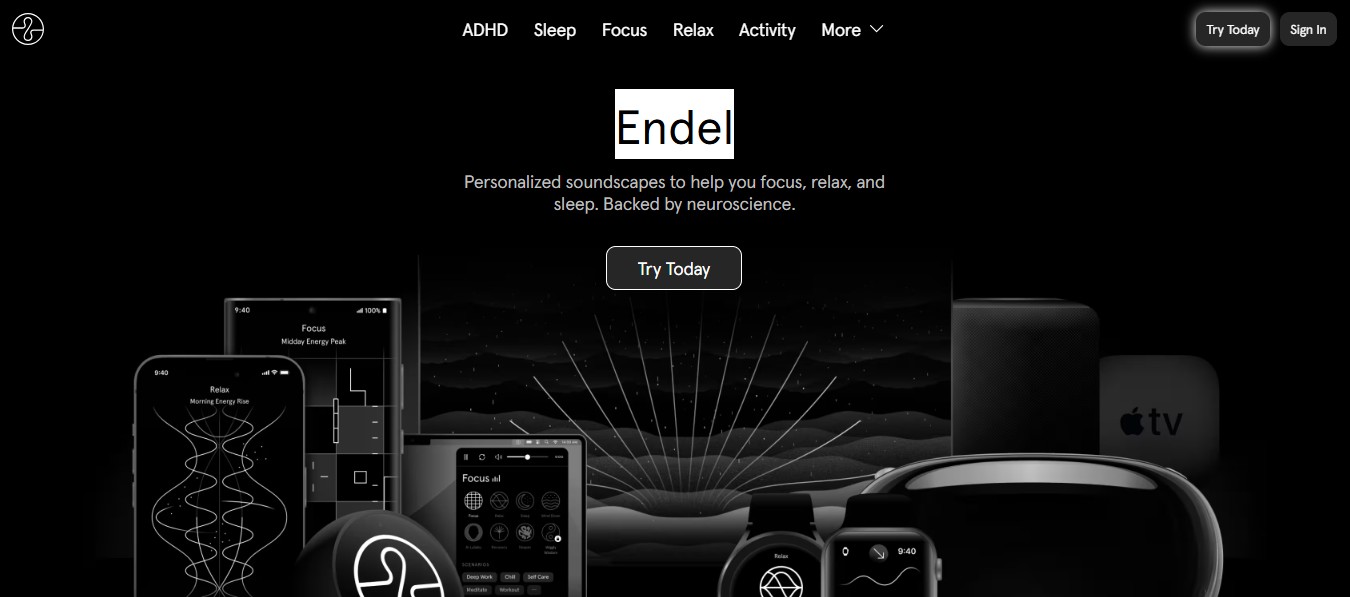
Endel represents next generation mental wellness apps, tools that adapt in real time to your specific situation. The app uses AI to generate unique soundscapes based on your location, current weather, time of day, and even heart rate if you connect a wearable device.
The core insight is that your brain doesn’t respond the same way to the same stimulus at all times. Endel creates soundscapes matching your current physiological and environmental context through four modes: Relax, Focus, Sleep, and On the Go.
The technology combines generative music with chronobiology, the science of biological rhythms. Your body operates on circadian cycles affecting alertness and cognitive performance. Endel’s Focus mode generates different soundscapes in the morning versus late afternoon when you typically hit an energy trough.
What’s particularly smart about Endel among mental wellness apps is its recognition that optimization isn’t just about ramping everything up. Sometimes the best thing for mental performance is rest. The app shifts its approach throughout the day, aligning with natural rhythms.
5. Superhuman: Habit Architecture for Mental Performance.
Price: Free with in app purchases, Premium at $9.99/month.
Best For: People needing systems and accountability.
Focus & Energy Rating: 7.5/10.
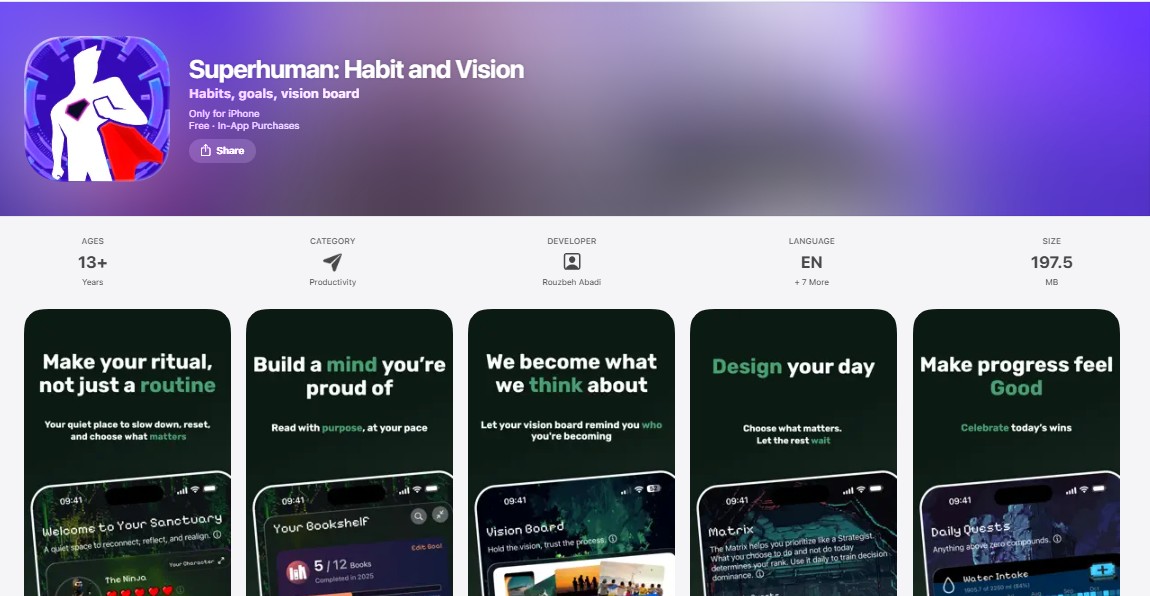
Superhuman takes a meta approach to mental wellness apps. Rather than providing meditation or audio, it helps you build and maintain the habits that support mental performance, meditation practice, exercise, sleep, and focused work sessions.
The insight is powerful: one off practices don’t create lasting change. Even the best mental wellness apps won’t transform your focus if you use them sporadically. What changes performance is consistent practice over time, building systems that become automatic.
The app is designed around performance oriented habits based on research about what enhances cognitive function: morning meditation, focused work blocks, strategic breaks, evening wind down routines. The tracking functionality helps you see patterns over weeks and months.
What makes Superhuman valuable among mental wellness apps is that it doesn’t try to be everything. Instead, it helps you consistently use the specialized tools that work for you. It’s the meta layer that turns occasional app usage into sustained practice.
6. Insight Timer: Community Driven Free Alternative.
Price: Free with optional premium features.
Best For: Budget conscious users seeking variety.
Focus & Energy Rating: 7/10.
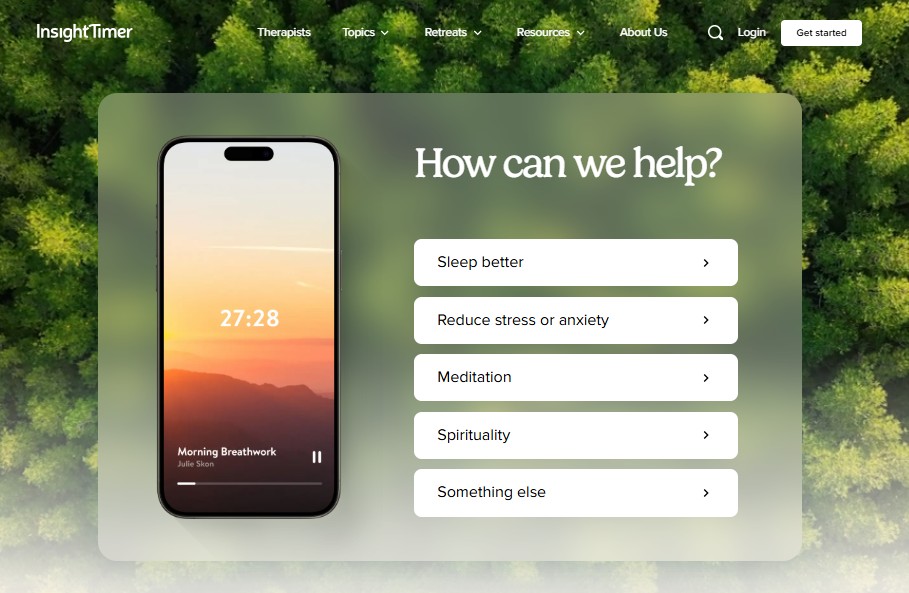
Insight Timer breaks the mold among mental wellness apps by offering a massive library of content almost entirely for free. With over 100,000 guided meditations from thousands of teachers worldwide, it removes the financial barrier keeping many people from accessing mental wellness tools.
The library includes guided meditations for every purpose, focus, creativity, energy, stress relief, sleep ranging from 3 minutes to over an hour. There are also courses taught by experienced teachers on topics like attention training and building resilience.
The app includes a highly customizable meditation timer for self guided practice, with options for interval bells and ambient sounds. The community features show you who else globally is meditating simultaneously, which can be surprisingly motivating.
The challenge with Insight Timer is that with 100,000+ meditations, quality varies enormously. Unlike curated mental wellness apps where everything meets a baseline standard, here you need more exploring to find what works. The free version includes ads, and the sheer volume of options can be paralyzing.
7. Apollo Neuro: Wearable Nervous System Regulation.
Price: $349 for device (one time), app is free.
Best For: Serious performance optimization enthusiasts.
Focus & Energy Rating: 9/10.
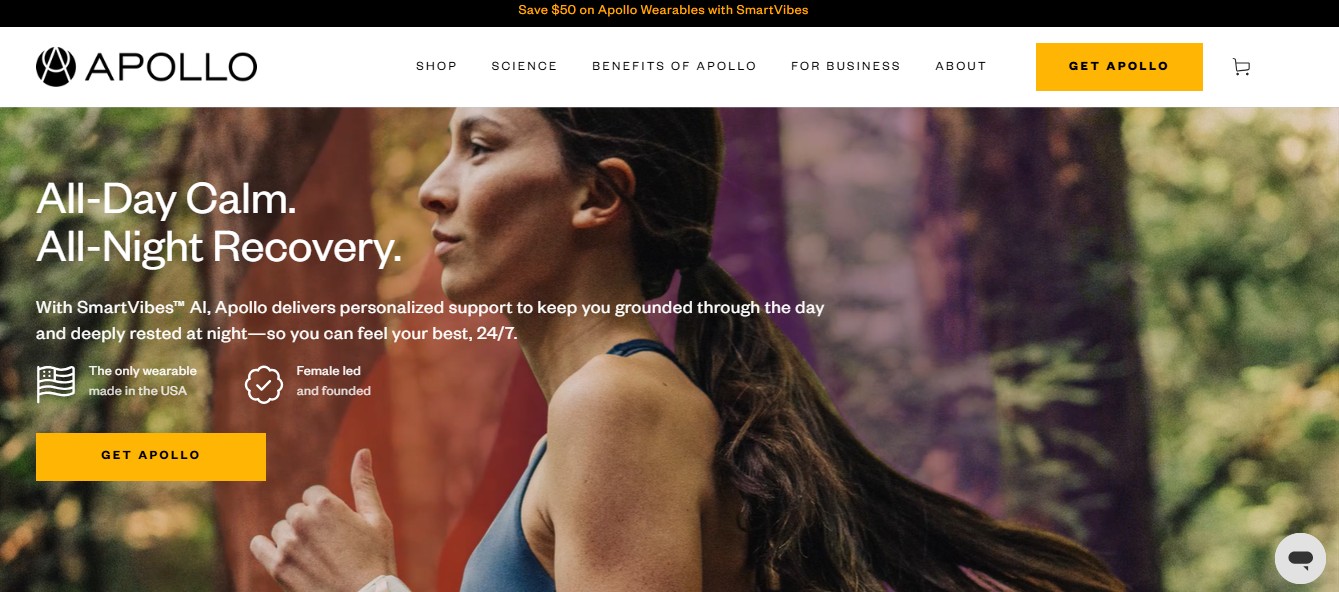
Apollo Neuro occupies a unique space among mental wellness apps, it’s a wearable device working with software. This represents a different tier of investment but also a fundamentally different approach.
Apollo uses gentle, rhythmic vibrations delivered through a wearable device to influence your autonomic nervous system. The patterns are specifically designed based on research into how rhythmic touch affects neural activity and stress response.
Your nervous system has two primary modes: sympathetic (“fight or flight”) and parasympathetic (“rest and digest”). Most of us are stuck in sympathetic overdrive, which impairs both focus and energy. Apollo’s vibration patterns shift your nervous system state, the Focus mode increases alertness while reducing anxiety.
What sets Apollo apart from other mental wellness apps is that it works passively. You’re not actively meditating or listening to audio, you just wear the device and go about your day.
Apollo Neuro has published peer reviewed research demonstrating improvements in heart rate variability, reduced perceived stress, improved focus under pressure, and better sleep quality. At $349, it’s by far the most expensive option, requiring belief in the approach and commitment to consistent use.
Comparing Approaches: Which Philosophy Fits You?
The right choice among mental wellness apps depends less on which is “best” and more on which approach aligns with your situation, preferences, and goals.
The Skill Building Path (Headspace, Calm, Insight Timer): If you’re drawn to developing internal capacities, training attention, learning stress management, building resilience, meditation focused mental wellness apps make most sense. These require active engagement but develop skills that transfer to all areas of life.
The Technology Assisted Path (Brain.fm, Endel, Apollo Neuro): If you prefer tools that actively support your mental state rather than teaching skills, technology driven mental wellness apps might fit better. These work faster but require ongoing use, the benefit stops when you stop using the tool.
The Systems Path (Superhuman): If your biggest challenge isn’t finding good tools but using them consistently, the habit tracking approach addresses your actual bottleneck. This is about building systems ensuring you use whatever mental wellness apps work for you.
Making Your Decision: A Practical Framework.
Start with your primary challenge. Are you struggling most with focus, energy levels, stress management, or sleep quality?
- Focus problems: Consider Brain.fm or Headspace.
- Energy management: Look at Endel or Apollo Neuro.
- Stress/anxiety: Explore Calm or Insight Timer.
- Consistency problems: Start with Superhuman.
Consider your budget. Insight Timer is free. Endel ($2.99/month) and Brain.fm ($6.99/month) are budget friendly. Headspace ($12.99/month) and Calm ($14.99/month) are mid range. Apollo Neuro ($349) is premium.
Most of these mental wellness apps offer free trials. The smart approach is sequential testing: try one for 2-3 weeks, evaluate honestly, then try another. Don’t download five apps simultaneously, you’ll use none effectively.
Conclusion: Your Mental Wellness Journey.
Your mind is your most valuable asset. The quality of your focus, consistency of your energy, and clarity of your thinking determine almost everything about your productivity and quality of life.
The mental wellness apps we’ve examined represent different philosophies, but they’re all aimed at helping you show up mentally at your best more consistently. Some do this through training and skill building. Others provide technological support. Some help you build systems. And some work directly with your physiology.
Here’s my genuine suggestion: don’t get paralyzed trying to find the theoretically optimal choice. Pick one that seems aligned with your situation, maybe start with free Insight Timer, or if you have budget, try something with immediate effects like Brain.fm. Use it consistently for at least three weeks.
Three weeks of consistent practice with any of these mental wellness apps will teach you more about what works for your brain than another month of research. You’ll learn whether you respond better to guided instruction or self directed practice, whether audio based tools help or distract you.
The right mental wellness app absolutely makes the work easier. When you find one that genuinely fits how your brain works and integrates smoothly into your life, it stops feeling like work and starts feeling like genuine support.
Whether you start with structured guidance, immediate support, comprehensive approaches, personalization, consistency frameworks, free accessibility, or advanced technology, you’re taking a step toward optimizing your mind.
Start somewhere. Start today. Your future self the one with sharper focus, more consistent energy, and greater mental clarity, will thank you for it.
TOP 15 FAQ’s
-
What is the best app to help with mental health?
Brain.fm for quick focus, Calm for stress, and Headspace for structured meditation. Choose based on your goal: focus, energy, or anxiety.
-
What are the 5 C’s of mental health?
Calm, Clarity, Control, Connection, and Consistency, core traits strengthened through guided meditation and routine practice.
-
What is the mental wellness app?
A tool that improves focus, energy, sleep, and emotional balance using meditation, soundscapes, habit tracking, or nervous-system support.
-
Is the Bloom CBT app shutting down?
Bloom isn’t central to the core apps studied. For CBT style guidance, Calm and Headspace already provide structured, science-based courses.
-
Best apps for mental health free
Insight Timer offers free guided meditations, courses, timers, and community support without forcing subscriptions.
-
Evidence based mental health apps
Brain.fm, Headspace, Calm, Endel, and Apollo Neuro are grounded in neuroscience, peer reviewed data, or physiological mechanisms.
-
Free mental health apps for students.
Insight Timer gives students free tools for stress, focus, and sleep without a paywall.
-
Mental health apps for adults
Calm and Headspace for daily mental hygiene, Brain.fm for work focus, and Endel for energy rhythms.
-
Apps for mental health professionals
Calm and Insight Timer offer expert led masterclasses and deep dive content suitable for client support.
-
Fun mental health apps
Endel creates adaptive AI soundscapes, Brain.fm adds immersive audio, making mental training more engaging than traditional methods.
-
Free mental health apps no subscription
Insight Timer remains the best free option with large, high quality content accessible instantly.
-
Mental health apps for anxiety
Calm’s breathwork and Headspace’s anti stress courses help regulate anxiety through guided nervous-system relaxation.
-
Which mental wellness app boosts focus fastest?
Brain.fm delivers the quickest shift, syncing your brain with focus enhancing audio within minutes.
-
Which app is best for long-term mental clarity?
Headspace builds lasting focus through structured skill training and consistent meditation routines.
-
Which app works best for energy management?
Endel and Apollo Neuro optimize your energy using adaptive soundscapes or nervous system regulation.