To be happy, most of us wait for something first. Picture a business owner who finally closes the contract he chased for a year. He feels relief for two days, and then the next target arrives.
Table of Contents
That example is made up, but the pattern is real. Here is the short answer: to be happy, you build it through small daily choices about your thoughts, people, purpose, and body. You do not wait for a feeling to show up.
To be happy is to feel that your life is good, meaningful, and worth showing up for, even on hard days. It does not mean constant joy or a mood you can switch on. Psychologists often separate brief pleasure from deeper life satisfaction, and lasting happiness lives mostly in the second one.
KEY TAKEAWAYS
- Chasing happiness too hard can backfire. In a 2011 study, people who valued happiness more reported less of it when life was calm.
- If you want to be happy at 80, protect your relationships at 50. In the Harvard Study of Adult Development, midlife relationship satisfaction was the best predictor of a happy, healthy old age.
- Gratitude helps people to be happy, but only a little. Across more than 24,000 participants, the effect was small but consistent.
- Exercise reduces symptoms of depression and anxiety in large reviews of trials. That makes movement a fair tool for anyone trying to be happy, not a guarantee.
- To be happy, stop waiting for milestones. Good changes soon start to feel normal.
- In my view, one action repeated for two weeks beats ten habits started on the same day.
What Does It Mean To Be Happy, and Why Does Chasing It Backfire?
To be happy does not mean feeling good all day. It means building a life where good feelings have room to appear. Watching your mood too closely can push them away.
In 2011, Iris Mauss and her team published two studies on this problem in the journal Emotion. In the first, people who valued happiness more reported less of it when their lives were low in stress. In the second, people nudged to value happiness reacted less warmly to a happy film clip, and disappointment in their own feelings explained the gap.
Both studies used female participants, so the results may not apply equally to everyone. Still, constantly asking “Am I happy yet?” can become the problem.
Imagine doing one hard workout and then judging your muscle in the mirror. Nothing has changed yet, because muscle grows through weeks of training and recovery, not inspection.
Happiness works the same way. The real frustration is doing the “right things” and still feeling flat by Friday. The principle is that results come from steady inputs, not constant checking.
So stop inspecting your mood and protect the inputs. That link between mirror and mood is my interpretation, not a finding from the study.
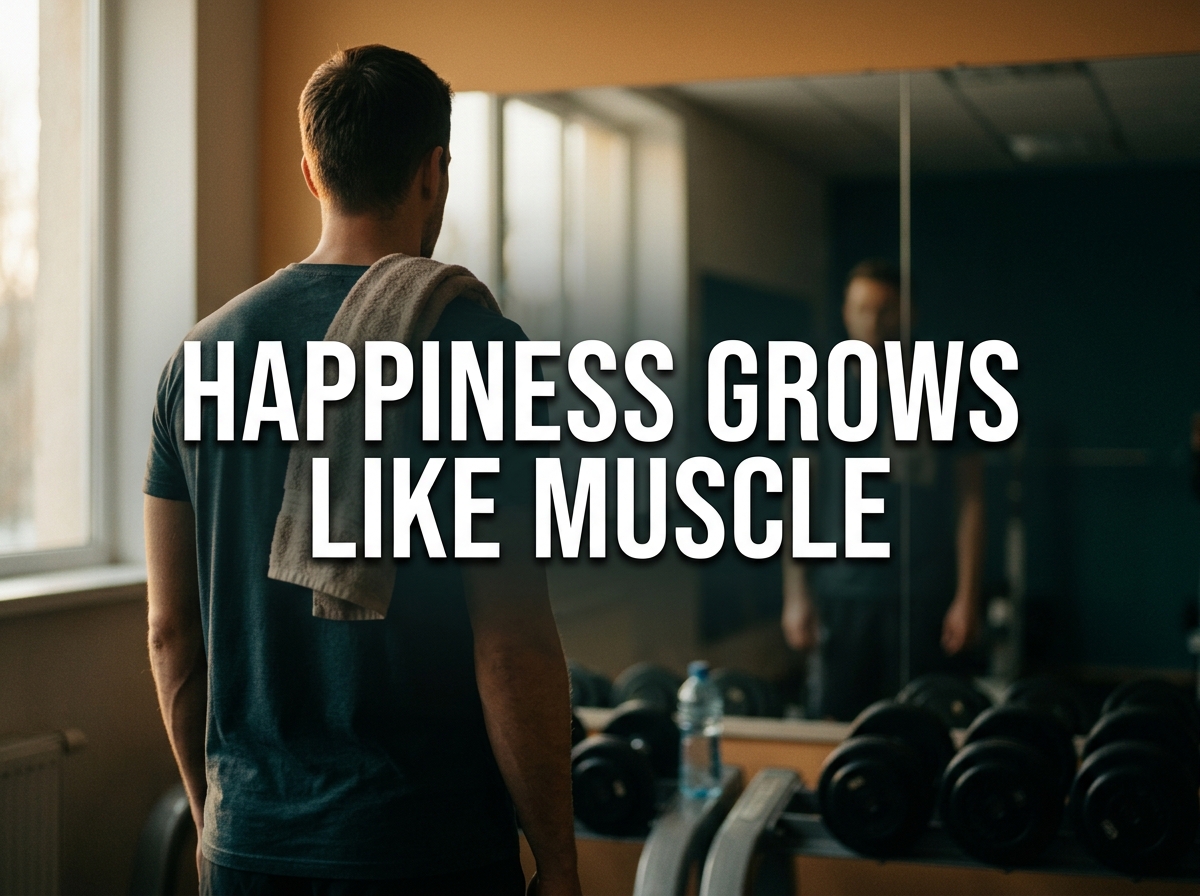
Watching your happiness too closely can make it harder to feel.
How Can Your Thoughts Help You To Be Happy Instead of Holding You Back?
Your thoughts shape how an event feels long before you decide what to do about it. To be happy more often, catch the story you attach to what happens, then test whether it is true.
Picture a student who scores 78 percent on an exam. One story says, “I am falling behind.” Another says, “I know which two chapters to fix.” The score is identical, but the next week feels very different.
Comparison works the same way. You compare your full, messy week with someone else’s best photo. “I will be happy when” thinking does similar damage, because it pushes happiness into a future that keeps moving.
That gap between what you expect life to feel like and what it actually feels like can also make progress seem smaller than it is. See reality vs expectations for a deeper look at that pattern.
Try this once today. Write your story in one sentence, then write one fact that disagrees with it. For the wider method, read my guide to changing your mindset.
Practicing this kind of reframing can also support a growth mindset, where setbacks become information rather than proof that you are failing. Reframing helps with everyday stress. It does not replace care when low mood lasts for weeks.
Which Relationships Help You To Be Happy More Than Success Does?
The quality of your close relationships is one of the strongest signals of how likely you are to be happy later in life. The best evidence comes from the Harvard Study of Adult Development, which began in 1938 with 724 young men. They were 268 Harvard sophomores and 456 young people from Boston, and the study now includes about 1,300 of their descendants.
In an interview with the Harvard Gazette, director Robert Waldinger said the team expected cholesterol or blood pressure at age 50 to predict a healthy, happy life at 80. That was not what they found. Satisfaction in relationships, particularly marriages, was the best predictor.
This is an observational study, and its early participants were men from two specific groups. Picture a construction supervisor who spends six days on site and the seventh on his phone. Nobody close to him has heard how he is really doing in weeks. The practical fix is small: message one person this week and ask one real question.

If a relationship leaves you afraid or constantly drained, that is a safety and health issue, not a mindset exercise. Seek support from someone you trust.
Why Does Purpose Help You To Be Happy When Achievement Fades?
Achievement gives relief. Purpose gives you a reason to keep going after the relief fades. To be happy after the win, you need that second thing.
Psychologists call the fading effect adaptation: people get used to good changes, so a raise or a bigger office soon feels normal. In my view, this is why many high performers feel flat at the top. They hit the goal, the goal stopped mattering, and nothing replaced it.
Goals end, but values can be practiced today. A value like “build things people can rely on” can guide a Monday morning, even when no milestone is close.
At night, ask one question: who was better off because of something I did today?
Which Daily Habits Help You To Be Happy: Gratitude and Movement?
Two habits have solid research behind them: gratitude practice and regular movement. Neither is magic. Both work best as small daily inputs. These habits also fit into a broader system of sleep, stress management, movement, and recovery, as outlined in 10 healthy habits for lasting balance.
For gratitude, a 2025 meta analysis in PNAS pooled 145 papers, 163 samples, and 24,804 participants from 28 countries. If you want a practical way to bring gratitude into training and everyday routines, see thankfulness habits for strength and wellbeing. It found small overall increases in wellbeing, with a Hedges g of 0.19. Small means useful for many people, but dramatic for almost no one.
For movement, a 2023 umbrella review in the British Journal of Sports Medicine covered 97 reviews, 1,039 trials, and 128,119 participants. Physical activity had medium effects on depression, anxiety, and psychological distress compared with usual care. Most of those reviews scored critically low on a quality tool, and the outcomes were symptoms, not happiness itself.
So treat movement as a mood input, not a guarantee. For gratitude, write three specific things from today, such as “my brother called,” not just “family.”
The One Lever Method: How To Be Happy Without Changing Everything.
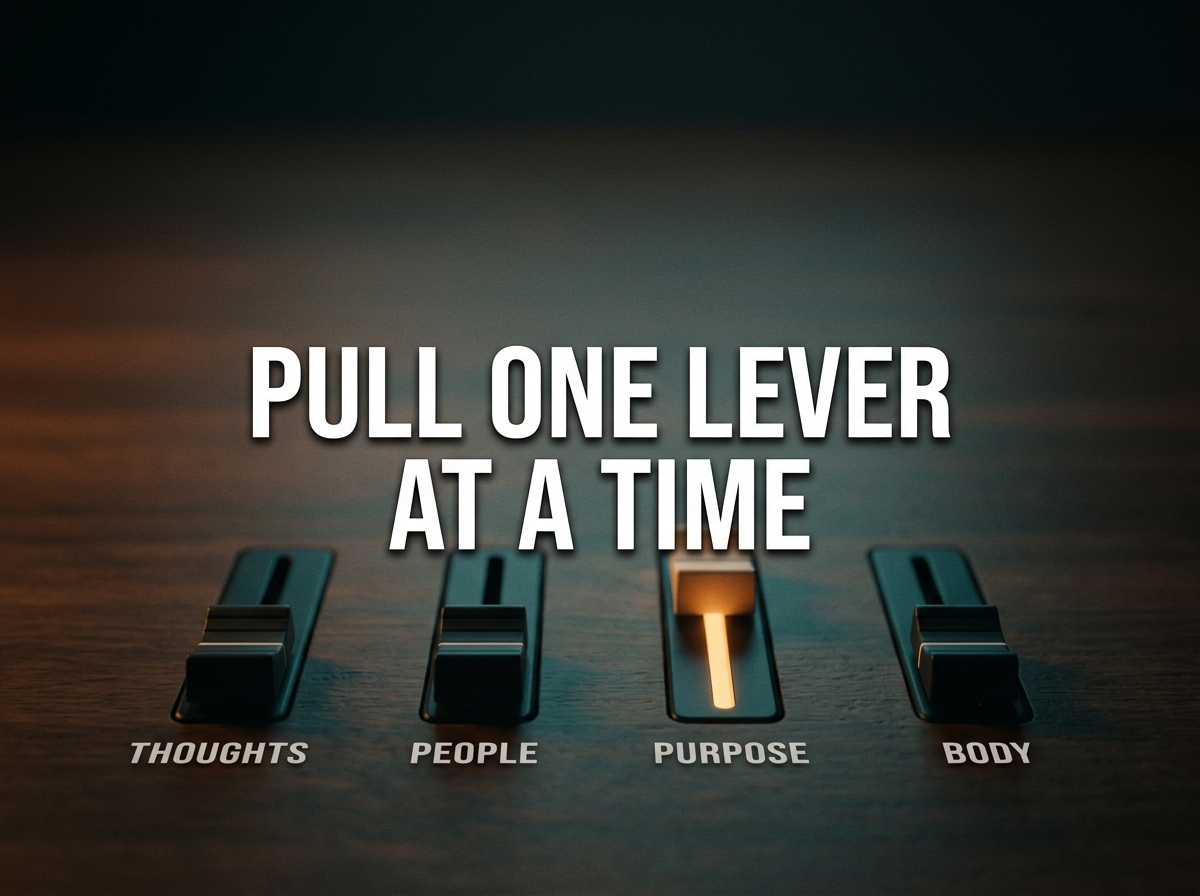
What it is. The One Lever Method is a simple way to be happy without overhauling your life. It says happiness has four levers: thoughts, people, purpose, and body. You pick the weakest lever and act on it daily for two weeks.
Why it works. Trying to change everything at once usually drains effort fast. One small action is easy to repeat, and repetition builds a habit. A fixed check after two weeks also stops you from judging your mood every hour, which is the mirror problem from earlier.
How to apply it.
- Score each lever from 1 to 5 today, honestly and quickly.
- Pick the lowest score and choose one action you can finish in ten minutes, such as a call, a walk, or three gratitude lines.
- Keeping that action small is the point: micro habits make it easier to start, repeat, and return when your routine breaks.
- Repeat it daily for 14 days, then rescore once. The 14 day window is my practical choice, not a research result.
If your routines usually collapse after a week, read why a routine works for a week then falls apart first.
Quick Comparison: Two Different Ways To Be Happy.
| Factor | Quick Pleasure | Lasting Happiness |
|---|---|---|
| Typical source | Snacks, scrolling, shopping, praise | Close relationships, purpose, steady habits |
| How long it lasts | Minutes to hours | Builds over weeks and months |
| Effort needed | Very low | Small daily effort, repeated |
| Main risk | You may need more each time | Slow progress tempts you to quit |
| Daily example | Buying a new gadget | Calling a friend, then walking together |
What If You Want To Be Happy but Feel Flat Anyway?
Sometimes habits and mindset are not enough, and that is not a personal failure. Sometimes the missing input is simply mental rest, especially when you have been pushing attention and effort for too long. Low mood that lasts can be a sign of depression or another health issue, and habits alone may not fix it.
If you feel low most of the day for two weeks or more, talk with a doctor or mental health professional. Do the same if daily life is getting harder. This article shares research and personal experience, not medical advice.
Make quick contact with a crisis line or local emergency services if you ever consider hurting yourself.
People frequently make mistakes when attempting to be happy.
Mistake: Expecting to be happy all the time.
Fix: Expect a mix of moods, and aim for more good days, not every day.
Mistake: Waiting for a milestone before allowing yourself to feel good.
Fix: Pick one action you can do today, since milestones soon feel normal.
Mistake: Trying ten ways to be happy at once.
Fix: Use one lever for two weeks, then reassess.
Mistake: Comparing your inside with other people’s highlights.
Fix: Compare yourself with your own last month, and mute one comparison source for a week.
Final Summery
- Happiness is built from repeated inputs, not found as a feeling you wait for.
- Your four levers are thoughts, people, purpose, and body. Start with the weakest.
- Research effects are small to medium: useful, not dramatic.
- To be happy, check your mood less and act more. Rescore once after 14 days.
- Flat mood that lasts two weeks or more deserves a conversation with a professional.
Look at the milestones you are waiting for. If every one of them disappeared, what would still be worth showing up for? Start there, and pick one lever tonight.
Written by Bippy (Md. Rishad Hasan Bippy), founder of liveoptimum.com and creator of the One Lever Method, writing on physical and mental performance development through personal experience.
FAQ’s
-
What are 5 ways to be happy?
Build happiness through five practical inputs: reframe negative thoughts, strengthen relationships, live with purpose, practice gratitude, and move your body regularly.
What does it mean to be happy?
Being happy means building a life that feels good, meaningful, and worth showing up for. It does not mean feeling positive every day.
What can I say instead of “be happy”?
You can say “find meaning,” “enjoy the present,” “live well,” or “build a fulfilling life.” Happiness is better treated as something you build than force.
What are 7 ways to be happy?
Practice gratitude, move regularly, nurture close relationships, reframe negative thoughts, pursue purpose, stop chasing constant happiness, and build one small daily habit.
How to be happy when depressed
Start with small actions such as movement, connection, and manageable routines. If low mood lasts two weeks or more, speak with a doctor or mental health professional.
How to be happy alone
Build happiness through purpose, movement, gratitude, and healthy routines. Being alone does not require isolation; maintain meaningful relationships even when spending time by yourself.
10 ways to be happy
Use small, repeatable inputs: gratitude, movement, meaningful relationships, purpose, positive reframing, less comparison, realistic expectations, daily routines, mental rest, and one-lever focus.
7 tips to be happy in life
Stop constantly checking whether you feel happy, strengthen close relationships, practice gratitude, move regularly, pursue purpose, challenge negative thoughts, and focus on one change at a time.
How to be happy book
Books can provide useful ideas, but happiness is built through practice. Focus on applying one useful principle consistently rather than collecting more advice.
How to be happy in life
Build happiness through four areas: thoughts, people, purpose, and body. Strengthen your weakest area with one small action repeated consistently.
How to be happy mentally
Challenge unhelpful stories, reduce constant comparison, protect mental rest, and focus on meaningful actions. If low mood persists, seek professional support.
How to be happy instantly
You cannot reliably switch lasting happiness on instantly. A short walk, meaningful conversation, gratitude, or mental break can improve your immediate state without guaranteeing happiness.
Can you be happy without achieving your goals?
Yes. Achievement can provide temporary relief, but purpose and values give life meaning after goals are completed. Happiness does not need to wait for the next milestone.
Why does chasing happiness make you unhappy?
Constantly monitoring whether you are happy can create disappointment when your mood does not match expectations. Focus on meaningful inputs instead of repeatedly checking the feeling.
What is the one lever method for happiness?
Score your thoughts, people, purpose, and body from 1–5. Pick the weakest area, take one small daily action for 14 days, then reassess.