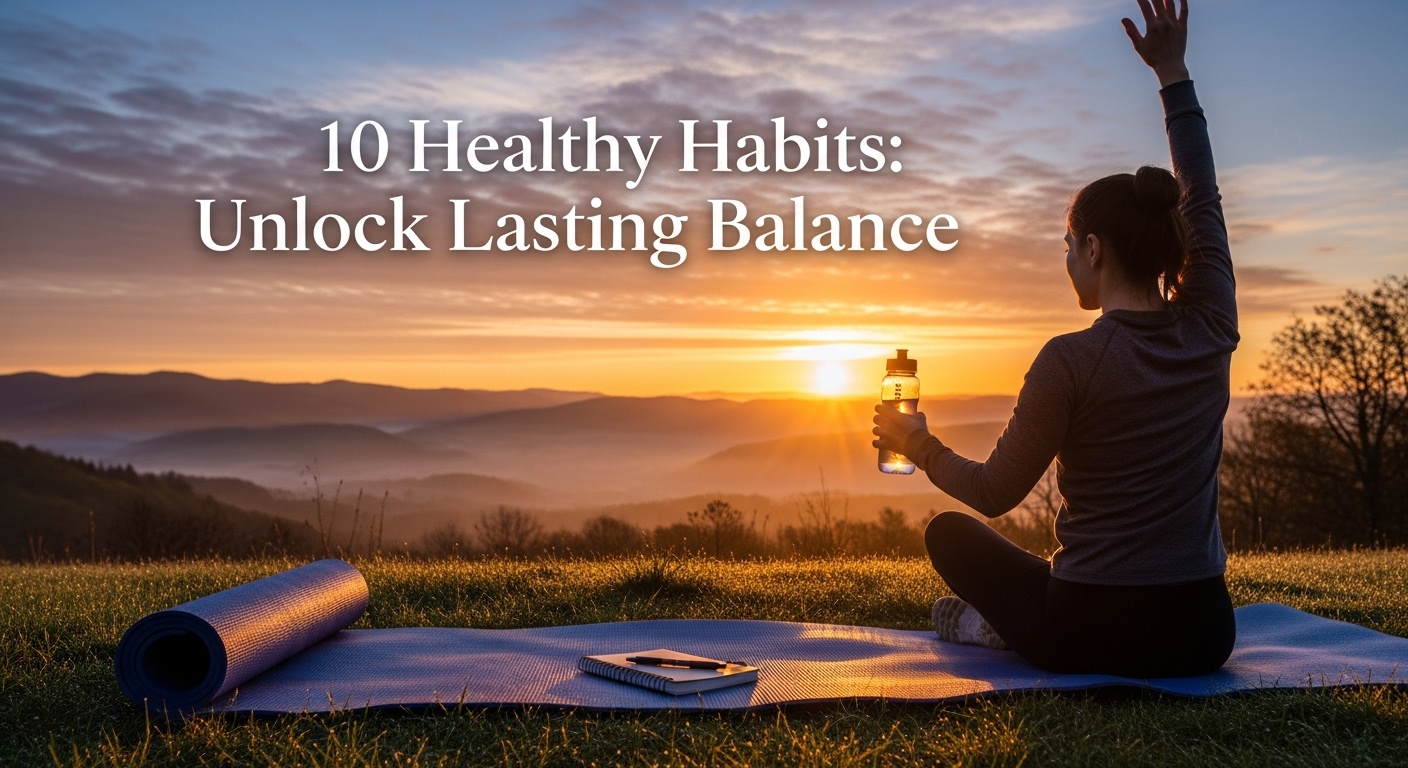

10 healthy habits for body and mind, built as a system instead of a goal. Learn what to do and how to make each one stick in real life, not just a week.
Table of Contents
The Journey Nobody Talks About.
Here’s something nobody tells you about building 10 healthy habits: it’s not about perfection. It’s about progress. I learned this the hard way after countless failed attempts at “complete life transformations” that lasted exactly three days.
In our last discussion, “Reality vs Expectations: 7 Powerful Ways to Sustain Growth,” we explored how unrealistic standards can sabotage long-term progress. That lesson becomes the foundation here. These 10 healthy habits aren’t about chasing an idealized version of health. They form a balanced system for body and mind that works in real life, built in small steps instead of all at once.
What changed things for me was simple. I stopped treating my body and mind as separate things. These habits are more than wellness tips. They connect physical and mental wellbeing, which is what makes progress last.
One commonly quoted figure says only 8% of people stick to their resolutions. The ones who succeed aren’t superhuman. They build systems, not goals.
This is more than another list of feel-good advice. These 10 healthy habits can shift how you think, move, and show up every day.
10 Healthy Habits
Habit 1: Morning Movement Ritual.

Intentional morning movement means doing a small, planned amount of physical activity soon after you wake up. Gentle stretching, a short walk, or basic bodyweight moves all count.
Let me tell you about the morning I found this out. It was 6 AM, I was exhausted, and the last thing I wanted to do was exercise. Those five minutes turned into the habit that has done the most for me as an adult. This is the first of the 10 healthy habits, and I still lean on it most.
Morning movement isn’t about crushing a hard workout. For me, it works like a signal to my body: “We’re awake, and we’re ready.” This first of the 10 healthy habits can be gentle stretching, a short walk, or basic bodyweight movements. Consistency matters more than intensity. Your body doesn’t care if you do 10 perfect push-ups. It cares that you showed up.
You know that overwhelming feeling when your to-do list never ends and your brain feels scattered? I used to wake up with that anxiety every single day. Then I learned something from progressive overload, and not only in the gym. It applies to life too.
When I commit to just 10 minutes of movement, even when I don’t feel like it, I’m doing reps for mental discipline. The frustration of not wanting to move, the hesitation before I start, and the relief when I finish all mirror what happens when I face challenges during the day.
“Morning movement isn’t just exercise for your body it’s strength training for your willpower.“
Habit 2: Hydration with Intention.
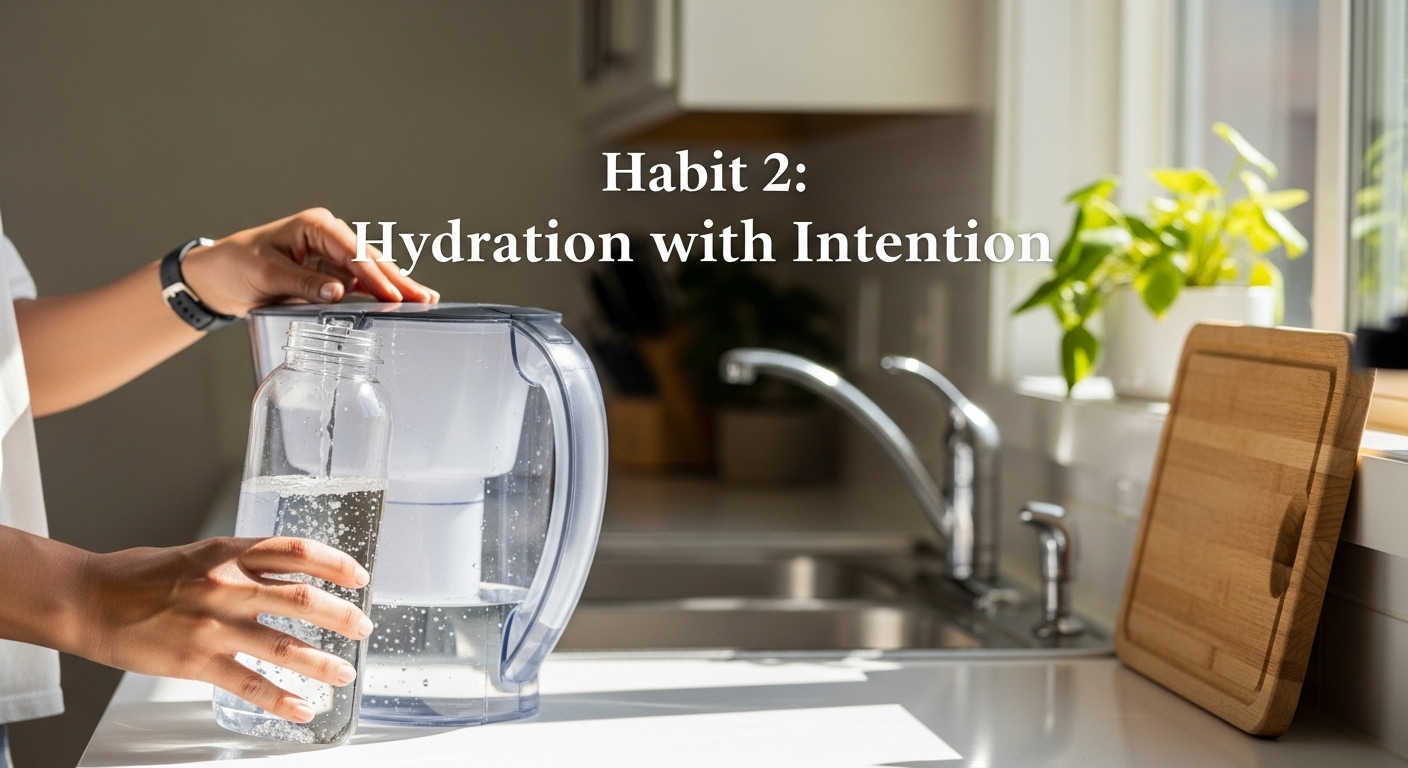
Steady hydration means drinking fluids at set points through the day instead of waiting until you feel thirsty or tired.
Water was the biggest fix for me, and it’s the second of the 10 healthy habits. For years I survived on coffee and sports drinks, wondering why I felt foggy and exhausted all the time.
The turning point came when I started tracking what I drank. I was shocked. On a good day, I got maybe 30 ounces of water. The brain is often described as about 75% water, and I was running mine on empty. Fixing my water intake made a clear difference for me.
So I created “hydration checkpoints” through the day: first thing in the morning, before each meal, mid-afternoon, and in the evening. Now I use a 32-ounce water bottle and aim to refill it twice daily.
You ever notice how everything feels harder when you’re dehydrated? It reminds me of muscle cramps during workouts, when the body struggles with a simple job. My mind seems to work the same way.
When I’m not properly hydrated, my thoughts get stuck in loops of worry. When I drink consistently, my thoughts flow more easily. I can consider a problem, process it, and let it go. That’s my experience, not a rule, but it’s a big reason hydration earns its place among my 10 healthy habits.
“Hydration isn’t just about physical performance, it’s about giving your mind the fluidity it needs to think clearly.“
Habit 3: Mindful Eating Practices.
Mindful eating means giving your full attention to a meal, without screens or other distractions, so you notice taste, hunger, and fullness as they happen.
Food used to be my enemy. Not in an eating disorder way, but in an “I have no idea what I’m putting in my body” way. This is the third of the 10 healthy habits, and it changed how I eat.
The shift happened when I started treating meals like meetings with myself. You wouldn’t scroll through your phone during an important work meeting, so I decided to give my food the same respect.
Mindful eating isn’t about perfect portion control. It’s about showing up for the experience. That means sitting down, putting away distractions, and tasting what you’re eating.
I used to eat to numb stress, boredom, and frustration. That reminds me of poor form in weightlifting. You might finish the rep, but you’re not working the muscle you meant to work. When I began eating mindfully as one of my 10 healthy habits, it felt like correcting my form. I could finally feel the difference between physical hunger and emotional emptiness.
“Mindful eating isn’t just about nutrition. It’s about learning to tell what your body needs from what your emotions are craving.”
Habit 4: Quality Sleep Architecture.
Quality sleep means giving yourself enough time, and a dark, cool, calm setting, to sleep through the night and wake up rested.
Sleep was my biggest blind spot. It’s the fourth of the 10 healthy habits, and one of the most important. I treated it like an inconvenient necessity that got in the way of productivity.
The wake-up call came when I realized I hadn’t had truly restful sleep in months. I was tired but wired, exhausted but unable to turn my brain off. That’s when I learned the term “sleep architecture,” which describes how sleep is organized into stages across the night.
I started with the basics: no screens for an hour before bed, a room temperature of 65 to 68°F, and blackout curtains. The biggest difference came from a “mental download” routine. I write down what went well, what I’m worried about, and what I’m looking forward to.
For years, I wore my ability to function on little sleep like a badge of honor. Recovery time taught me otherwise. Muscles adapt to training during recovery, not during the workout itself, when the body repairs tissue.
Once I made quality sleep one of my 10 healthy habits, my mental performance improved. I believe that’s because I finally allowed time for restoration, though that is my experience, not a guarantee. Because quality sleep is one of the foundations of both physical recovery and mental performance, your sleep mindset deserves deliberate attention.
“Quality sleep isn’t time away from your goals it’s the foundation that makes achieving them possible.“
Habit 5: Stress Response Training.

Stress response training means practicing calm, deliberate reactions to manageable stress, so everyday pressure has less power over you.
Stress used to control my life. This is the fifth of the 10 healthy habits. I’d get triggered by the smallest things: delayed emails, unexpected plans, even slow walkers.
The breakthrough came when I stopped trying to eliminate stress and started training my response to it. I learned about “stress inoculation,” which means deliberately exposing yourself to stress you can tolerate. For me, that started with cold showers, which became part of my 10 healthy habits.
The key was breathing through the discomfort instead of fighting it. That skill has carried over into other stressful moments for me.
I spent years feeling constantly overwhelmed. It reminds me of a strength plateau in training, where you lift the same weight week after week, not getting stronger but not getting weaker either.
Then I began to think of stress as resistance training for my nervous system. My view shifted. The frustration became data about my current capacity.
“Stress isn’t your enemy. It’s your nervous system’s way of preparing you for something that matters.”
Habit 6: Movement Integration Throughout the Day.
Movement integration means adding short bursts of activity across the workday instead of relying on a single workout.
Sitting for eight hours straight is hard on your body and brain. That’s why this became one of my 10 healthy habits. By 3 PM, I felt like my brain was wrapped in cotton balls.
I found what I call movement snacks: tiny bursts of activity scattered through the day. Two-minute dance breaks, desk stretches, and walking meetings all count.
My rule is simple. Every hour, I move for at least two minutes. Over time my energy stayed steadier, my posture improved, and the afternoon slump faded. That’s my experience, not a guarantee.
You know when you’ve been working hard and your brain feels like it’s moving through molasses? It felt like my brain was running with the flow turned down. Long stretches of sitting seem to do that to me.
When I started building movement into my day as one of my 10 healthy habits, it felt like turning the flow back up.
“Movement isn’t a break from thinking. It’s fuel for better thinking.”
Habit 7: Digital Boundaries and Mental Space.
Digital boundaries mean setting clear times and places for phone and message use, so technology doesn’t set the pace of your day.
My phone used to own me. This is the seventh of the 10 healthy habits. I’d check it first thing when I woke up and last thing before sleep.
I started simple: no phones in the bedroom. That change improved my sleep and gave me a few quiet moments back for myself.
I also set specific times for checking messages and treated them like appointments. Instead of constant reactive checking, I became intentional about how I take in digital information.
For years I had plenty of information and very little clarity. That reminds me of overtraining in the gym. When you train too often without recovery, performance gets worse. Setting digital boundaries felt like scheduling rest days for my mental training, and it’s now firmly one of my 10 healthy habits.
“Digital boundaries aren’t about disconnecting from the world. They’re about reconnecting with yourself.”
Habit 8: Strength Building (Physical and Mental).
Strength building means training your muscles with gradually harder work. In my experience, it also builds confidence that carries into daily life.
I used to think strength training was only about looking good. Now it’s the eighth of the 10 healthy habits, and one of the most useful. To me, strength training is confidence training disguised as exercise.
I started with basic bodyweight movements. As I got stronger, I began to feel capable in other areas too.
Progressive overload became my approach to nearly everything. In the gym, it means gradually increasing the demand, such as more weight or more reps. In life, it means slowly expanding your comfort zone.
I learned to value muscle fatigue, the moment your body says “I can’t” and you find one more rep. That mental effort shows up when I face other challenges.
I spent years feeling inadequate for life’s challenges. It reminds me of trying to deadlift a weight that wouldn’t budge. My trainer told me: “You can’t lift what you haven’t trained for, but you can train for anything.”
When I applied that idea, each hard situation started to feel like training instead of a test I was destined to fail. That mindset is a big reason strength building earns its place among my 10 healthy habits.
Physical strength training builds muscle. For me, it also built confidence in my ability to handle what life demands.
Habit 9: Recovery and Restoration Practices.
Recovery practices are deliberate activities that let your body and mind restore energy after effort, instead of waiting until you’re exhausted.
Recovery used to feel selfish. It’s the ninth of the 10 healthy habits. Rest isn’t the opposite of productivity. It’s what makes productivity possible.
I now treat recovery as part of my routine, not something I do only when I’m worn out. My toolkit includes gentle stretching, deep breathing, warm baths, journaling, or sitting quietly without an agenda.
I learned the difference between passive rest (scrolling) and active recovery (activities that restore energy). Reading, nature walks, and real conversations energize me in ways mindless scrolling never could.
For years I believed breaks were for weak people. That reminds me of overtraining syndrome in athletes. When you push past your body’s ability to recover, performance doesn’t plateau. It gets worse.
When I began treating recovery as a performance strategy, one of my 10 healthy habits, I wasn’t working less. I was working smarter, from fullness instead of depletion. When your energy is already depleted, recovery needs to become an intentional part of your daily system.
“Recovery isn’t the absence of progress, it’s what makes progress sustainable.“
Habit 10: Mindset Cultivation and Mental Training.

Mindset practices are daily habits that build awareness of your thoughts, such as meditation, gratitude writing, and questioning automatic thinking.
Your mindset isn’t just positive thinking. For me, it works like an operating system running in the background of everything else. This is the tenth of the 10 healthy habits, and it became as important to me as physical training.
I started with daily mindfulness meditation: 10 minutes of watching my thoughts without judging them. It wasn’t about reaching perfect calm. It was about noticing my mental patterns.
Gratitude practice became my mental strength training. Every morning, I write three specific things I’m grateful for. It seems to help me notice what’s going right instead of constantly scanning for problems. That’s my experience, not a proven effect.
I also learned to question automatic thoughts. When I catch myself thinking “I’m not good enough,” I pause and ask: “Is this thought helping me? What would I tell a friend?”
I spent years believing my thoughts were facts about reality. That reminds me of poor form in weightlifting. Negative thought patterns felt familiar, but they weren’t serving my goals.
Once I began to see thoughts as mental events instead of commands, the frustration of feeling trapped by my mind started to ease. That shift is a big reason mindset work sits among my 10 healthy habits. The real challenge is turning healthy habits into systems you can consistently follow.
Your mindset isn’t fixed, it’s a skill you can develop, and it determines everything else.
The Integration: Your Complete System.
Start with one or two of the 10 healthy habits that resonate most. Build consistency there, then add others gradually. This isn’t about a dramatic overnight overhaul. It’s about change you can keep.
Practicing the 10 healthy habits can change how you feel physically and how you show up mentally and emotionally. The person you become through steady practice is the real reward.
Remember, the goal isn’t to become someone else. It’s to become a fuller, more energized version of yourself through these 10 healthy habits.
MOST ASKED FAQ & ANSWERS
1.What are the best healthy habits to balance mind and body?
The best healthy habits for mind-body balance combine gentle physical activity, hydration, quality sleep, nutrition, stress management, and intentional mindset work. For example: morning movement, mindful eating, recovery practices, and digital boundaries. These habits support lasting balance by improving both mental clarity and physical restoration.
2. How does morning movement help improve mental wellness?
Morning movement even just gentle stretching, a short walk or light bodyweight movements, kick starts your nervous system. It increases blood flow, sets the tone for mindset discipline, and reduces anxiety. Over time, consistent morning movement enhances energy levels, improves mood, and supports mental wellness by bridging physical activity with emotional readiness.
3. Why is hydration important for clarity and performance?
Proper hydration helps your brain function optimally, when you’re hydrated, cognitive functions like focus, processing speed, and emotional regulation function better. Dehydration can cause fogginess, slow thinking, and fatigue. Hydration with intention (drinking enough water at key intervals) is one of the habits that supports both mental clarity and peak performance.
4. What is mindful eating and how do I start?
Mindful eating means paying full attention to your meals: tasting food, being aware of hunger vs emotion, avoiding distractions. To start, sit down without your phone, eat slowly, notice flavors and textures. Mindful eating improves digestion, reduces emotional overeating, and strengthens the connection between your body’s signals and your mental well-being.
5. How can I improve sleep quality naturally?
Improving sleep quality naturally involves creating consistent routines: go to bed at the same time, reduce screen exposure an hour before sleep, cool your room (-65-68°F / 18-20°C), use blackout curtains, and do a “mental download” (journal or list out thoughts) before sleeping. Quality sleep supports restoration, mood regulation, and mental resilience.
6. What is stress response training and why does it matter?
Stress response training (also called stress inoculation) means exposing your nervous system to tolerable stressors (like cold showers, breathwork, brief discomfort) so you learn to react well under pressure. This habit helps you build resilience, reduce overwhelm, and improve how you cope with daily stress rather than letting stress control you.
7. How can I integrate movement throughout the day, even with a busy schedule?
Movement integration can be as simple as movement “snacks”: 2-minute stretches, walking meetings, short walks during breaks, or quick bodyweight movements. Schedule them hourly if possible. These small bursts of movement boost circulation, reduce mental fatigue, prevent posture decline, and improve productivity and mood.
8. What are digital boundaries and how do they affect mental health?
Digital boundaries are limits you set around technology use (e.g. no phone in the bedroom, designated times to check messages, limiting social media). They reduce mental clutter, information overload, and stress. When you limit constant notifications and reactive scrolling, you free up mental space, improve sleep quality, and sharpen focus.
9. How does strength building boost confidence and performance?
Strength building (whether bodyweight or weighted) does more than improve muscles, it builds mental resilience and self-confidence. Hitting physical strength goals teaches you you can handle discomfort, push past perceived limits, and gradually expand your comfort zone. This mindset translates into better performance in many areas of life.
10. What are effective recovery practices to restore mental and physical energy?
Effective recovery practices include passive rest and active recovery: gentle stretching, nature walks, journaling, deep breathing, warm baths. The goal is physical restoration (muscle repair, nervous system cooling) and mental restoration (reducing stress, calming thoughts). Recovery is what makes balance sustainable.
11. How can mindset cultivation improve resilience over time?
Mindset cultivation involves regular mental training: mindfulness, gratitude, awareness of thought patterns, affirmations, visualization. These habits rewire how you respond to challenges. Over time, mindset work reduces negative thought loops, supports emotional stability, and fuels mental resilience even when physical stress or life demands rise.
12. Can building healthy habits reduce anxiety or overwhelm?
Yes. Healthy habits like consistent sleep, mindful eating, movement, stress response training, and digital boundaries all reduce physiological and psychological triggers of anxiety. Over time, they help you manage overwhelm by giving you reliable routines and strategies to calm the nervous system.
13. How many habits should I start with so I don’t burn out?
It’s best to start with 1-2 of the healthiest habits that resonate most. Master those until they feel automatic, then gradually add more. This incremental approach (habit stacking) helps prevent burnout, fatigue, or abandoning the plan early.
14. What’s the compound effect of combining multiple healthy habits?
The compound effect means small, consistent actions across different areas (movement, hydration, sleep, mindset) amplify each other. For example: better sleep improves mood, which improves hunger regulation, which improves movement motivation. Over time, these interlinked habits produce results far bigger than any one habit alone.
15. How do I stay consistent with healthy habits long term?
To stay consistent, use habit tracking, set small milestones, establish cues (triggers) for habits, build accountability (friend, journal, community), and allow for flexibility without guilt. Also, recognize “progress over perfection”, if you miss one day, recommit the next. Over time, consistency becomes identity, not just behavior.