Table of Contents
Forest therapy changed Emily’s life in ways medication couldn’t. Three months ago, she could barely make it through her workday without overwhelming anxiety. Then her therapist suggested spending 20 minutes in the woods near her home, doing nothing but breathing and observing. Within two weeks of daily forest therapy practice, Emily noticed something remarkable, her sleep quality improved dramatically, her racing thoughts slowed to a manageable pace, and she felt genuinely calm for the first time in years.
Forest therapy isn’t about getting cardiovascular exercise or identifying bird species. This Japanese practice, known as shinrin-yoku, literally means “taking in the forest atmosphere.” It’s a deliberate, slow paced immersion in nature specifically designed to activate all your senses and quiet your overactive mind. While traditional hiking aims for reaching destinations or burning calories, forest therapy focuses entirely on present moment connection with the natural world surrounding you.
This comprehensive article reveals how forest therapy accelerates recovery from stress, anxiety, burnout, and even physical illness. You’ll discover the fascinating science showing how trees literally change your body chemistry at a cellular level, learn a proven five phase practice method you can implement immediately, and find practical solutions for experiencing significant forest bathing benefits even without convenient access to wilderness areas. Whether you’re recovering from mental exhaustion, physical illness, or simply seeking effective preventive wellness strategies, nature offers powerful medicine that modern science is finally beginning to validate and measure.
The Science Behind Forest therapy and Recovery.
How Nature Changes Your Body.
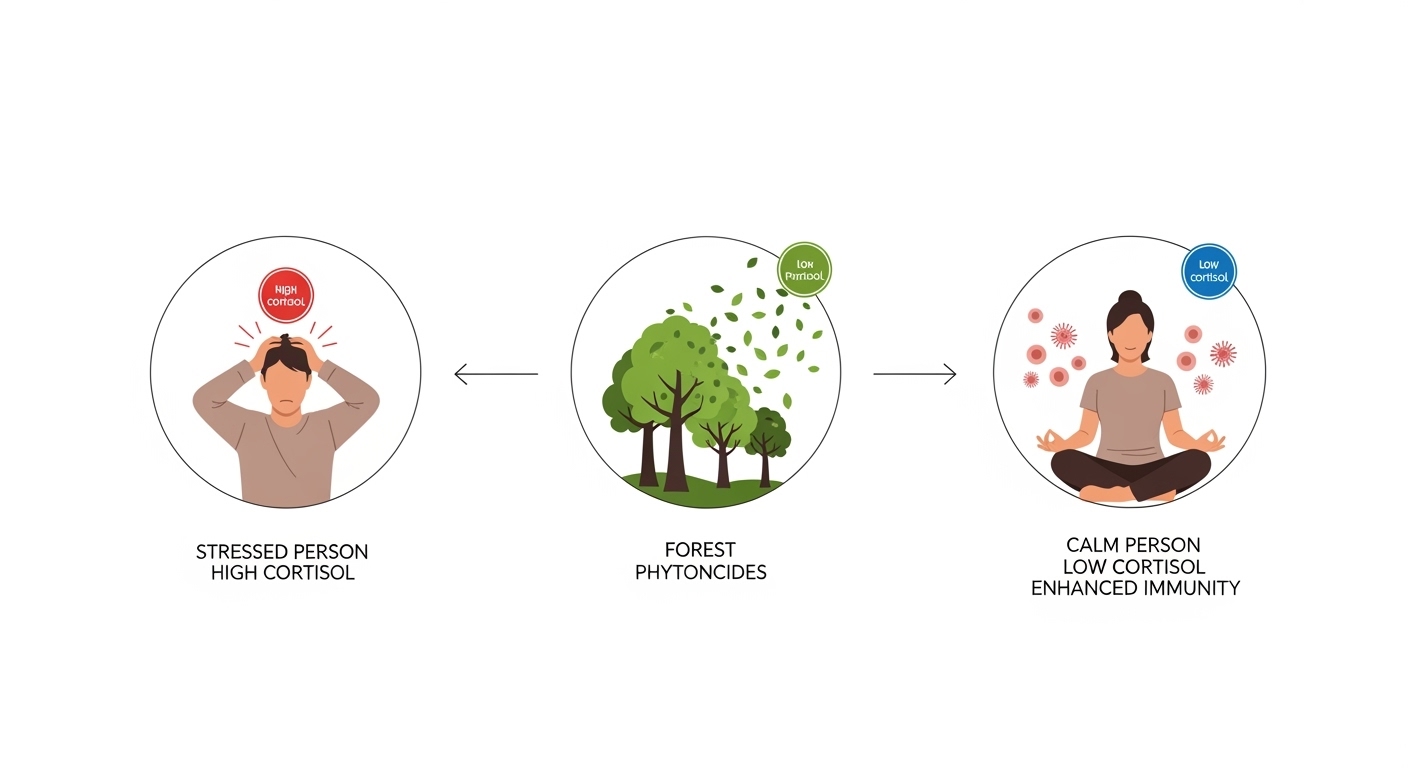
Your body responds to forest environments in measurable, scientifically documented ways. When you practice forest therapy, your stress hormone levels drop significantly and consistently. Scientists have carefully measured cortisol concentrations in saliva samples collected before and after woodland visits, finding reductions exceeding 20 percent within just twenty minutes of forest immersion. This isn’t placebo effect or wishful thinking, it’s documented biochemistry. Your nervous system actively shifts from sympathetic fight or flight activation into parasympathetic rest and digest mode, allowing genuine physiological recovery to begin at the cellular level.
Also read “Mental Performance: 7 Fearless Breaks to Reset the Mind.”
Trees communicate through sophisticated chemistry, releasing aromatic compounds called phytoncides into the surrounding air. These volatile organic oils serve to protect trees from harmful insects and bacterial infections, but they also provide remarkable protection for human visitors. When you breathe forest air naturally rich with phytoncides, your immune system strengthens dramatically and measurably. Studies carefully tracking immune cell counts show natural killer cell activity increases by 40 to 50 percent after dedicated forest therapy sessions. These specialized immune cells identify and systematically destroy virus infected cells and potential cancer cells throughout your body. The truly remarkable part?
This significant immune boost persists for an entire month following just a single weekend spent in forested areas.
Your cardiovascular system also undergoes beneficial transformation during forest therapy experiences. Blood pressure decreases as blood vessels relax and dilate. Heart rate variability improves significantly, indicating better autonomic nervous system balance and resilience. For people actively recovering from heart conditions or managing chronic hypertension, regular forest bathing provides tangible physiological support alongside conventional medical treatment. The practice helps your body remember what genuine relaxation feels like at a fundamental physiological level.
Mental Health and Cognitive Recovery.
Depression frequently involves destructive rumination your mind relentlessly replaying negative thoughts in exhausting, unproductive loops. Forest therapy interrupts this harmful pattern remarkably effectively. Brain imaging studies using functional MRI technology reveal measurably decreased activity in the subgenual prefrontal cortex region strongly associated with repetitive negative thinking patterns after 90 minute nature immersion sessions. Participants consistently report feeling noticeably lighter and less burdened by circular worries that previously consumed their limited mental energy.
Anxiety responds particularly well to forest therapy because the practice firmly grounds you in immediate sensory experience rather than abstract worry. When you consciously focus on the rough texture of bark under your fingertips or the subtle sound of wind moving through leaves overhead, your mind cannot simultaneously catastrophize about hypothetical future events. This isn’t temporary distraction it’s systematic retraining of your attention mechanisms toward sustainable present moment awareness, which builds lasting anxiety resilience over time.
Extensive research involving nearly twenty thousand participants across multiple countries identified a clear threshold for nature’s measurable health benefits: 120 minutes weekly. This requirement breaks down to just seventeen minutes daily a modest investment with significant returns. Those consistently meeting this minimum reported substantially better overall health and general wellbeing compared to people with minimal nature exposure. Interestingly, whether you take one concentrated two hour forest therapy session or six separate 20 minute visits throughout the week doesn’t significantly matter the cumulative time investment is what produces results.
Forest therapy delivers measurably superior benefits compared to urban park experiences, though both certainly help. Comparative studies examining cardiovascular responses in dense forests versus city green spaces consistently show stronger positive physiological effects in true woodland environments. The powerful combination of high tree density, ecosystem biodiversity, authentic natural soundscapes, and concentrated phytoncide exposure creates optimal healing conditions that urban settings cannot fully replicate.
Your Step by Step Forest Therapy Practice Guide.
Preparation and What You Need.
Starting your forest therapy practice requires remarkably minimal equipment, which is precisely the philosophical point. Wear comfortable clothing layers appropriate for current weather conditions. Bring adequate water if you’ll be outdoors longer than an hour. That’s essentially everything you need. Deliberately leave your smartphone at home or switch it to airplane mode and store it deep in your bag. No fitness tracker, no camera, no wireless earbuds. The practice works specifically because you’re intentionally unplugging from technology’s constant demands and consciously plugging into natural rhythms your body intuitively understands.
Choosing your specific location matters somewhat less than you might initially think. Any area with sufficient trees where you can walk safely works adequately for forest therapy. Ideal spots include maintained wooded trails, large urban parks with dense tree coverage, botanical gardens, local arboretums, or nature preserves. You primarily need enough undisturbed space to walk slowly and mindfully for an hour without constant interruptions from traffic noise or dense crowds. Water features like flowing streams or peaceful ponds enhance the multisensory experience but aren’t absolutely essential for beneficial practice.
The Five Phase Forest Therapy Method.
Phase One: Arrival and Transition (10 minutes).
Stand mindfully at your carefully chosen starting point, ideally still outside the main wooded area if possible. This threshold moment carries real significance. Close your eyes gently and take five deep, intentional breaths, inhaling slowly through your nose and exhaling completely through your mouth. Consciously acknowledge that you’re temporarily leaving behind your demanding to do lists, accumulated work stress, and persistent daily worries. They’ll certainly be there when you return, but for the next hour, you’re giving yourself genuine permission to simply be present without agenda or expectations.
Set a gentle intention rather than a rigid goal. You might silently say, “I’m here to receive whatever the forest generously offers today.” This openness prevents the counterproductive performance anxiety of “doing forest therapy right.” There truly is no right or wrong approach only authentic experience and personal discovery.
Phase Two: Awaken Your Senses (15 minutes).
Begin walking, but considerably slower than you’ve probably ever walked before. Your pace should feel almost absurdly slow initially. If you’re covering more than a quarter mile in fifteen minutes, you’re definitely moving too fast for effective forest therapy. This isn’t about covering distance; it’s about achieving depth of noticing and sensory awareness.
Focus deliberately on one sense at a time for maximum impact. Start with vision, but use soft, unfocused gaze rather than looking for specific objects. Notice intricate light and shadow patterns dancing across the forest floor. Observe how sunlight filters through the dense canopy overhead, creating constantly shifting mosaics on the ground below. See the remarkable variety of green shades there are dozens present, each subtly different in tone and intensity.
Shift your attention to hearing. Close your eyes while standing completely still. Identify three distinct sounds: perhaps wind rustling leaves overhead, a bird calling from your right side, and water flowing somewhere in the distance. Layer the soundscape consciously nearby sounds, middle distance sounds, far away sounds. Notice how forest sounds differ completely from urban noise pollution.
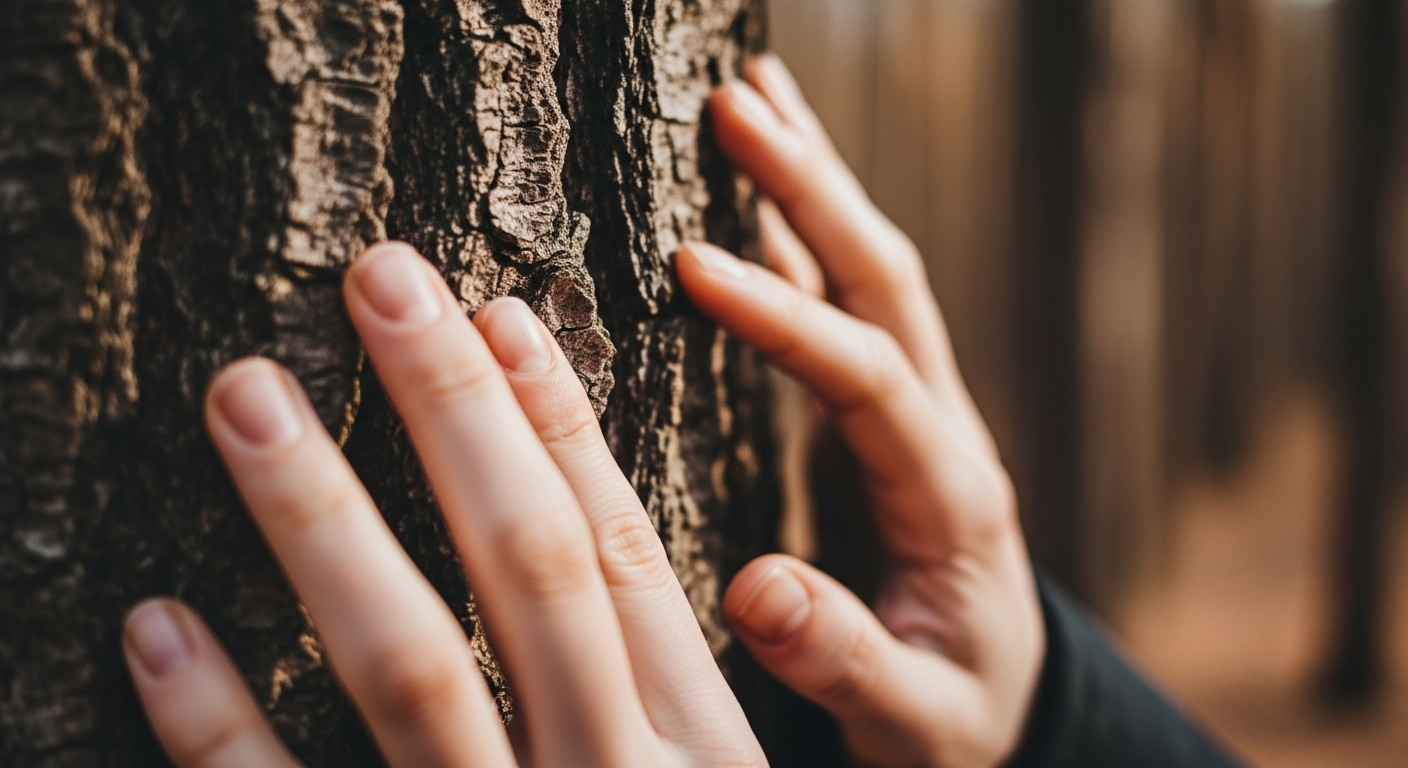
Touch various textures as you continue walking slowly. Run your hand thoughtfully along rough bark, feeling the deep grooves and raised ridges. Touch a leaf gently, noticing whether it’s waxy, fuzzy, smooth, or leathery. Feel the air temperature on your exposed skin and notice any gentle breeze touching your face.
Phase Three: Find Your Sit Spot (20 minutes).
Select a comfortable place to sit, perhaps a fallen log, a flat rock, or simply the soft ground. This location becomes your temporary home, your personal observation post. Settle in completely and let your body relax fully. Now simply sit without agenda. Watch without commentary. A beetle might climb over your shoe. Leaves might drift down slowly. Clouds might pass overhead through gaps in the tree canopy. Your only job is to notice everything without internal commentary or judgment.
This phase typically challenges people most significantly. We’re deeply conditioned for constant stimulation and measurable productivity. Sitting still feels genuinely uncomfortable initially. Stay with the discomfort. This awkward feeling is actually your nervous system actively recalibrating from chronic hypervigilance to peaceful alertness. This is precisely where deep healing happens.
Phase Four: Deeper Connection (20 minutes).
Try these specific invitations to deepen your forest therapy experience meaningfully. Find a small stream or puddle and place a single leaf on the water’s surface. Watch it float away gradually, imagining it carrying your accumulated worries and persistent stress downstream. This simple symbolic act provides surprising emotional release for many practitioners.
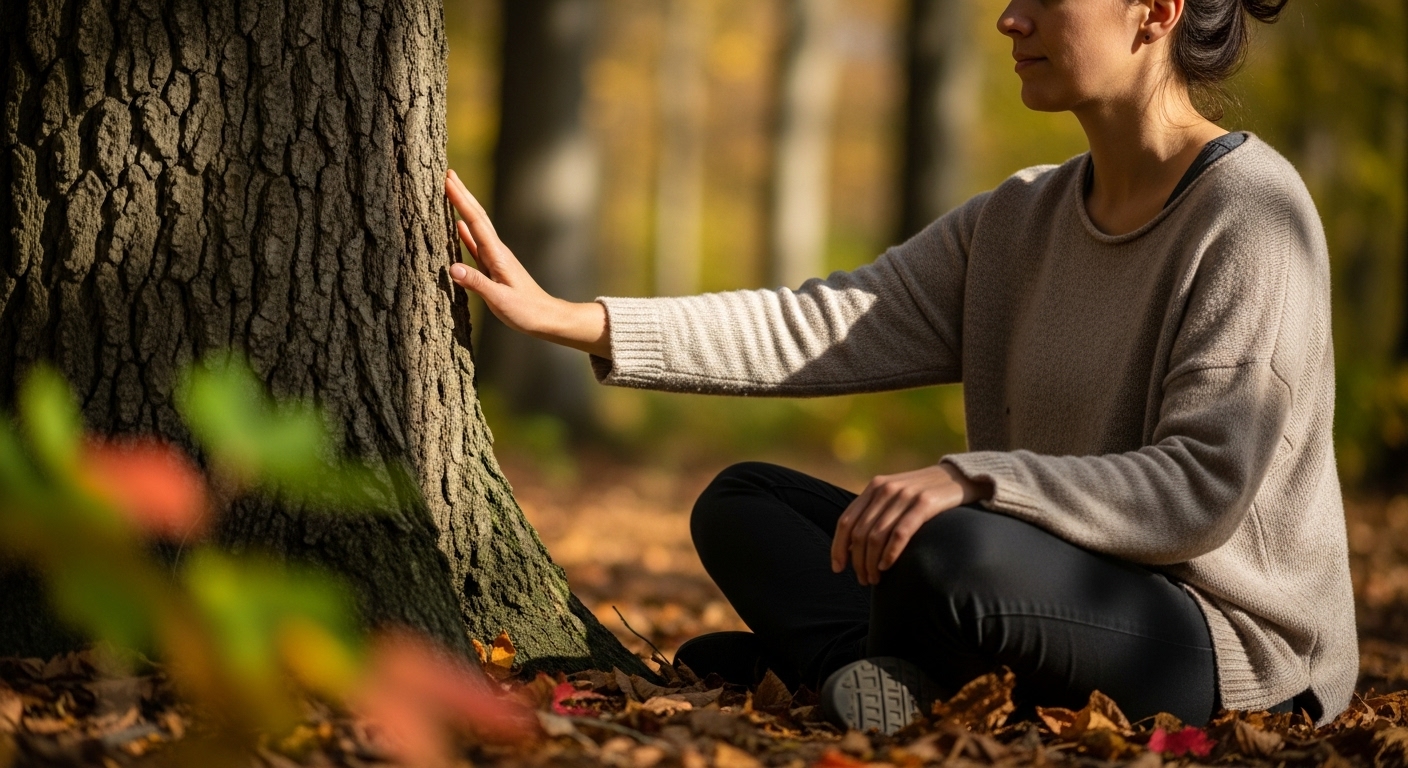
Choose a tree that somehow draws your attention. Approach it slowly and respectfully. Place both palms flat against its trunk. Close your eyes. Feel the texture, temperature, and even subtle energy. Stand this way for several full minutes. Many people report feeling surprisingly grounded and supported by this direct tree connection.
Lie on your back looking upward through the canopy. Watch branches sway, clouds move, light shift continuously. This perspective change becoming small under the vast ceiling of leaves often triggers profound feelings of belonging to something much larger than your personal problems.
Phase Five: Closing and Gratitude (10 minutes).
Before leaving, consciously acknowledge what you received. Some practitioners speak gratitude aloud directly to the forest. Others prefer silent appreciation. The specific form matters less than the genuine recognition that you’ve been given something valuable time, peace, healing presence.
Take three final deep breaths, this time consciously preparing to return to your regular life. Notice that you’re the same person who arrived, but your internal state has shifted noticeably. Walk slowly back to your starting point, making the transition gradual rather than abrupt.
Read other articles of same category “Lifestyle & Performance”
Forest therapy Without a Forest: Urban Alternatives.
City Dweller Solutions.
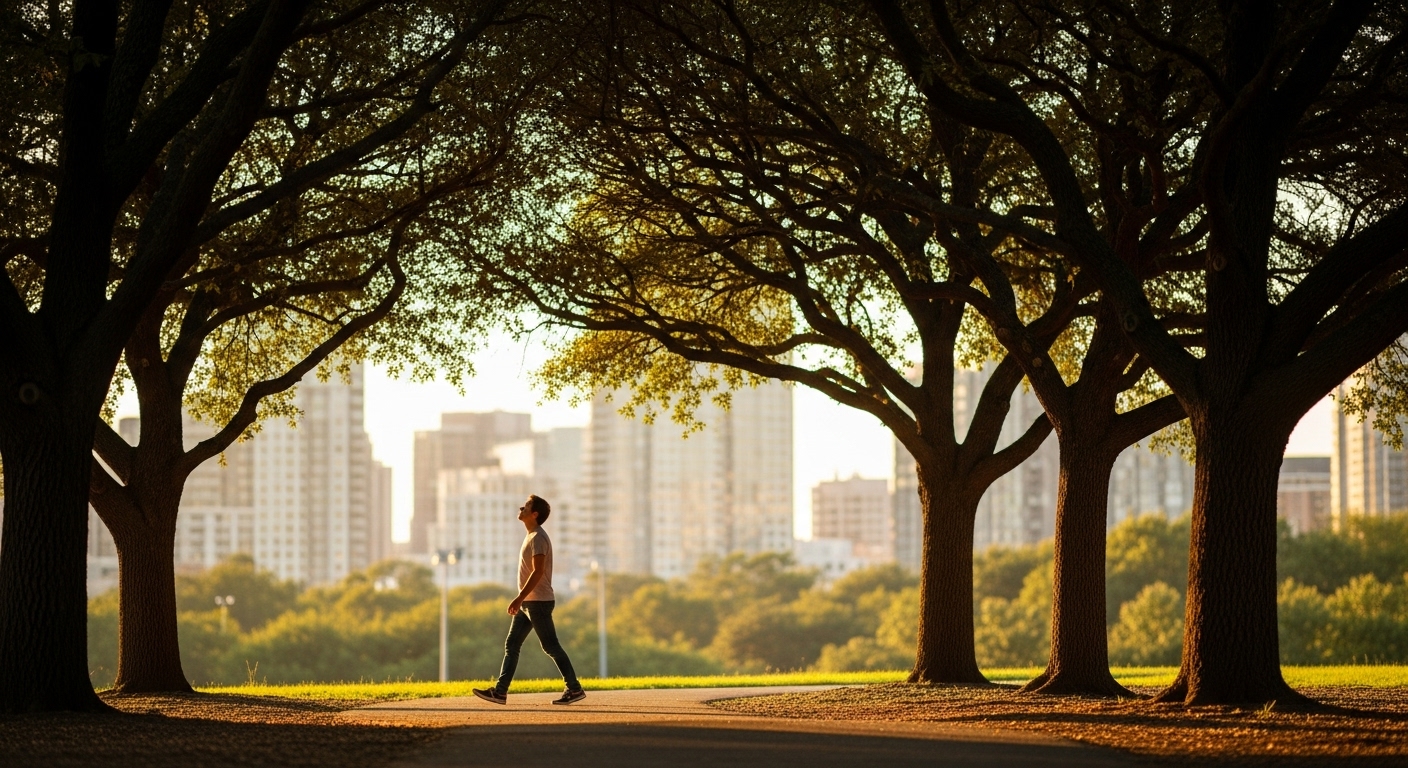
Living in urban areas doesn’t disqualify you from meaningful forest therapy benefits. City parks with mature tree sections work remarkably well. Look specifically for areas where you can stand and see at least thirty trees simultaneously. These zones create enough canopy effect to shift your sensory experience meaningfully away from typical urban environments.
Botanical gardens offer excellent forest therapy opportunities because they’re specifically designed for plant diversity and intentional sensory engagement. University campuses frequently maintain peaceful wooded sections. Cemetery parks with mature landscaping provide surprisingly quiet settings for contemplative practice.
When Outdoor Access Is Limited.
Houseplants genuinely improve indoor air quality and psychological well being measurably. Three to five substantial plants in your living space provide documented benefits. Window views of trees matter more than most people realize hospital patients who could see trees healed faster than patients viewing walls.
Essential oils containing phytoncides offer olfactory benefits. Pine, cedar, cypress, and fir oils contain some compounds found in authentic forest air. While this doesn’t replace breathing real forest air, it provides familiar scent cues triggering relaxation responses.
Common Mistakes to Avoid.
Moving too fast misses the entire point of forest therapy. The practice requires walking at roughly one quarter your normal pace. Bringing technology sabotages the experience, your phone’s mere presence alters your brain state. Expecting immediate transformation sets you up for disappointment. Some people feel calmer after their first session; others need consistent practice before recognizing benefits.
Waiting until you’re desperately stressed makes forest therapy emergency intervention rather than preventive medicine. Regular practice creates resilience. Dismissing urban nature experiences as “not real enough” stops many people from starting. Research proves smaller green spaces still provide measurable improvements.
Conclusion.
Forest therapy offers medicine that’s simultaneously ancient and cutting edge. The evidence is clear: spending 20 minutes daily in natural environments measurably reduces stress hormones, strengthens immune function, lowers blood pressure, and improves mental health markers. These aren’t minor improvements, they’re clinically significant changes supporting recovery from stress, illness, and modern life’s cumulative wear.
What makes forest therapy particularly powerful is its remarkable accessibility. You don’t need special skills, expensive equipment, or perfect wilderness. Any trees, any green space works. Your next steps are simple. This week, identify the nearest green space. Schedule twenty minutes. Leave your phone behind. Walk slowly. Notice what you see, hear, and smell.
Commit to 120 minutes weekly for one month. Track your energy levels, sleep quality, stress reactivity, and mood. Changes appear gradually but accumulate into genuine transformation. The forest has been waiting to support your healing. Start today.
TOP 15 FAQ
-
What is forest therapy?
Forest therapy is a mindfulness based practice of immersing yourself in nature to lower stress, improve immunity, and restore mental clarity.
-
What is the forest therapy treatment?
It’s a therapeutic nature immersion that lowers cortisol, boosts heart health, and rebuilds mental balance through deep sensory awareness.
-
What is another name for forest therapy?
Forest therapy is also known as Shinrin-yoku or forest bathing, a Japanese practice of consciously connecting with nature.
-
How to be a forest therapy guide?
You need certified training in Shinrin-yoku facilitation, mindfulness practice, and safety. Guides help others reconnect with nature intentionally.
-
Forest Therapy near me
Search for certified forest therapy walks, wellness retreats, or botanical garden sessions in your area. Many offer beginner-friendly programs.
-
Forest Therapy book
Read “Your Guide to Forest Bathing” by M. Amos Clifford or “Shinrin-Yoku” by Dr. Qing Li to explore its healing principles deeply.
-
Forest therapy techniques
Walk slowly, breathe deeply, awaken all senses, sit quietly, and express gratitude—each builds connection and supports recovery.
-
Forest Therapy Japanese
In Japan, Shinrin-yoku is recognized as preventive healthcare, encouraging slow walks through forests to heal body and mind.
-
Forest Therapy course
Courses teach guiding methods, forest ecology, and mindfulness science—helping you lead safe, evidence-based nature sessions.
-
Forest therapy quotes
“Where the mind goes, the body follows.” A reminder that nature restores calm when we truly slow down and listen.
-
Forest Therapy certification
Accredited programs (like ANFT or Forest Therapy Hub) certify practitioners to guide mindful forest experiences safely and ethically.
-
Forest Therapy Guide salary
Certified guides typically earn $25–$100 per session, depending on location, group size, and specialization.
-
How does forest therapy improve mental health?
It calms overthinking, reduces anxiety, and boosts serotonin by reconnecting your senses with the natural environment.
-
What are the physical benefits of forest therapy?
It lowers blood pressure, enhances immunity via phytoncides, and promotes parasympathetic recovery after stress.
-
Can city dwellers practice forest therapy?
Yes. Urban parks, botanical gardens, or even tree-lined streets offer similar benefits when practiced mindfully.