Table of Contents
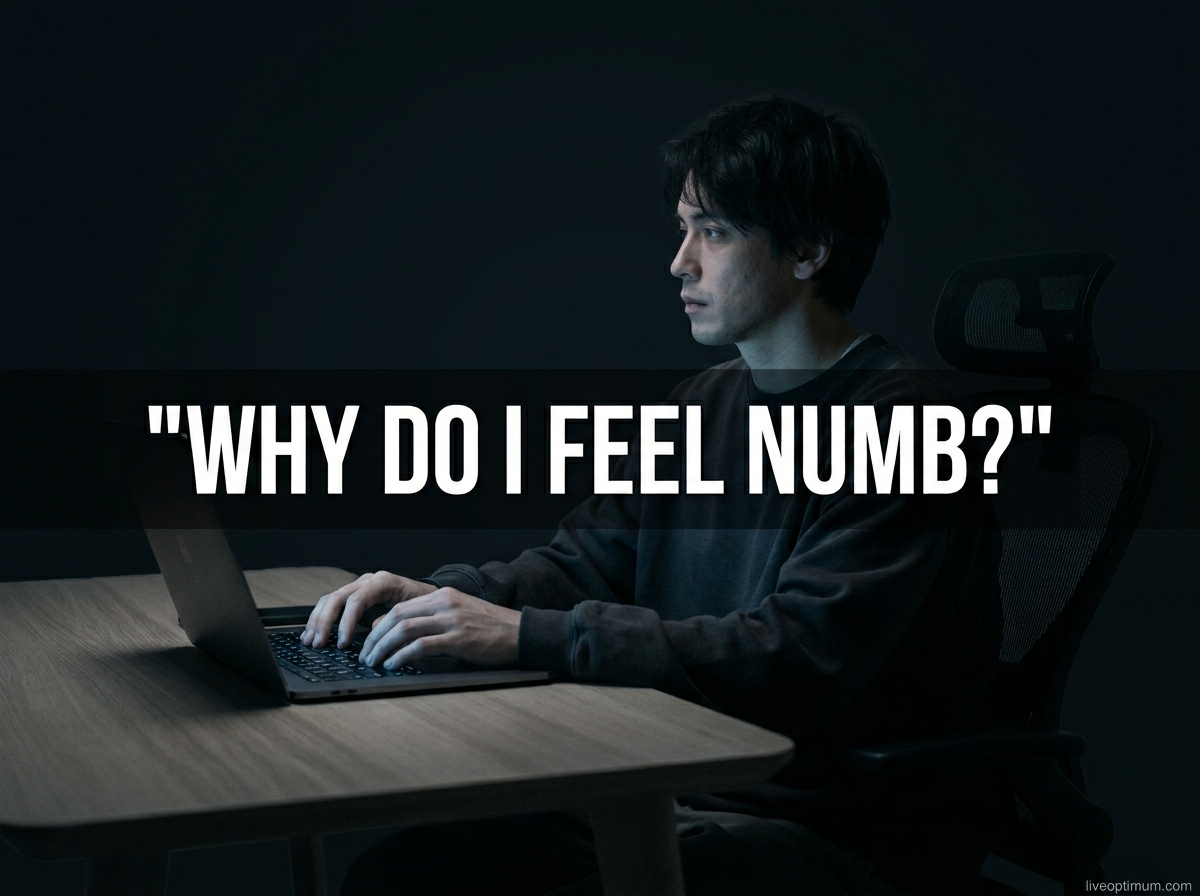
Why do I feel numb? I’ve learned it’s not weakness, it’s your nervous system cutting the signal. Here’s what your body is actually telling you.
I used to sit through moments that should have hurt and feel nothing. Good news landed flat. Bad news bounced off. I wasn’t broken. I was offline.
Why do I feel numb? Emotional numbness is your nervous system entering a protective shutdown. It happens when sustained stress, unprocessed pain, or chronic tension forces your body to suppress its own signals. You are not losing the ability to feel. You are experiencing a system that has decided, for now, feeling is too costly.
Emotional numbness is a state where your nervous system mutes its own emotional output to prevent overload. It is not a mood. It is not depression by itself. It is a physiological response, your body’s way of pressing pause on incoming signal traffic when the volume gets too high to process.
KEY TAKEAWAYS.
- Numbness is a nervous system response, not a personality flaw or character weakness.
- Your body goes numb before your mind catches up the signal drops at the body level first.
- Chronic low-grade stress causes numbness more often than single dramatic events.
- Feeling numb at work or in relationships usually means your nervous system has run out of recovery time.
- Numbness and depression overlap but are not the same one is a state, the other is a condition.
- The first sign of returning feeling often comes as irritability or physical restlessness, not joy.
- You cannot think your way out of emotional numbness you have to move your body through it.
Why Do I Feel Numb Even When Nothing Bad Happened?
Numbness does not require a crisis. It builds quietly over weeks of ignoring smaller signals.
- Chronic low-grade stress accumulates in the body. Each skipped recovery moment adds to a backlog your nervous system eventually stops trying to clear.
- Sleep debt mutes emotional processing. The prefrontal cortex needs REM sleep to regulate emotional response without it, you register events but don’t feel them.
- Constant context-switching trains your system to detach. Jumping between tasks, screens, and conversations fragments your body’s ability to stay present in any one moment.
- Suppressing smaller feelings teaches your system to suppress all feeling. This is not dramatic. It happens one “I’m fine” at a time.
Your nervous system does not distinguish between a traumatic event and relentless low-level friction. Both drain the same reserve. When that reserve hits zero, the system does what any overloaded circuit does: it trips. Not loudly. Just silently. You wake up one day and realize you haven’t felt anything in three weeks, and you cannot name the moment it started because there wasn’t one.
I remember working through a six-week stretch where every day felt efficient but empty. I answered messages, hit deadlines, showed up to everything. But nothing registered. Not the good parts. Not the hard parts. I thought I was being productive. My nervous system had simply decided it couldn’t afford to feel and keep functioning at the same time. That was the real cost.
“Emotional numbness is not absence of feeling. It is the body’s decision to defer feeling until it has the capacity to survive it.”
Signs of “Why do I Feel Numb” That Most People Miss.
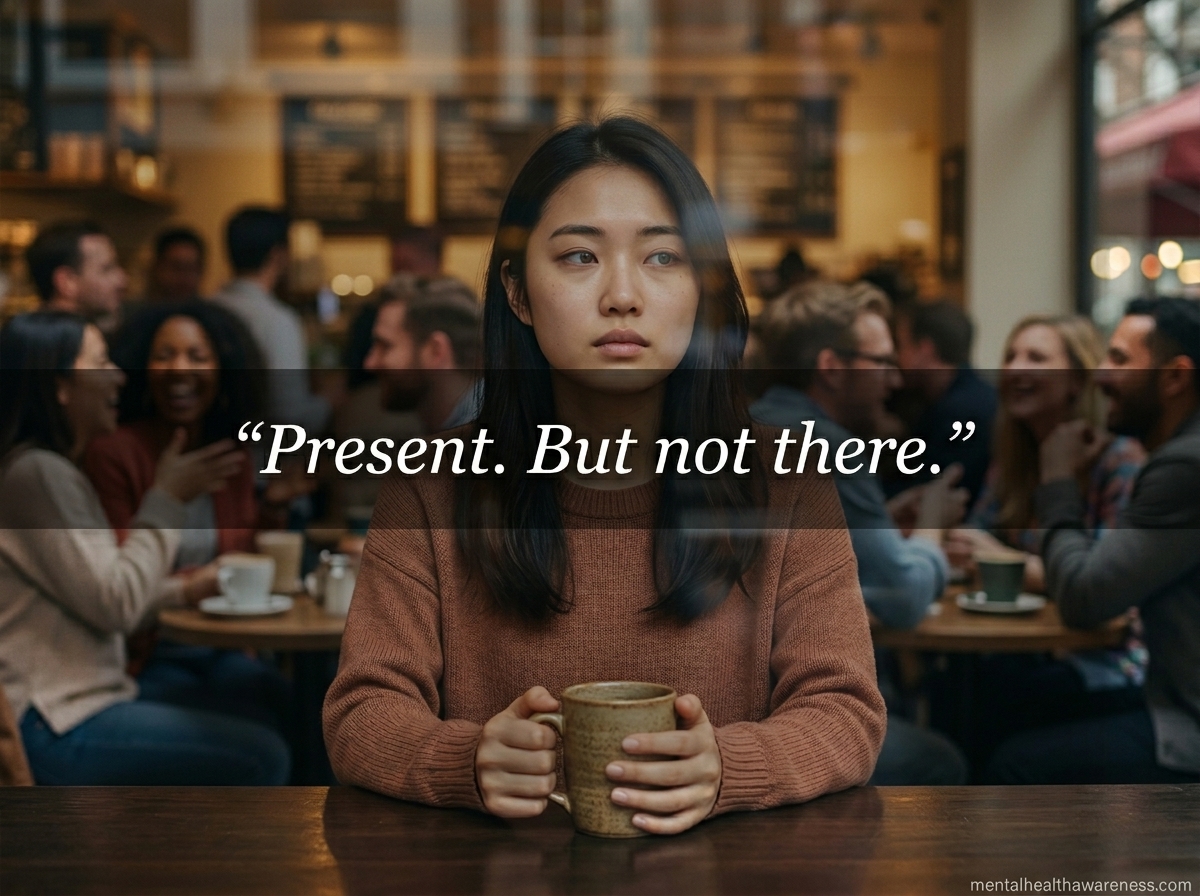
The clearest signs are not dramatic. They hide in ordinary moments.
- You watch yourself from the outside. You notice you’re at a party, or laughing, but you feel like an observer, not a participant.
- Music stops landing. Songs that used to move you now just play. The signal is still arriving your system just stopped opening it.
- You feel tired but not sleepy. This is nervous system fatigue, not physical fatigue. Your muscles are fine. Your processing capacity is at zero.
- Small annoyances register more than big wins. When the system goes numb to positive signals first, irritability is often what remains a low hum of frustration with nothing specific behind it.
- You stop reaching out. Not because you don’t want connection. Because reaching out requires energy you can’t generate.
Here’s what most lists about emotional numbness miss: the early signs are not emotional at all. They are physical. Your jaw tightens. You stop taking deep breaths. You sit in the same position for hours without noticing. Your body is already numb before your mind registers that something is wrong. The emotional silence follows the physical one, not the other way around.
I missed my own numbness for weeks because I kept looking for an emotional signal to confirm it. There wasn’t one. The sign was that I ate the same meal four days in a row without caring. That was it. That was the alarm.
“Our body goes numb before our mind knows it. By the time you ask why you feel numb, your nervous system has been offline for longer than you think.”
Why am I Feeling So Lost and Empty Even When Life Looks Fine.
How Stress Makes You Feel why do I feel numb Over Time.
Sustained stress does not just tire you out. It chemically alters how your nervous system processes emotional data.
- Cortisol floods the system in chronic stress. A 2012 study published in the Journal of Neuroscience found that chronic cortisol exposure reduces synaptic connections in the prefrontal cortex the area responsible for emotional regulation and social engagement.
- The vagus nerve goes quiet. When your nervous system stays in high-alert mode, it pulls resources away from the ventral vagal circuit, the part responsible for feeling safe, connected, and emotionally present.
- Dopamine output drops under sustained pressure. When effort stops producing reward responses, your brain stops generating anticipation. Everything feels flat because the system that creates motivation and pleasure has reduced its output.
- The freeze response is real. Beyond fight and flight, your nervous system has a third response: freeze. Numbness is often the emotional signature of a partial freeze state not paralyzed, but not fully online either.
Think of your emotional bandwidth like a business running on a thin margin. Every week of high stress is a week where you spend more than you earn. Eventually you are not profitable. You cut everything non-essential. Feeling deeply joy, connection, grief is non-essential to biological survival. So it gets cut first.
I watched this happen to someone close to me who was managing a business crisis for four months. They never had a breakdown. They never seemed overwhelmed. They just stopped laughing. The stress had not broken them. It had just quietly redirected all available resources to survival mode, and everything else went dark.
“Chronic cortisol exposure does not just cause stress, it physically restructures the emotional circuitry of the brain over time.”
Why Do I Feel Numb in Relationships?
Relational numbness is the most misunderstood form because it looks like not caring, but it isn’t.
- Emotional flooding leads to shutdown. When conflict or intensity crosses a threshold, the nervous system can switch off emotional access as protection. You don’t stop caring. You stop being able to feel the caring in real time.
- Unspoken resentment creates distance that registers as numbness. Small disappointments that never get named accumulate into a dull wall between you and the other person.
- It is possible to be both physically and emotionally present. This gap is confusing for both people in the relationship. It often gets labeled as coldness or withdrawal when it is actually exhaustion.
- The nervous system generalizes. If one relationship is a source of sustained tension, your system may begin muting emotional access in all relationships not just that one.
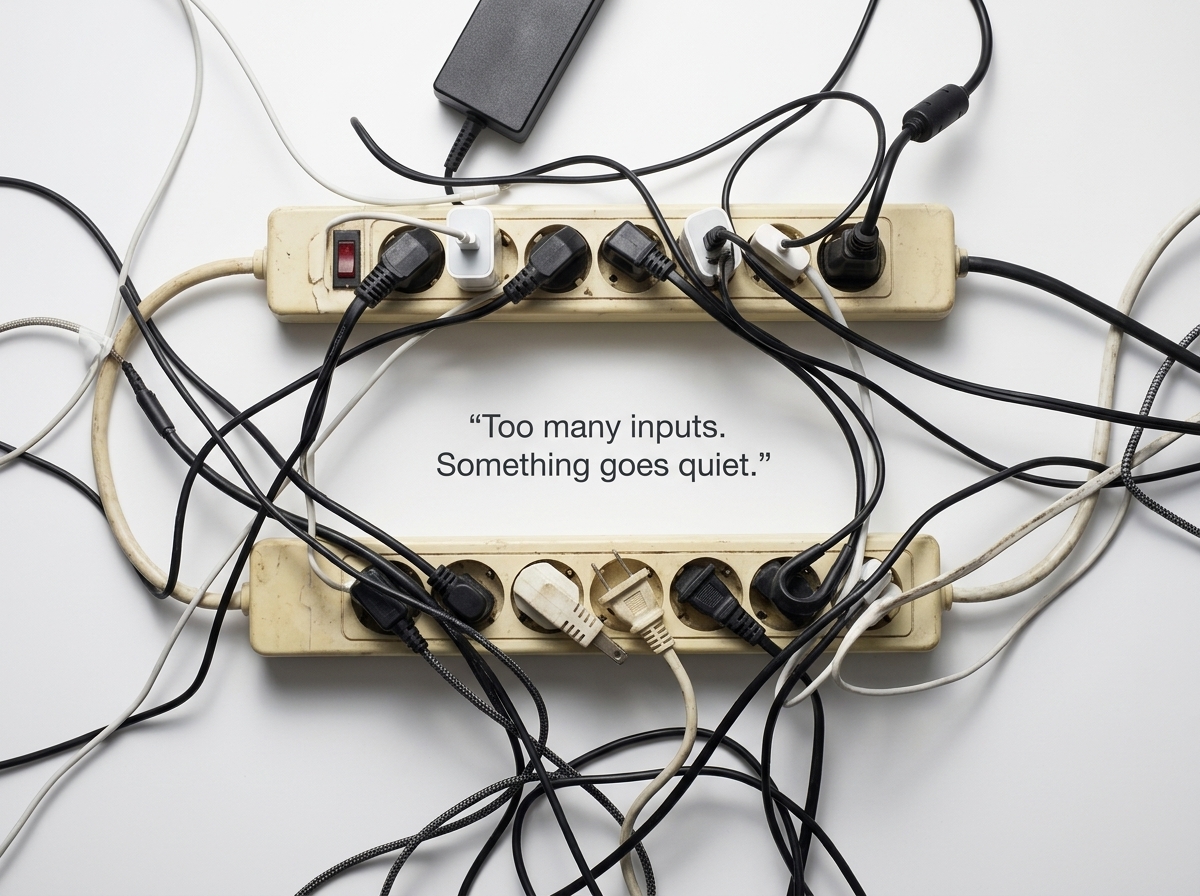
Life-Pain Metaphor Bridge: Consider a power strip that has six connected gadgets. Each one draws from the same source. When one device starts pulling too much a noisy argument, a job that never lets you rest, a relationship that demands more than it gives the whole strip dims. The lights in every room go a little darker. That is relational numbness. It is not selective betrayal of one person. It is a whole-system power management decision made without your permission.
The frustrating part is that the solution most people attempt trying harder, being more present, pushing through draws more from the strip. The fix is upstream. You reduce the total load first. Then the lights come back on.
“You do not go numb in relationships because you stopped loving. You go numb because your system ran out of power to sustain both feeling and functioning.”
The Optimum Loop Framework.

This is the optimum loop Framework a concept developed at liveoptimum.com for understanding why numbness happens and how to reverse it without forcing your way through.
Your nervous system does not go from fully feeling to fully numb in a straight line. It cycles. It freezes under load. It begins to thaw when load reduces and safety returns. The mistake most people make is trying to feel their way out of the freeze forcing emotion, demanding connection, pushing for breakthrough moments. That is like trying to thaw ice with pressure instead of warmth.
Why it works: The nervous system responds to perceived safety, not to willpower. When your body detects consistent signals that the threat level has dropped through physical rest, reduced stimulation, breath regulation, or movement it begins releasing the protective mute it placed on your emotional signal. You cannot force this. But you can create the conditions for it.
How to apply it: First, stop adding inputs. Numbness worsens under more stimulus, more pressure, more demands for emotional engagement. Give your system a window of quiet not meditation necessarily, just reduction. Second, move your body with low intensity for 20 to 30 minutes daily. This discharges residual stress hormones and tells your nervous system the danger has passed. Walking works. Third, notice physical sensation before emotional sensation. Your fingertips on a warm cup. The weight of a chair. Sensation is the first door back. Feel the body before you ask the mind to feel the emotion.
Quick Comparison
| State | What It Feels Like | What Is Actually Happening | What Doesn’t Help |
|---|---|---|---|
| Acute Stress | Anxious, alert, reactive | Sympathetic activation, cortisol surge | Avoidance, caffeine. |
| Emotional Numbness | Flat, detached, muted | Nervous system freeze, vagal withdrawal | Forcing emotion, overanalyzing |
| Burnout Numbness | Empty, automatic, mechanical | Dopamine depletion, reward circuit offline | More work, productivity focus. |
| Relational Numbness | Present but absent, disconnected | System-wide muting under sustained relational load | Demanding more connection. |
Common Mistakes People Make With Emotional Numbness.
Mistake: Treating numbness as a mood that will pass on its own.
Fix: Numbness is a state the nervous system must be actively led out of it rarely resolves without deliberate reduction of load.
Mistake: Trying to feel more by consuming more more content, more input, more stimulation.
Fix: Numbness deepens under more input. Reduction is the mechanism, not amplification.
Mistake: Labeling themselves as cold, broken, or incapable of feeling.
Fix: Numbness is temporary and functional it is a protection, not an identity.
Mistake: Waiting for a big emotional event to break through the numbness.
Fix: Small, physical, sensory experiences rebuild the signal path not dramatic moments.
Mistake: Isolating completely because social interaction feels too effortful.
Fix: Low-demand presence with safe people no pressure to perform or explain is one of the fastest ways to return nervous system safety.
Numbness is worth paying attention to not because it is dangerous, but because it is data. Your body is telling you the load exceeded the capacity. That is useful information if you treat it as a signal rather than a flaw. The work is not to feel more. The work is to reduce what is draining the system so feeling can return on its own terms.
For a deeper look at how your nervous system drives your energy, performance, and presence, the Mind-Body Integration pillar at liveoptimum.com covers the full framework connecting your physical state to your mental output.
If you want to understand the physical mechanics behind why your body goes quiet under stress, the piece on how to reset your nervous system gives you practical entry points for the optimum loop process above.
FINAL SUMMARY
- Emotional numbness is a nervous system response to overload not a flaw, a signal.
- The body goes numb first. The emotional silence follows physical shutdown, not the other way around.
- Chronic low-grade stress creates numbness more reliably than single acute events.
- You cannot think or pressure your way back to feeling you reduce load and restore safety first.
- Physical sensation (not emotional demands) is the first reliable path back to presence.
- Relational numbness is not about who you’re with. It is about total system capacity running below threshold.
The question is not “why do I feel numb” you already have the answer. The real question is what you are going to do with that information today. Not next week. Today. What is one thing you can remove from the load before tonight?
Written by Bippy (Md. Rishad Hasan Bippy), founder of liveoptimum.com and creator of the optimum loop Framework writing on physical and mental performance development through personal experience.
TOP FAQ’s
-
What does it mean if your feelings are numb?
It usually means your nervous system muted emotional signals to prevent overload from stress, pressure, or recovery debt.
-
Why do I feel like I’m not here mentally?
Mental disconnection often happens when chronic stress pushes your brain into protective shutdown or partial freeze mode.
-
Why have I become so numb?
Long periods of stress, poor recovery, emotional suppression, and constant stimulation can slowly reduce emotional responsiveness.
-
Is it normal to feel numb for no reason?
Yes. Emotional numbness can build quietly from low-grade stress without a major event triggering it.
-
Feeling numb emotionally
Emotional numbness is often a temporary stress response where your system reduces emotional intensity to protect itself.
-
Is it normal to feel numb emotionally
Yes. Short periods can happen during overload, but persistent numbness deserves attention and lifestyle changes.
-
Why do I feel numb emotionally
Your brain and nervous system may be conserving energy after prolonged stress, emotional load, or poor recovery.
-
Why do I feel numb physically
Stress can reduce body awareness, creating shallow breathing, muscle tension, and a detached physical feeling.
-
What does feeling numb emotionally feel like
It can feel like emptiness, detachment, flat emotions, loss of excitement, or feeling present physically but absent mentally.
-
How to stop feeling emotionally numb
Reduce stress load, walk daily, lower stimulation, improve sleep quality, and reconnect with physical sensations first.
-
How to stop feeling numb
Stop adding pressure. Create safety signals through movement, rest, reduced stimulation, and consistent recovery habits.
-
Is emotional numbness dangerous
Temporary numbness isn’t usually dangerous, but long-term numbness may signal chronic stress or deeper issues needing support.
-
Why do I feel numb even when nothing bad happened?
Your body responds to accumulated stress, not just dramatic events. Small pressures can silently overload the system.
-
Why do I feel numb in relationships?
Relationship numbness often comes from emotional exhaustion where the nervous system reduces emotional access to conserve energy.
-
How do I reconnect with my emotions again?
Start with physical awareness: walk, breathe deeply, notice sensations, reduce noise, and let feelings return naturally.